News
Why PAP Honoured Rajiv Ruparelia With Its 2026 Humanitarian Award

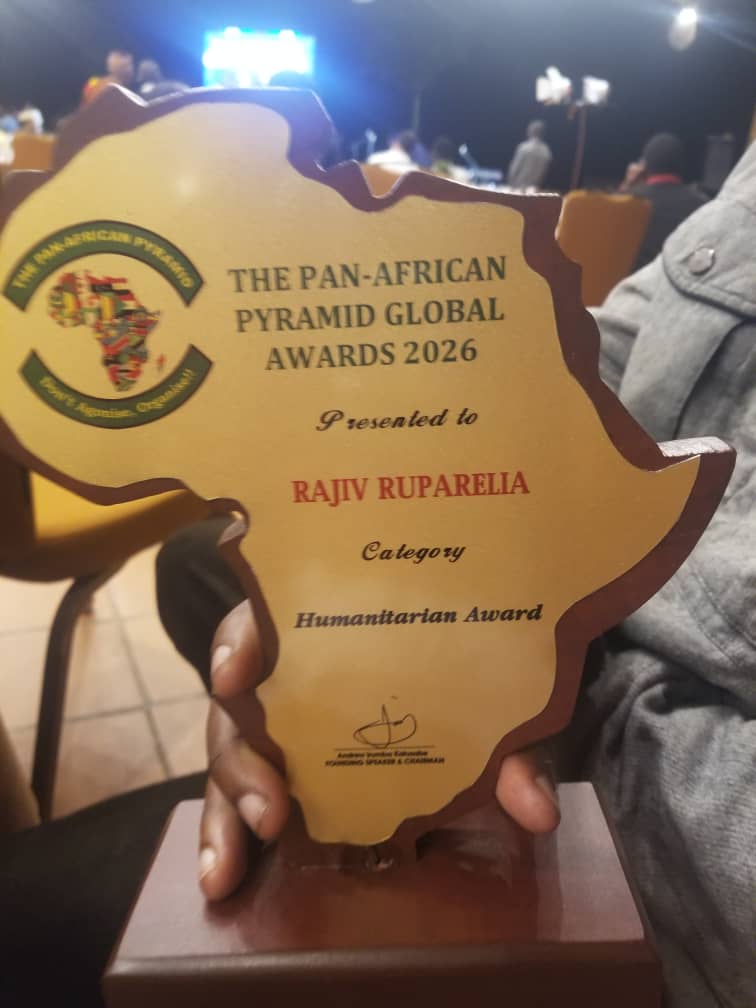
KAMPALA When the Pan-African Pyramid announced Rajiv Ruparelia as the recipient of its 2026 Humanitarian Award, the decision was framed less as a tribute to wealth than as recognition of how resources, ideas and personal commitment can be converted into practical help.
Rajiv, the Ugandan businessman and philanthropist who died in 2025, was honoured posthumously during the ninth PAP Global Awards at Speke Resort Munyonyo.
According to PAP, the award was based on a record of humanitarian involvement that extended beyond financial contributions. The organisation highlighted Rajiv’s personal engagement, ideas and willingness to support initiatives intended to produce measurable benefits for communities.

That distinction matters in a country where philanthropy is often discussed in terms of the size of a donation.
PAP speaker Andrew Irumba described Rajiv’s legacy as one grounded in service, shared prosperity and the belief that African problems should be addressed through African-led solutions.
Rajiv was born on January 2, 1990, and became known publicly through business, but PAP said his humanitarian interests developed into a broad programme touching several areas of community life.
Through the Ruparelia Foundation, he supported initiatives involving education, healthcare, sports, environmental conservation and community welfare.
The organisation cited scholarships for disadvantaged children, medical interventions, equipment and ambulances, health camps, disaster response and youth programmes among the areas associated with his philanthropic work.
His support for young talent also extended beyond traditional charity. PAP pointed to assistance for young entertainers, including Fresh Kid and Felista De Superstar, as evidence of his interest in helping young Africans identify and develop their abilities.
The underlying philosophy was straightforward: giving should create opportunity rather than merely provide temporary relief.
PAP said Rajiv’s approach reflected the idea that Africa’s most valuable resource is its people. In that reading, philanthropy becomes an investment in human capacity — in education, health, talent and dignity.
His connection with the Pan-African Pyramid was similarly practical. PAP said his contribution helped the organisation sustain its work over 12 years and that he supported the initiative not merely with money but with ideas and personal commitment.
That is why the award was presented as a humanitarian recognition rather than simply a posthumous business honour.
The organisation argued that Rajiv’s work demonstrated an important principle: Pan-Africanism is meaningful only when it improves the lives of ordinary people.
That approach places his legacy in a broader debate about African development. The continent has no shortage of conferences, declarations and political speeches about unity. The harder question is how those ideas are translated into schools, clinics, employment, youth opportunities, emergency assistance and productive investment.
PAP’s tribute placed Rajiv firmly on the practical side of that argument.
His death cut short a career that was still developing, but the organisation said the impact of his work could be measured in the opportunities created for others.
The Humanitarian Award therefore serves two purposes.
First, it records the contribution PAP believes Rajiv made during his lifetime.
Second, it establishes a standard for the future: that African leadership should be judged not only by wealth accumulated or positions held, but by what becomes possible for other people because of an individual’s success.
That is a more demanding definition of achievement.
And it explains why, at Munyonyo, Rajiv’s name was not remembered simply as that of a young businessman who died too soon. He was remembered as someone whose resources were repeatedly directed outward — toward people, communities and causes that PAP believes embodied the principle of shared African prosperity.
Send Us Your Story
If you would like your article or opinion published on The New Light Paper, one of Uganda’s trusted news platforms, send your submission to thenewlightpaper@gmail.com.