Breaking News
President Museveni Calls On Ugandans To Honour Fallen Liberation Heroes

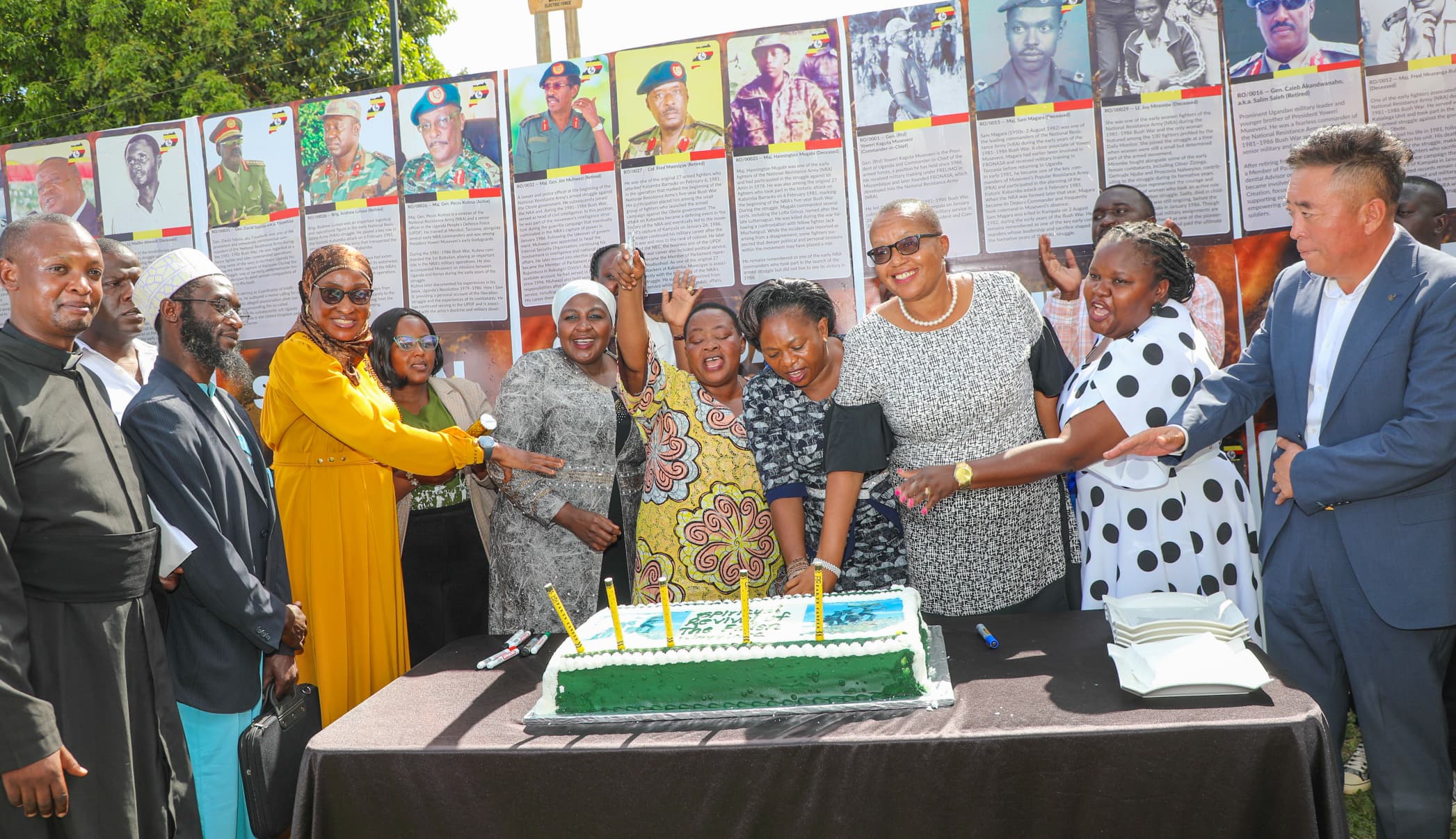
President Yoweri Museveni has urged Ugandans to honour the men and women who died during the country’s liberation struggles, warning that forgetting their sacrifices would amount to losing an important part of the nation’s identity.
Museveni delivered the message during a spiritual revival organised by the Office of the National Chairman at Kyambogo, where religious leaders, liberation veterans, families of fallen fighters, political leaders and members of the public gathered to remember those who lost their lives in Uganda’s turbulent political history. Prime Minister Robinah Nabbanja represented the President at the event and delivered his message to the gathering.
The event, organised under the leadership of ONC Manager Hajjat Hadijah Namyalo, popularly known as the Chief Muzzukulu, was intended to give renewed attention to the sacrifices of people who contributed to Uganda’s liberation but, according to the organisers, have not received sufficient recognition.

Namyalo said the initiative was born out of concern that many of the people who sacrificed their lives for Uganda had gradually faded from public memory. She said remembering them should go beyond ceremonies and should encourage Ugandans to protect the values and national aspirations for which the fallen fighters made their sacrifices.
In his message, Museveni stressed that Uganda’s liberation was not achieved by combatants alone. He said ordinary citizens, particularly peasants who supported the struggle despite the dangers involved, also played an important role in changing the country’s course.
“It takes the sacrifice of warriors to cause a turn of events in society and to create visible impact,” Museveni said, emphasising that the deaths of those who fought should continue to carry meaning for generations that came after them.
He argued that many of the people who died in the struggle were driven by a vision that extended beyond their personal interests. Their sacrifice, he said, was rooted in the belief that Uganda could become a better country for generations they themselves would never see.
That message placed the commemoration beyond the battlefield. Museveni said the history of liberation should also recognise civilians who provided support and helped sustain the struggle during difficult periods. Their contribution, he said, forms part of the wider story of Uganda’s political transformation.
“A country that forgets its fallen warriors loses its soul,” Museveni said, calling on Ugandans to pray for, remember and honour those who paid the ultimate price.
The President further linked remembrance to the responsibilities of the living, urging citizens to demonstrate patriotism through hard work, honesty and discipline. He said national development should not be viewed solely as the responsibility of government, but also as a personal duty through which citizens can honour those who came before them.
He also called on young Ugandans to study the history of the liberation struggle and understand the roles played by both military and civilian actors. Such knowledge, he said, would help younger generations appreciate the sacrifices behind the country’s present circumstances and understand their responsibility to preserve what earlier generations fought to establish.
Museveni recalled that when the National Resistance Movement came to power in 1986, Uganda had endured years of political instability, violence and economic decline. He attributed the subsequent restoration of what he described as the country’s dignity, as well as greater political stability and economic recovery, to the changes that followed the liberation struggle.
He nevertheless cautioned that the achievements of the past should not be taken for granted. For him, remembering the fallen is therefore not simply about looking backwards. It is also about challenging the present generation to safeguard and build on the gains inherited from those who sacrificed their lives.
The human cost of the country’s past conflicts was brought closer to the gathering through the participation of relatives and descendants of people who died during the struggles. Among those remembered were figures including Capt. Valeriano Rwaheru, James Karuhanga, Ahmed Kashillingi, Maj. Gen. Fred Rwigyema and Lt. Gen. Proscovia Nalweyiso.
Families linked to prominent figures, including Patrice Lumumba and Sam Magala, also joined the remembrance, providing a personal dimension to a history often discussed through politics and military events. Their presence underscored that behind the national story were families that carried the consequences of losing loved ones.
As Uganda continues to debate its history, political legacy and national identity, the Kyambogo gathering placed remembrance at the centre of that conversation. Its central message was that the sacrifices of the past should not end with memorial ceremonies, but should remain a source of responsibility for those living today.
Send Us Your Story
If you would like your article or opinion published on The New Light Paper, one of Uganda’s trusted news platforms, send your submission to thenewlightpaper@gmail.com.