News
Engineers Warn Of Building Vulnerabilities As Earthquake Risks Persist

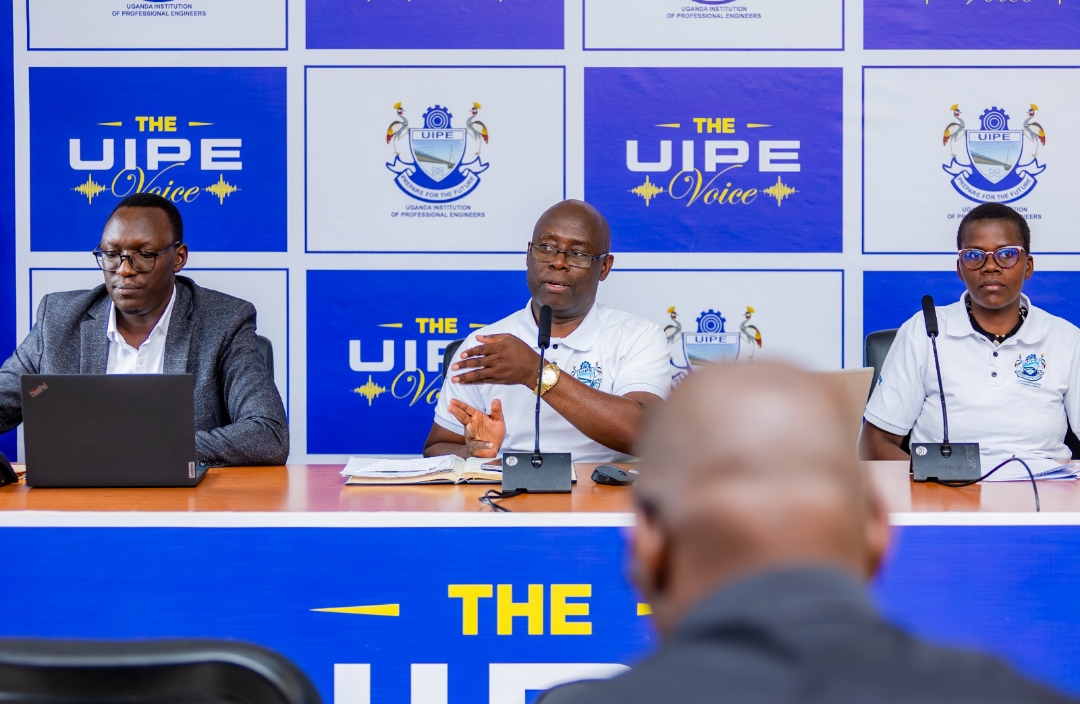
Uganda’s building safety screening has found that only about 9% to 10% of more than 30,000 buildings assessed so far are safe, according to preliminary findings presented by the National Building Review Board (NBRB), raising concerns about the country’s preparedness for a major earthquake.
Dr Morris Oleng, the board’s head of research, disclosed the findings during the fifth edition of the Uganda Institution of Professional Engineers’ UIPE Voice engagement, where he called for stronger building standards, better enforcement and urgent attention to structures that may be vulnerable to seismic activity.


Oleng said the preliminary assessment indicated that more than half of the buildings screened required some form of strengthening. He cautioned that the work was still ongoing, with further investigations expected to provide a clearer picture of the country’s building safety and earthquake exposure.
The findings come as researchers assess the potential consequences of an earthquake on Uganda’s homes, schools, roads, bridges and other infrastructure. Oleng said preliminary modelling estimated that earthquake damage to buildings could cause annual economic losses exceeding $74m, while more than 70 people could die in an earthquake under the scenarios presented.
The projections also indicate that earthquake losses could amount to as much as 3% of the country’s gross domestic product over a 50 year return period. Oleng said the estimates highlighted the need to strengthen prevention and preparedness measures as Uganda’s population grows and urbanisation accelerates.
Uganda’s exposure to seismic activity is linked to its position between the eastern and western arms of the East African Rift system. Oleng said the geological setting, combined with rapid development and buildings that do not adequately incorporate earthquake resistant design, could increase the consequences of a major event.
He cited historical earthquakes, including the 1966 Toro earthquake, which reportedly killed 160 people, and a 1994 earthquake identified in the presentation as Kisomoro, which reportedly caused eight deaths. The latter event was also associated with building damage estimated at more than $60m.
For Oleng, the central concern is not simply whether an earthquake occurs, but whether buildings can withstand the forces generated by ground movement.
“earthquakes, do not kill. It is the buildings. We live in that will kill us, not the earthquake,” he said, according to the event transcript.
The warning is particularly significant for schools, where structural failure during class hours could expose large numbers of learners and teachers to danger.
A separate study involving 100 school buildings in Fort Portal, Hoima and Mbarara found that about 5% required urgent corrective measures. Between 60% and 70% needed further inspection and potentially strengthening, while approximately 20% were described as safe. The precise classification of the findings requires confirmation against the original study.
Oleng said the school assessment identified weaknesses including missing structural supports, weak mortar joints, unsupported parapets, cracks and concerns about construction materials. He also described the risk posed by buildings whose designs had not adequately considered seismic forces.
The NBRB is working with the Global Earthquake Model Foundation under a project identified as SERENE to develop evidence for earthquake risk assessment and building regulation. The work examines the likelihood of seismic activity, the people and infrastructure exposed to it, and the vulnerability of the structures involved.
Oleng said Uganda’s existing seismic design standard, identified in the presentation as US 319:2003, needed updating to reflect current knowledge and improve guidance for engineers. He also called for stronger enforcement by authorities responsible for approving building plans and supervising construction.
The board is conducting further building audits and a national baseline survey with the Uganda Bureau of Statistics. The survey is intended to establish the characteristics of buildings across the country and improve understanding of their potential performance during an earthquake.
UIPE vice-president for finance and administration, Dr Martin Kalibbala, said the engagement was intended to connect engineers with the public and explain how professional engineering decisions affect everyday life.

UIPE vice-president for public relations, ethics and practice, Zainab Mpakiraba, also called for more community engagement and professional knowledge sharing.

Oleng further proposed that government consider a national insurance scheme to help protect property owners against earthquake losses. He also outlined structural strengthening methods that engineers could use where rehabilitation is technically and economically justified.
The findings remain preliminary, and the board is continuing its assessments. The immediate challenge is to establish which buildings need urgent intervention, ensure that local authorities act on safety recommendations and update the standards used to design and approve new structures.
Enjoy Pictorial


Send Us Your Story
If you would like your article or opinion published on The New Light Paper, one of Uganda’s trusted news platforms, send your submission to thenewlightpaper@gmail.com.