Breaking News
Pan-African Leaders Converge In Kampala To Honour Rajiv, Champion African Unity

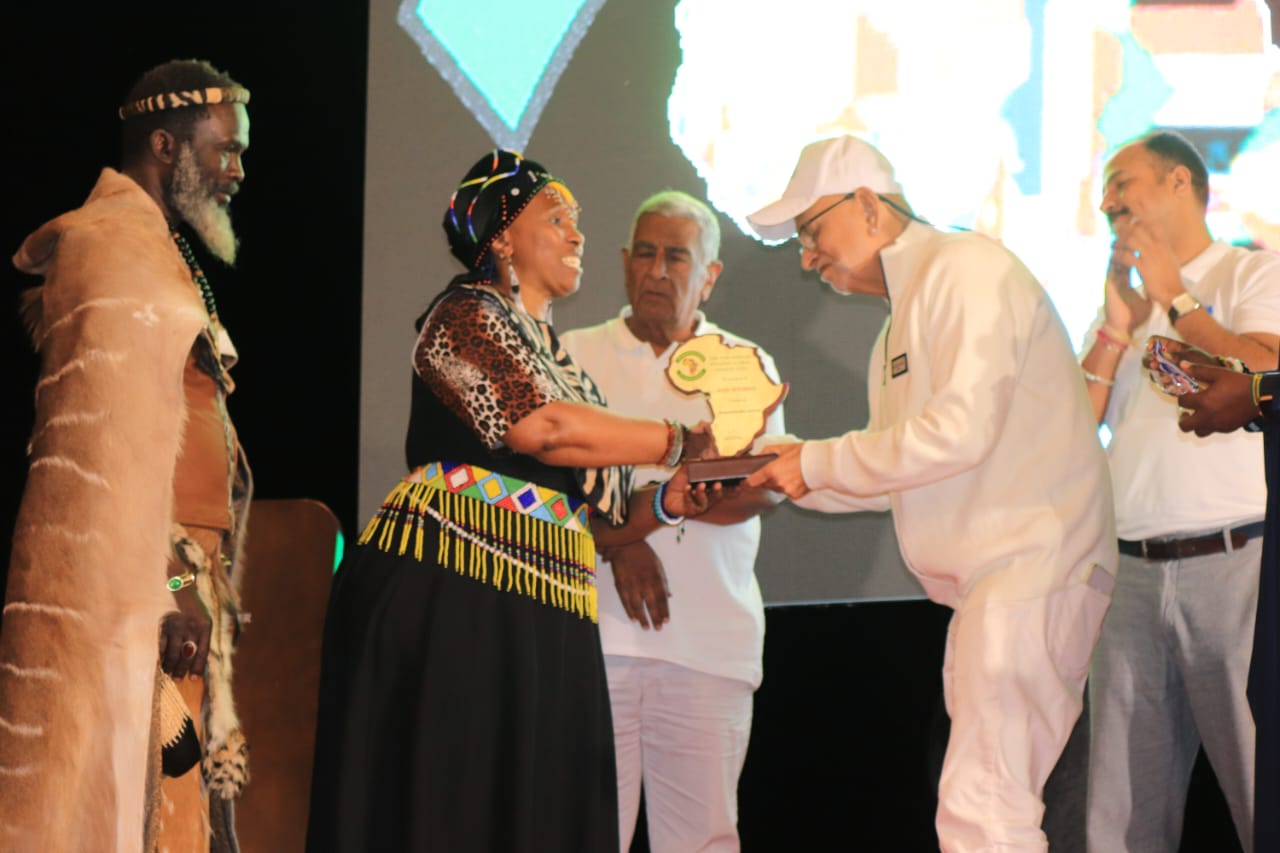
KAMPALA: Speke Resort Munyonyo became, for one evening, less a conference venue than a forum for an old African question: what would it take for the continent to exercise greater control over its own economic and political destiny?
Hundreds of guests gathered at the resort on August 29 for the ninth Pan-African Pyramid Global Awards and the organisation’s 12th anniversary dinner.
The event combined an awards ceremony with speeches, entertainment and discussions on development, sovereignty, refugees, decoloniality and what speakers described as new forms of colonial influence.

Its guest list reflected the breadth of the Pan-African conversation.
Businessman and philanthropist Dr Sudhir Ruparelia attended as Guest of Honour, while international participants included Bishop Joshua Maponga of Zimbabwe, South African anti-apartheid activist Dr Khanyisile Litchfield Tshabalala, Ghanaian entrepreneur Clinton Arko Agyemang, Jamaican Pan-Africanist Blossom Thomas and US-based activist Ayo Kimathi.
Their presence underlined an increasingly familiar reality: Pan-Africanism is no longer confined to political history. It is being debated through questions of trade, investment, industrialisation, migration, sovereignty and cultural identity.
Bishop Maponga delivered the keynote address, challenging Africans to reconsider the systems that continue to shape the continent’s development and urging greater confidence in home-grown solutions.
The awards themselves provided a practical illustration of the philosophy.
The late Rajiv Ruparelia and Hon. Helen Nakimuli Walusimbi received Humanitarian Awards. Dr Tshabalala was recognised for her contribution to the anti-apartheid struggle. Dr Frank Mugyenyi was recognised for work linked to African mineral sovereignty and governance.
Ambassador Clinton Arko Agyemang received recognition for African youth social and development entrepreneurship, while Blossom Thomas was honoured for African Renaissance leadership in the diaspora.
Victoria Sugar was recognised with the African Development Entrepreneur Award, MTN Uganda received the Lifetime Achiever Award and Prince Wasajja Kiwanuka was honoured with the African Renaissance Award.
Taken together, the categories reveal what PAP appears to regard as the building blocks of continental progress: humanitarian action, political freedom, resource sovereignty, entrepreneurship, industrialisation and leadership.
That is significant because Pan-Africanism has historically been associated with political liberation. The discussion at Munyonyo widened the definition to include economic independence and the ability of African economies to create value from their own resources.
The evening also had a social dimension. After the speeches and awards, guests shared dinner, cut a cake and watched live entertainment.
But beneath the ceremony was a serious argument about the continent’s future.
Africa’s challenges are often described in national terms — unemployment in one country, infrastructure gaps in another, commodity dependence elsewhere. The Pan-African perspective asks a different question: how many of those problems could be addressed if African countries traded more with one another, moved capital more easily, developed continental value chains and treated shared markets as opportunities rather than barriers?
That question is not new. What has changed is the urgency.
With a young population, expanding consumer markets and enormous natural resources, Africa has the ingredients for a much larger economic role. Yet the continent continues to export many raw materials with limited processing and remains dependent on external markets, finance and technology in critical areas.
The speakers at Munyonyo therefore placed responsibility squarely on Africans themselves.
The challenge is not simply to celebrate African identity.
It is to build institutions, businesses and communities capable of turning that identity into economic strength.
For one evening, the Pan-African Pyramid Awards offered a stage for that debate.
The harder work begins after the applause.
Send Us Your Story
If you would like your article or opinion published on The New Light Paper, one of Uganda’s trusted news platforms, send your submission to thenewlightpaper@gmail.com.