
News
When Power Meets Grief The Human Moment Behind Sudhir Ruparelia’s Public Life

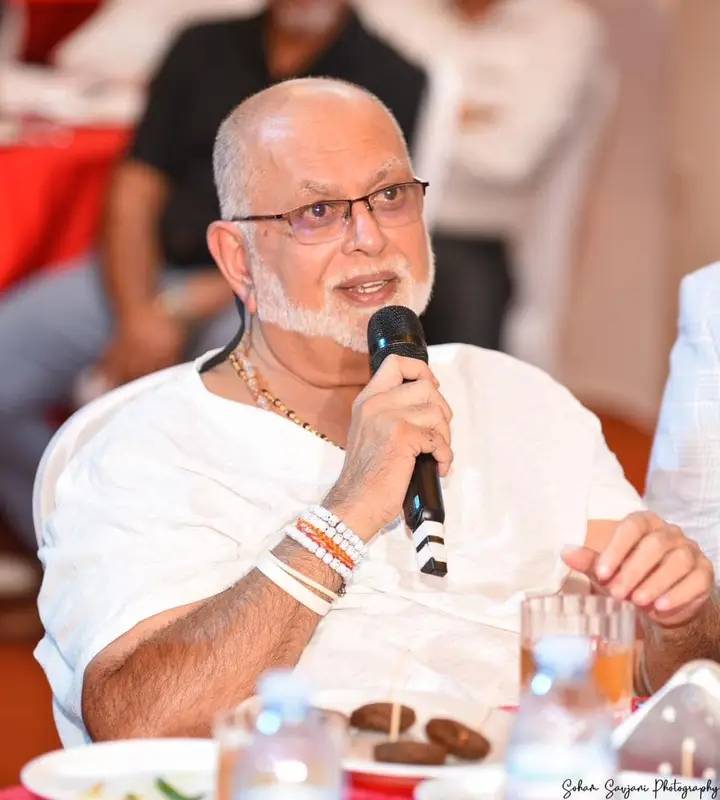
In Uganda’s public imagination, Sudhir Ruparelia has often appeared as a fixed symbol of financial success, a man whose name evokes towers of glass, luxury hotels and the quiet confidence of accumulated wealth. Yet over the past year, events have pulled him from the familiar narrative of balance sheets and boardrooms into a far more human space, one shaped by grief, scrutiny and the expectations that accompany prominence in a deeply unequal society.
Ruparelia’s rise from Kabatoro in Kasese to the apex of Ugandan business life is well known. Arriving in Kampala as a young trader, he built enterprises that would later span banking, education, real estate and hospitality, creating thousands of jobs and reshaping parts of the capital’s skyline.
For many Ugandans, his story has long served as proof that ambition and persistence can still carry weight in an economy where opportunities are often unevenly distributed. But wealth, as recent months have shown, does not insulate against loss.
The death of his son Rajiv Ruparelia in a late night crash on the Busabala flyover brought that reality into sharp focus. Rajiv, who had taken on a central leadership role within the Ruparelia Group, was widely viewed as the bridge between the founder’s vision and a new generation of corporate management. His death resonated far beyond the family, prompting a wave of public mourning and renewed anger over road safety and the dangers posed by poorly marked construction sites.
In Kampala and beyond, the tragedy became a moment of collective reckoning, not simply about one family’s grief but about the everyday risks faced by ordinary road users.
In public messages following the incident, Ruparelia expressed gratitude for the sympathy shown by citizens from all walks of life. Friends and associates say his response reflected a man acutely aware of his position, yet determined not to retreat behind wealth or security. One business associate, speaking privately, described him as deeply affected but conscious that the circumstances of his son’s death had struck a national nerve. The episode placed him, briefly, in the same emotional space as countless families who have lost loved ones on Uganda’s roads.
At the same time, Ruparelia has found himself confronting a different kind of vulnerability, one born of the digital age. Fake social media accounts and manipulated videos bearing his image have circulated online, prompting repeated warnings from his representatives.
While such incidents are increasingly common for high profile figures, they underline a broader erosion of trust in public discourse, where influence can be misused and reputations distorted at speed. For a businessman whose credibility underpins vast investments, the challenge is not merely personal but systemic.
None of this has silenced debate around his business dealings. High value property agreements, including those involving state institutions, continue to attract scrutiny from sections of the public who question how power and wealth intersect in Uganda. These discussions reflect a wider unease about transparency and fairness in a country where economic growth has not always translated into shared prosperity.
Supporters argue that large investors like Ruparelia are essential to national development, while critics see in such arrangements a reminder of how closely business and political authority can align.
Away from controversy, his philanthropic footprint has quietly expanded. Through the Ruparelia Foundation, investments in healthcare facilities in Kasese and support for conservation initiatives have sought to channel private wealth into public benefit.
These efforts, while modest in comparison to the scale of his empire, reveal an understanding that legacy is built as much in communities as in capital.
Sudhir Ruparelia’s story, viewed through the lens of recent loss, resists simple conclusions. He remains a figure of admiration and contention, a symbol of what is possible and of the questions that accompany extreme success.
In a society often tempted to reduce its most powerful individuals to icons or villains, his experience over the past year has offered a reminder of shared vulnerability. The measure of his legacy may lie not only in the billions attributed to his name, but in how his influence responds to grief, responsibility and the public gaze that now follows every step.


