
News
Ruparelia Foundation Returns to Kyebando to Honour Rajiv Ruparelia Through Festive Outreach

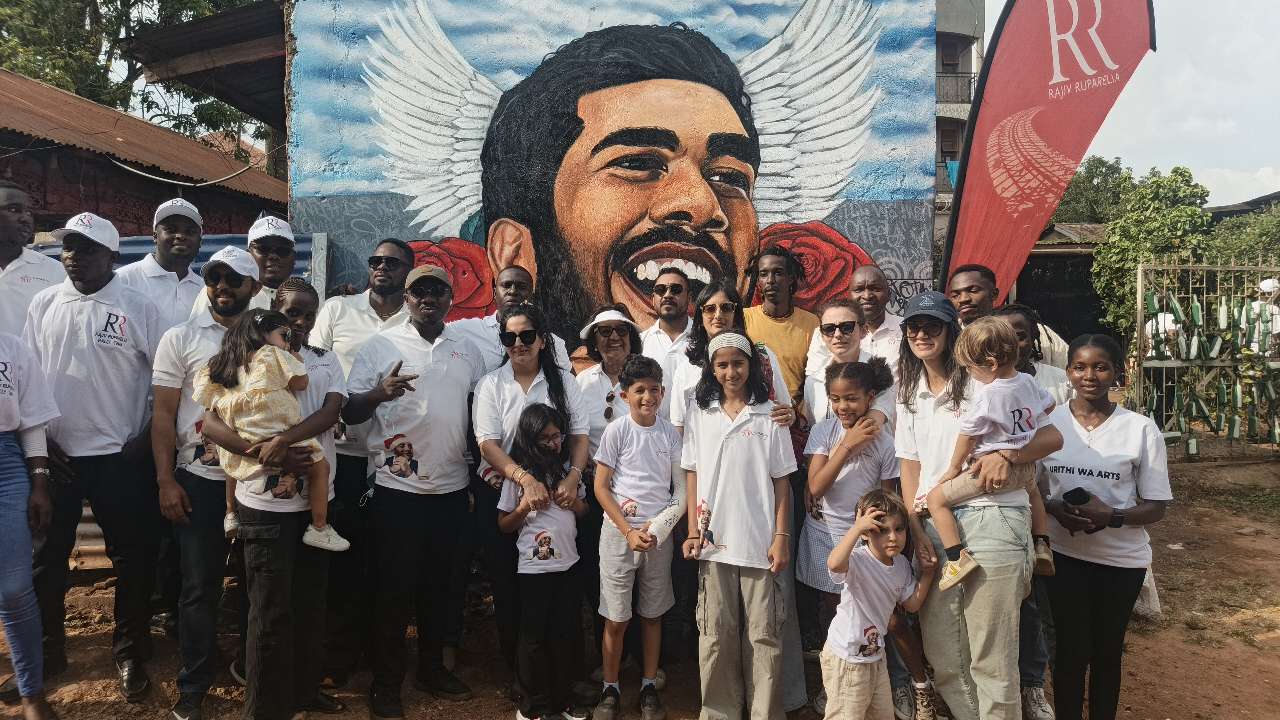
As Christmas approached in Kyebando, the familiar sounds of music and laughter carried a quieter undertone of remembrance. For the third year running, the Ruparelia Foundation returned to the neighbourhood not simply to mark the festive season, but to continue a tradition shaped by the late Rajiv Ruparelia, whose belief in community centred celebration has become a guiding thread in the foundation’s outreach work.
The gathering on Friday drew families, children and volunteers into a shared space that reflected the spirit of the season more through participation than spectacle.
Speaking to residents, Joystina Rupareila said the outreach was rooted in Rajiv’s conviction that Christmas should be experienced beyond private homes and shared with those often left on the margins.

She recalled how he personally initiated the programme two years ago, seeing it as an opportunity to connect joy with responsibility. “He felt Christmas was most meaningful when it was celebrated with the community, especially with children and the vulnerable,” she said, noting that this year’s event was held deliberately in his memory.
What began as a single visit has since evolved into an annual commitment. The programme was carried forward last year under the stewardship of Shina Ruparelia through the Ruparelia Foundation and has now become a fixture on the foundation’s calendar.

Organisers say the aim is not only to offer seasonal support, but to build lasting relationships with communities, returning year after year rather than appearing briefly and moving on.
This year’s outreach also looked beyond Kyebando. Plans are already in place to extend the celebrations to Nansana, where about sixty children are expected to take part, with the foundation indicating its intention to add a new location each year. The gradual expansion reflects a cautious approach that prioritises depth of engagement over scale, according to those involved.
Behind the scenes, partnerships played a central role. Annette Kim, a team leader with the Ruparelia Foundation, highlighted collaboration with the Ekilawuli community, a group known for recycling used plastic bottles.
Through the partnership, discarded plastic is cleaned and reshaped into reusable items such as plates, a process that links environmental conservation with everyday utility.
She said the initiative also provides income and skills for single mothers who are involved in collecting and processing the bottles, turning an environmental challenge into an economic opportunity.
Alongside the recycling effort, families received food items, scholastic materials and sanitation supplies, modest interventions that residents said would ease pressures during the holidays. For many children, the day’s activities offered something less tangible but equally valuable, a sense of inclusion in a celebration often shaped by inequality.
Joystina Rupareila thanked Shina Ruparelia and the organising team for sustaining the programme, and thanked partners and volunteers for their support.
As she wished the community a peaceful Christmas and new year, her remarks echoed a broader message that has come to define the foundation’s work.
In remembering Rajiv Ruparelia, the family has chosen continuity over ceremony, allowing his vision to endure through repeated presence and practical engagement rather than words alone.