
Business
Sudhir’s Billion Dollar Empire: How Decades Of Diversification Made Him Uganda’s Most Resilient Tycoon

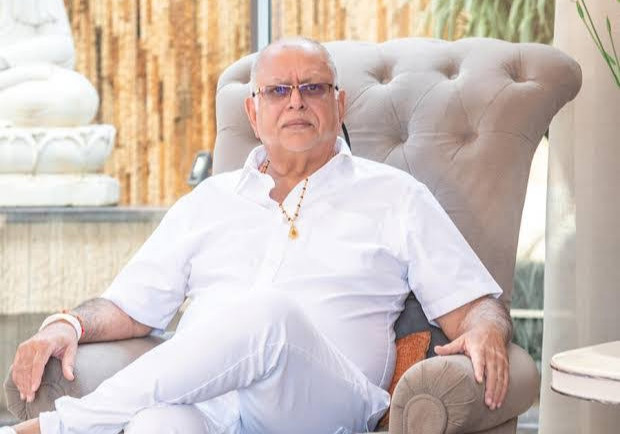
By Gad Masereka
When Forbes Africa once again placed Dr. Sudhir Ruparelia at the top of Uganda’s billionaire ranking with a net worth estimated between USD 1.2 billion and USD 1.6 billion, the listing confirmed what economists, bankers and ordinary Ugandans had long suspected. After four decades of building, surviving and rebuilding, the founder of the Ruparelia Group has emerged as the country’s most resilient tycoon, with an empire whose secret is no longer scale alone, but the depth and discipline of its diversification across sectors that rise and fall at different times.
Speaking to the broader story of his rise, multiple international and regional outlets have in recent months returned to a single question. How did a man who arrived back in Uganda in 1985 with about USD 25,000, after years of exile in the United Kingdom following Idi Amin’s 1972 expulsion of Asians, build one of East Africa’s largest privately held conglomerates? The answer, increasingly, lies less in any single sector and more in the way each new venture has been deliberately layered against the risks of the last.
Real estate forms the visible backbone of the Ruparelia Group. From Speke Resort Munyonyo and Munyonyo Commonwealth Resort to Pearl Tower, Kabira Country Club, Bukoto Heights and a long list of commercial and residential developments, the family controls some of the most recognisable addresses in Kampala. These properties not only generate steady rental and operational income, but also serve as collateral for further expansion, providing the kind of asset base that lenders and partners trust through economic cycles.
Hospitality has been built directly on top of that real estate footprint. By integrating resort, conference and event business into the same properties, the group has tapped into Uganda’s growing tourism and MICE market, while also positioning itself for international events and high end visitors. Speke Resort Convention Centre in particular has redefined Uganda’s capacity to host continental and global gatherings, and helped anchor a brand that competes with the best in the region.
Education, often overlooked in headline coverage, has become one of the empire’s quietest pillars of resilience. Institutions such as Kampala Parents’ School, Kampala International School Uganda and Victoria University combine social impact with stable, long term revenues that are far less sensitive to commodity prices or currency swings than other sectors. For a conglomerate operating in a volatile economy, these schools provide both cash flow visibility and reputational capital.
Insurance, floriculture and broadcasting round out the portfolio, each adding a different kind of stability. Insurance offers predictable underwriting income, floriculture provides foreign currency earnings from export markets, and the media interests give the group a voice in shaping public discourse on business, policy and the economy. Together, these layers produce an empire that is far more shock absorbent than any single line of business could be on its own.
Few episodes illustrated that resilience more clearly than the 2017 closure and sale of Crane Bank, a flagship financial institution which many critics expected would unravel the entire empire. Instead, Dr. Sudhir pivoted decisively. He doubled down on real estate, expanded hospitality, deepened education investments and quietly continued building in insurance and property development. By the time the dust settled, the group had not only survived but emerged with a sharper focus on assets it directly controlled.
Analysts now point to that pivot as a textbook example of African corporate adaptability. “Many businesses collapse after such a setback,” one Kampala based investment consultant observed. “Sudhir restructured, regrouped and grew. That is the difference between a wealthy man and a builder of institutions.” International publications, from BusinessToday in India to financial commentators across the continent, have echoed similar conclusions in profiling his journey from refugee to billionaire.
Just as important as the business architecture is the family architecture behind it. His wife Jyotsna has long played a central role in overseeing finances, while his children Meera, Sheena and the late Rajiv Ruparelia have each held key responsibilities within the group. Even after Rajiv’s tragic death in a road crash in May 2025, the group’s succession structure has held firm, an outcome that many family owned African businesses fail to achieve and that has reassured investors, banks and partners about long term continuity.
Philanthropy has run parallel to all of this. Through the Ruparelia Foundation, the family has invested heavily in education scholarships, eye camps, health interventions and community support programmes, building a public trust dividend that is difficult to quantify but easy to feel in markets and communities where the group operates. For many Ugandans, the Ruparelia name is associated as much with classrooms and clinics as with luxury resorts and high rise developments.
The Uganda Revenue Authority’s ranking of Dr. Sudhir as a consistent top taxpayer, and the more than 10,000 jobs his businesses directly and indirectly support, place the empire firmly inside Uganda’s formal economic engine. In a country where informal employment dominates, that scale of structured, taxed and regulated business activity is itself a contribution to national stability.
Looking ahead, the bigger question is no longer whether the empire will survive its founder’s era, but how its model will influence the next generation of African entrepreneurs. With African economies facing global trade realignments, rising debt pressures and climate driven shifts, the Sudhir Ruparelia approach of patient diversification, disciplined reinvestment, adaptability under stress and deep community engagement is being studied as a blueprint for builders far beyond Kampala. Forty years on from his return from exile, his story has moved from being a personal triumph to becoming a continental case study in how to build, defend and pass on a billion dollar African business empire.