
Business
From Exile To Empire: How Dr. Sudhir Ruparelia’s Disciplined Business Model Has Set The Benchmark For Success Across Africa

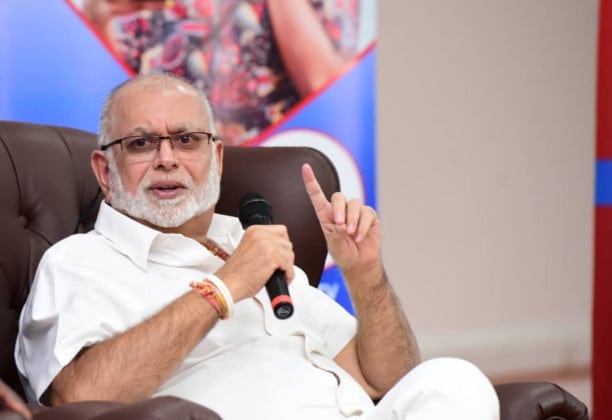
By Gad Masereka
City tycoon Dr. Sudhir Ruparelia has once again been spotlighted as a defining figure in Africa’s entrepreneurial story, with his disciplined and diversified business approach drawing fresh attention from policy analysts, investors and a new generation of African entrepreneurs studying how to build durable enterprises on the continent. The patriarch of the Ruparelia Group, whose conglomerate spans real estate, education, hospitality, insurance, floriculture and broadcasting, is increasingly cited as a case study in resilience at a moment when many African businesses are struggling to stay afloat under inflation, currency pressures and global supply shocks.
From his return to Uganda in the mid 1980s, after years in exile following Idi Amin’s 1972 expulsion of Asians, Dr. Sudhir built his empire from a modest base into a portfolio that today commands billions and directly or indirectly employs over 10,000 Ugandans, according to figures from the Uganda Revenue Authority, which also ranks him among the country’s top taxpayers. That trajectory, from refugee to one of the continent’s most influential industrialists, sits at the centre of what analysts now refer to as the Ruparelia model of African enterprise.
At the foundation of that model is strategic diversification. By placing his interests across multiple sectors, the tycoon has ensured that a slump in one industry does not endanger the broader empire. Properties such as Speke Resort Munyonyo, Munyonyo Commonwealth Resort and the Speke Resort Convention Centre have come to define Uganda’s hospitality and conference tourism profile, while education ventures like Kampala Parents’ School, Kampala International School Uganda and Victoria University anchor a steady, long term revenue stream that is largely insulated from short term market cycles.
Strategic reinvestment is the second pillar of the approach. Profits from real estate are routinely channelled into expansion in hospitality and education, while gains from financial and insurance operations are recycled into new property developments. This deliberate recycling of capital has powered continuous growth without exposing the group to excessive borrowing, a discipline that many emerging African conglomerates have struggled to maintain through volatile economic cycles.
Equally important has been Dr. Sudhir’s patient cultivation of relationships. Over the decades he has built strong networks with political leaders, local entrepreneurs and international investors, allowing his group to navigate Uganda’s business and policy landscape with precision. Those networks have proved especially valuable during turbulent periods, when access, trust and credibility have determined which businesses survive shocks and which ones do not.
His resilience was tested most visibly by the controversial closure and sale of Crane Bank in 2017, an episode that many believed would mark a turning point for the worse. Instead, the tycoon pivoted decisively to real estate and hospitality, expanding rather than shrinking his footprint. Industry observers now point to that pivot as one of the most studied corporate recoveries in East Africa. “Many businesses collapse after such a setback. Sudhir restructured, regrouped and grew. That is the difference between a wealthy man and a builder of institutions,” one Kampala based investment analyst noted.
Innovation has been another distinguishing feature, particularly in education, where his institutions combine modern facilities with high academic standards and have steadily moved beyond profit making to become engines of workforce development. Kampala International School Uganda and Victoria University, in particular, are now central to discussions about how private capital can complement public systems in delivering quality education to East African students.
The Ruparelia Group is also not a one man show. His children Rajiv, Meera and Sheena Ruparelia have held key roles within the group, ensuring continuity, youthful innovation and an orderly succession plan that has reassured both partners and lenders. Even after the tragic death of Rajiv Ruparelia in May 2025, the group’s leadership has demonstrated structural stability, a quality that few African family businesses achieve and that international investors increasingly look for when evaluating long term partnerships on the continent.
Philanthropy has been an inseparable part of the story. Through the Ruparelia Foundation, the family has channelled significant resources into education, health and poverty alleviation, with eye camps, school support programmes and community interventions that have impacted thousands of lives across Uganda. Beyond their social value, these initiatives have built a reservoir of public trust that has reinforced the credibility of the group’s commercial ventures.
His enduring influence was recently recognised with the Lifetime Achiever Award at the Pan African Pyramid Awards, an honour that placed him firmly in the league of continental icons whose careers have shaped Africa’s post independence private sector. For a generation of African entrepreneurs looking for a homegrown blueprint, Dr. Sudhir Ruparelia’s combination of diversification, reinvestment, adaptability and community impact now stands as one of the clearest case studies of how to build, defend and grow an empire under African conditions, and not just for Uganda, but for the continent at large.