Breaking News
Giving patients a voice: The community Led Monitoring effort to improve healthcare in Karamoja

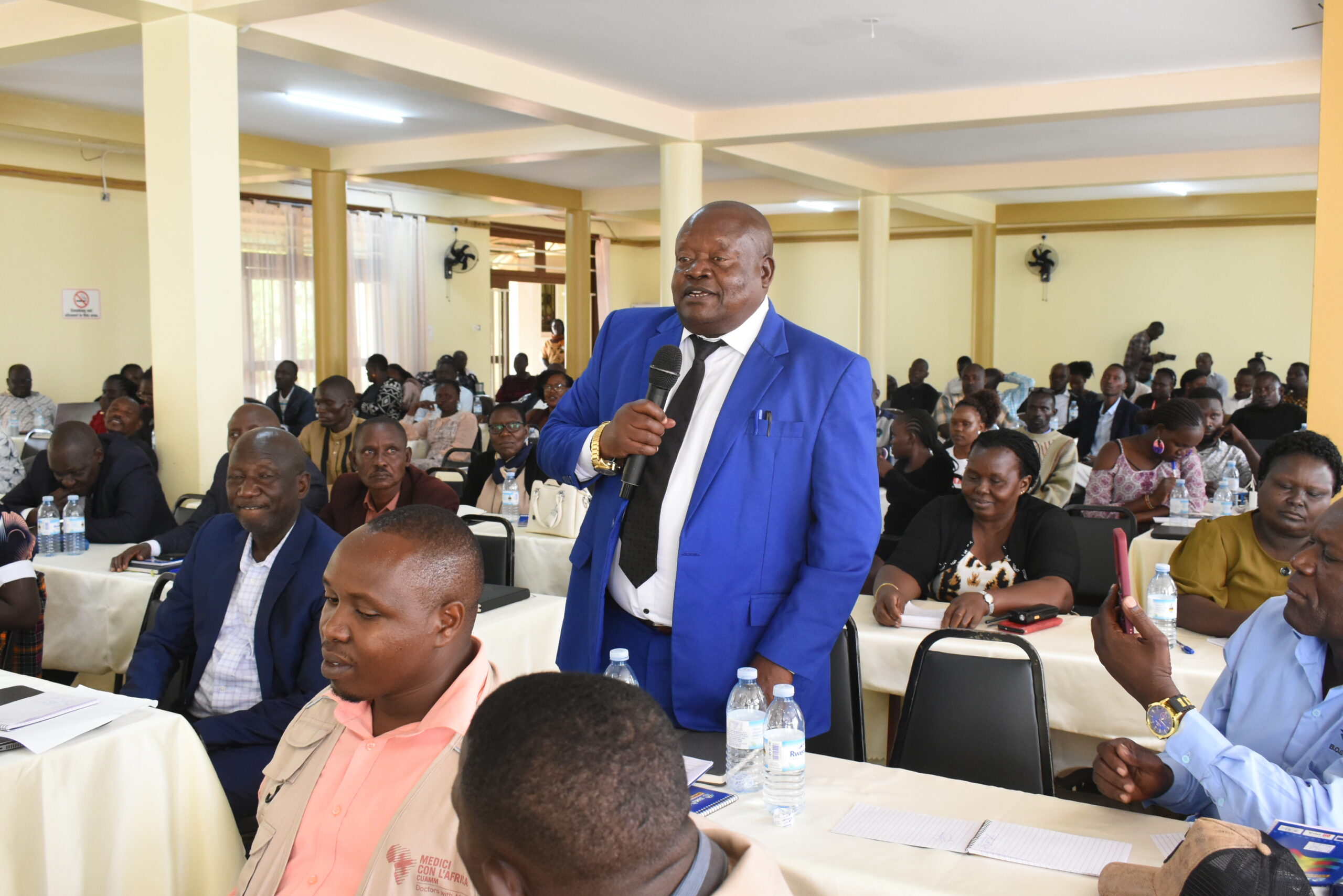

By Richard Onapatum
A call for help reached Kotido Resident District Commissioner Charles Ichogor. Two patients reportedly needed surgery, but a lack of electricity at the health facility threatened to delay their treatment.
Recounting the incident during the final regional community-led monitoring dialogue symposium for the Karamoja Cluster, held at Sparrow Hotel in Soroti on Thursday, November 12, 2026, Ichogor said he received an urgent call from a trained community advocate alerting him to the situation.

He said he responded to the alert and went to the facility, where the power challenge had become an obstacle to providing the required medical care.
For Ichogor, the incident demonstrated the importance of community-led monitoring (CLM) in connecting people experiencing service delivery challenges with leaders who can intervene.
But it also raises a bigger question facing healthcare delivery in Karamoja: when patients and communities speak about failures in healthcare, who listens, and what happens afterwards?
When patients become part of the accountability process
Community-led monitoring is being used to document challenges affecting health service delivery and bring them to the attention of health workers, district leaders and other responsible authorities.
The approach gives communities a structured role in identifying service gaps, collecting evidence, engaging duty-bearers and following up on proposed solutions.
Rather than relying exclusively on official inspections or administrative reports, community monitors can document what patients experience when they seek care, including medicine stock-outs, long waiting hours, inadequate staffing, delays in laboratory services, poor infrastructure and conditions that compromise privacy.

The regional symposium brought together community representatives, health service providers, district leaders, community-based organisations and other stakeholders to review evidence from the monitoring process and discuss unresolved service delivery challenges.
Project supervisors from the participating implementing organisations led presentations of the monitoring findings, sharing evidence gathered from the facilities and communities where the exercise was conducted.
The third cycle of community-led monitoring covered 40 health facilities across eight districts: Kotido, Abim, Moroto, Amudat, Amuria, Kapelebyong, Dokolo and Bugiri.
Kiplangat Walter, the programme’s Monitoring and Evaluation Officer, reported the 40-facility coverage during the symposium. The meeting provided an opportunity for district leaders, community-based organisations and community advocates to review findings, share lessons and discuss unresolved service delivery challenges.
The engagement also allowed participants to discuss practical actions that could improve the quality, accessibility and accountability of health services.
The initiative is funded by the Global Fund through The AIDS Support Organisation (TASO), with Doctors with Africa CUAMM supporting the programme. Community-based organisations have played a central role in collecting information, engaging communities and presenting service delivery concerns to responsible authorities.
The funding arrangement places community monitoring within a wider effort to strengthen health systems and improve access to essential services. It also raises questions about how the work can be sustained after the current funding period.

What the monitoring revealed
Findings presented during the symposium pointed to challenges extending beyond individual health facilities.
Naluwede Edith Kotenge, a team leader involved in monitoring in Bugiri, presented concerns documented in 14 health centres in the district. Among the issues raised were long waiting times, medicine stock-outs, laboratory delays and privacy challenges for patients.
Participants also discussed land ownership issues affecting government health facilities, insecurity in some communities and the need to strengthen the training of community health extension workers.
Understaffing was identified as a challenge affecting many of the monitored facilities.
These concerns illustrate the range of issues that community monitoring can bring to the attention of health authorities. While some relate directly to the availability of medicines and personnel, others concern how patients are received, how quickly they are attended to and whether facilities have the basic conditions required to provide services.
For patients, such shortcomings can mean spending hours waiting for attention, failing to receive prescribed medicines or struggling to access timely treatment.
Amudat’s staffing and referral challenges
Amudat District emerged as another example of the pressures facing healthcare delivery.
The District Health Officer reported staffing levels at 18 per cent during the regional discussion, underscoring the scale of the human resource challenge reported by the district.
Amudat Resident District Commissioner Denis Okori said the district has 11 sub-counties, with seven health facilities operating at Health Centre II level. He described staffing as critically low and said recruitment had been complicated by political issues.
The two accounts point to the same underlying concern: health facilities are expected to serve communities across a large geographical area despite serious constraints in the number of available health workers.
Okori also thanked CUAMM for supporting fuel for the district ambulance used to assist pregnant women, highlighting the importance of referral support for expectant mothers who need access to higher-level medical care.
His remarks brought attention to the link between staffing, transport and access to essential services. Even where a health facility identifies a patient requiring referral, the absence of transport or fuel can delay access to further treatment.
The staffing situation also raises questions about how districts can recruit and retain health workers, particularly where wage-bill limitations and other administrative challenges affect recruitment.

Electronic registration: When technology becomes another barrier
The challenges facing health facilities are not limited to shortages of staff, medicines and infrastructure. The transition to digital health records has also created difficulties for some service users.
Akongo Sophia Lowari, NARWOA’s Project Officer, raised concerns about delays associated with electronic registration, explaining that the process can slow down patients seeking health services. She also highlighted challenges relating to health workers taking study leave.
Her contribution points to another dimension of healthcare accountability: improving infrastructure and staffing alone may not be enough if administrative procedures also create barriers for patients seeking care.
Stakeholders also raised concerns about unreliable internet connectivity, tablets freezing during use and inadequate electricity in some health facilities. They called for improved connectivity, appropriate equipment and practical support to help health workers use digital systems effectively.
The action-plan discussions also highlighted the need for more reliable internet and functional equipment. The Ministry of Health’s reported procurement of new tablets was raised as part of efforts to improve the use of electronic health systems, although participants stressed that devices alone would not solve connectivity problems.
Electronic systems are intended to improve patient information management and service delivery. However, without reliable infrastructure and adequate technical support, the registration process can become another source of delay, particularly in remote communities.
The Ministry wants community monitoring institutionalised
The discussion has implications beyond the districts involved in the monitoring exercise.

Dr George Opentho, Commissioner for Community Health at the Ministry of Health, said the ministry recognises community-led monitoring as an important accountability tool and wants the approach institutionalised.
He indicated that work on a national framework for community-led monitoring had been moved forward within the ministry, stressing the need to establish it as a recognised approach to strengthening health service accountability.
Opentho cautioned, however, that community-led monitoring should not replace existing community barazas or performance reviews. Instead, it should complement these processes by bringing evidence from service users into discussions about health service performance.
“There is nothing for us without us,” he said, emphasising the importance of involving communities in identifying the indicators against which service delivery should be assessed.
His message places patients and other service users at the centre of efforts to improve healthcare.
The commissioner also pointed to the potential of expanding community-led monitoring beyond HIV services to other health priorities, including nutrition.
The ministry’s position signals an intention to sustain the approach beyond individual projects. However, the practical details of institutionalisation, including implementation arrangements, financing and responsibilities at district level, remain important questions
From complaints to action
For community-led monitoring to make a lasting difference, documenting a problem is only the beginning.
The concerns raised must reach the relevant authorities, attract a response and be followed up to establish whether the promised action has happened.
Ichogor described working with the NARWOA team to visit health facilities after receiving information from community advocates. He said he offered his vehicle to facilitate the visits, adding that community monitors could help connect people experiencing service delivery challenges with district leaders.
He also called for action against health workers found issuing incorrect prescriptions to patients and asked the Ministry of Health to address medicine stock-outs.
The regional discussions produced other proposals to address specific service delivery challenges.
On referral services, participants discussed pooling fuel to support patients who need to be transferred to higher-level facilities. Transport vouchers supported by CUAMM were cited as an approach that had worked in Kotido.
Other proposals included strengthening birth preparedness plans, training village health teams and community health extension workers, improving participation in community barazas, repairing hospital beds and engaging religious and cultural leaders on practices affecting access to healthcare.
Participants also called for better mentorship of health workers, improved internet connectivity and clearer roles for traditional birth attendants, including training them to operate within their defined responsibilities.
For staffing gaps, participants discussed the need to address wage-bill constraints and improve coordination around health workers pursuing further studies so that facilities are not left understaffed.
These proposals offer possible responses, but their value will depend on whether responsible institutions translate them into funded and measurable action.
Leadership and community ownership matter
The sustainability of community-led monitoring depends not only on funding but also on whether institutions and communities have clear structures for acting on the findings.

Dr Bernard Michael Etukoit, TASO’s Executive Director, described CLM as a powerful social accountability mechanism and emphasised the importance of defined leadership responsibilities.
Using school management as an example, he argued that accountability structures must be established at different levels, with clearly identified people responsible for taking the process forward.
His argument highlights a practical challenge: collecting evidence is not enough if there are no clear structures to receive concerns, engage responsible officials and monitor whether agreed actions are implemented.
Amuria district’s representative, Mr Etonu Vincent, also highlighted the value of community monitoring to local leadership. He said the process had helped district leaders have information about service delivery challenges at their fingertips and enabled communities to participate in monitoring services in their own areas.
He observed that continued community participation could help reduce blame by giving residents and leaders shared information about service delivery challenges. He also appealed for sustained financial support so that the monitoring work could continue and communities could benefit from improved services.
His remarks point to the importance of connecting community evidence with the responsibilities of local government. When people can document what happens in health facilities and raise it with responsible leaders, accountability becomes a shared process rather than an exercise left entirely to health authorities or implementing organisations.
Global Fund support and the question of sustainability
The future of community-led monitoring is closely tied to the funding and institutional arrangements supporting the programme.
Mr Chemuko Wakuri Fred, a substantive representative for the Malaria Constituency on Uganda’s Country Coordinating Mechanism for the Global Fund, emphasised local ownership as a foundation for sustainability.
He encouraged community organisations, district leaders and other stakeholders to take responsibility for the monitoring process rather than treating it as an activity that belongs only to implementing organisations or external funders.
He argued that when communities own an initiative, they are more likely to protect it, use its findings and continue demanding improvements. He also called for attention to primary healthcare and the use of appropriate knowledge in strengthening health systems.
The meeting also heard concerns about the approaching end of the current Global Fund grant cycle in 2026 and the uncertainty surrounding future support for community-led monitoring activities.

Dr Peter Lochoro, CUAMM’s Country Representative in Uganda, acknowledged the challenges brought to light through community-led monitoring and said the findings had helped stakeholders identify problems and possible solutions.
He encouraged organisations not to shy away from documenting service delivery challenges and indicated that he would advocate for continuation of the activities if further funding became available.
His remarks highlighted the importance of the evidence generated through community monitoring, even where immediate solutions may not be available. The findings can help communities, health workers and district authorities understand persistent gaps and identify areas requiring intervention.
But continued funding alone may not guarantee sustainability. District authorities and the Ministry of Health will also need to define how community monitors can be supported, how findings will feed into health planning and how unresolved problems will be followed up when project funding ends.
Without clear arrangements for financing and institutional support, communities could continue documenting problems without having the resources or authority to ensure that solutions are implemented.
The Ministry’s commitment to institutionalising the approach is therefore significant, but it will need to be matched by practical guidance, responsibilities and resources.

The real test is what happens next
The regional symposium highlighted five central steps in community-led monitoring: listen, analyse, engage, act and follow up.
The five pillars describe a process that begins with hearing communities and ends with checking whether concerns have been addressed. Listening allows patients and service users to raise problems. Analysis helps identify and understand service gaps. Engagement brings the evidence to responsible authorities. Action addresses the identified problems, while follow-up establishes whether agreed interventions have been implemented.
In his formal closing remarks, Ichogor urged participating community-based organisations to carry the monitoring tools back to their areas and continue using them. He encouraged stakeholders to apply the approach beyond healthcare, including in monitoring government programmes such as the Parish Development Model and Emyooga.
For patients in Karamoja and the other participating districts, however, the value of the process will not be measured by the number of meetings held or reports produced.
It will be reflected in whether medicines are available when prescribed, whether health facilities have enough staff, whether referrals are completed and whether patients receive respectful and timely care.
Dr Opentho’s call for community-led monitoring to become institutionalised offers a national direction. The Global Fund’s support has helped make the monitoring work possible, while the contributions of TASO, CUAMM, community organisations and district authorities have provided structures through which community concerns can reach decision-makers.
The challenge is to ensure that these efforts continue beyond the current funding period and become part of routine health service accountability.
The two patients whose surgical treatment was reportedly threatened by a lack of electricity illustrate why these efforts matter. Their experience, as recounted by the Kotido RDC, demonstrates the importance of having channels through which communities can alert those responsible for public services.
But one alert and one intervention cannot establish whether the wider system is improving.
The enduring question is whether every concern raised by a patient can trigger a response, and whether that response can be tracked until the problem is resolved.
For community-led monitoring to fulfil its promise, giving patients a voice must be followed by giving their concerns the attention, resources and action they deserve.
Send Us Your Story
If you would like your article or opinion published on The New Light Paper, one of Uganda’s trusted news platforms, send your submission to thenewlightpaper@gmail.com.