Business
Improved Rice Farming Boosts Incomes, Strengthens Peace Among Refugees, Host Communities In West Nile

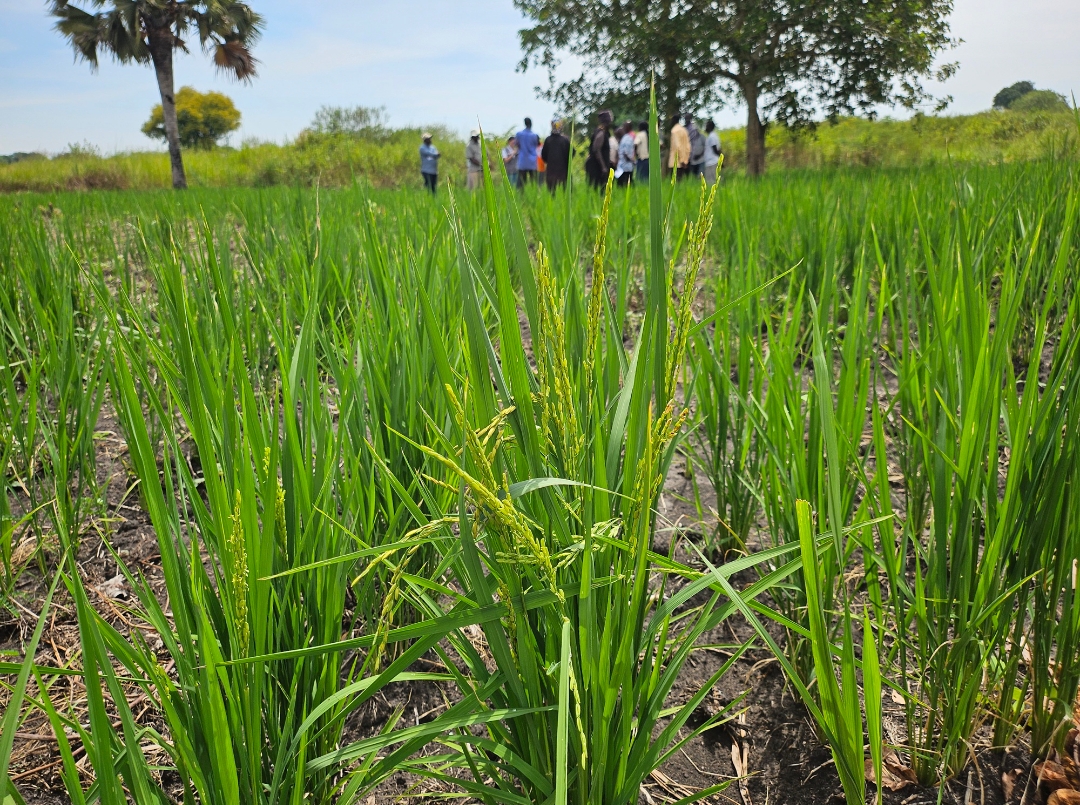
Farmers in refugee settlements and host communities in Yumbe and Madi Okollo districts are recording higher rice yields and improved earnings after adopting improved seed varieties and modern farming techniques under a Japan-funded initiative designed to strengthen women’s economic empowerment and promote peaceful coexistence.
The gains, documented during a joint monitoring mission to project sites on October 19, 2026, highlight how agricultural investment is helping vulnerable communities confront food insecurity, climate-related challenges and economic pressures that can heighten tensions over scarce resources.

The project, known as the Implementation of the Women, Peace and Security Agenda in Refugee Settlements and Host Communities, is funded by the Government of Japan, with UN Women Uganda as the grant recipient. Peace Winds Japan is collaborating in implementation, alongside partners including the National Agricultural Research Organisation (NARO), which is responsible for the agricultural livelihoods component.
Through the intervention, farmers are receiving practical training in improved rice production and quality seed, particularly the NERICA 4 variety, which is known for its tolerance to certain rice diseases and some drought conditions. The programme seeks to strengthen women’s participation in economic activities while improving household resilience in communities affected by displacement and humanitarian challenges.
For Taban Rashid, a farmer from Pitia village in Kululu sub-county, Yumbe district, the training has brought a substantial change in both his farming methods and income. Having participated in training under the MUSHO project since 2025, Rashid said he previously relied on broadcasting, a method of scattering seeds across a field, which required more seed and made weeding labour-intensive.
“I would usually use 50 kilogrammes of seed to plant an acre, and weeding one acre would take me 15 days,” he said.
The old practices also contributed to post-harvest losses and poor rice quality, reducing the returns he earned after milling. Before receiving the training, Rashid harvested approximately eight bags of rice per acre and earned about sh800,000.
After adopting the recommended practices, his harvest increased to 25 bags per acre, while his earnings rose to approximately sh2.5m. The improvement has also enabled him to share his knowledge with other farmers, extending the benefits beyond his own garden.
“I used to blame the milling machine for breaking my rice. But with the knowledge I got from JICA, I came to learn that the quality is made in the garden, protected in the store, and the machinery only reveals the work you did from planting to storage,” Rashid said.
His experience illustrates the project’s emphasis on the entire production chain, from seed selection and planting to harvesting, handling and storage. The approach seeks to ensure that increased production translates into better-quality grain and improved market returns.
Natasha Butorac, the Women, Peace and Security Specialist at UN Women, said the initiative recognises the relationship between climate change, competition for natural resources and conflict in refugee-hosting areas.
“Part of the aim of this intervention is to bring in drought-resilient and disease-resilient varieties of rice,” she said.
Butorac explained that improved agricultural productivity can strengthen household food security, create income-generating opportunities and ease economic pressures that sometimes contribute to tensions between communities. She said the programme also supports Uganda’s Women, Peace and Security National Action Plan, which identifies climate-related risks as an emerging concern for peace and security.
The initiative builds on lessons from the Japan International Cooperation Agency-supported Eco-PRiDe Rice project, which demonstrated the potential of improved rice production but needed stronger participation by women.
“But by this project, I’m really happy to say that the vast majority of the farmers who are taking part are women,” Butorac said, noting that their participation is challenging perceptions that women cannot effectively engage in agricultural production.
At the implementation level, NARO is using a practical training model known as the “Musomesa” field school approach, which combines group demonstrations with individual farmer practice. Dr Emmanuel Odama, a senior research officer at NARO, said the model allows farmers to learn together and apply the same techniques in their own gardens.
Under the system, a group establishes a demonstration plot known as a “mother garden”, while individual participants maintain their own “baby gardens” to replicate the recommended practices.
“While we are planting in the mother garden, individual farmers should be planting in their baby gardens concurrently. When we are planting in line, you should be planting in line,” Odama said.
The approach is intended to move farmers beyond theoretical instruction by enabling them to practise improved techniques throughout the growing season. Participants are required to have access to at least half an acre of land to take part in the programme.
Beyond its agricultural objectives, the project is also fostering cooperation between refugees and host communities. Odama said some host community members have offered portions of their land to refugees, helping them participate in farming beyond the land access arrangements traditionally available through the Office of the Prime Minister.
Such cooperation, he said, is strengthening mutual understanding between the two groups while giving refugees greater opportunities to engage in productive activities and improve their livelihoods.
The benefits are particularly significant in an area where prolonged dry conditions have threatened agricultural production. During the monitoring mission, officials inspected demonstration gardens to assess implementation, progress, results and challenges arising from the extended drought.
Despite the unfavourable weather, the NERICA 4 demonstration plots had shown encouraging results, according to project officials and participating farmers. Odama said the variety’s tolerance to certain diseases and some drought conditions had helped it withstand conditions that could severely affect other varieties.
“If we had local varieties of rice, we would not be able to see anything here,” he said, referring to the impact of the prolonged dry spell on the demonstration gardens.
Amaku Shaban, chairperson of the Dongoloto Farmers Group in Kululu sub-county, said the new seed and training in line planting had helped farmers sustain production despite the difficult weather.
“We were doing broadcasting; now we sow in line, and they also brought us a new seed variety called NERICA 4. It is disease- and drought-resistant. If it was our ordinary variety, we wouldn’t have any crop to see,” Shaban said.
He added that the training and improved seed had renewed farmers’ confidence in their ability to improve household livelihoods, even as changing weather patterns make farming increasingly unpredictable.
Dr Moses Biruma, director of research at NARO’s Abi Zonal Agricultural Research and Development Institute in Arua, said a needs assessment conducted before the intervention identified rice growing as the preferred agricultural enterprise among the targeted farmers. The project subsequently focused on addressing their needs through improved seed, practical training and better production and post-harvest handling methods.
NARO is monitoring performance against baseline data collected before implementation, using the adoption of recommended practices and improvements in yields as key indicators of progress. The findings are expected to help establish whether the intervention is delivering sustainable benefits to participating households.
For women in Bidi Bidi and neighbouring host communities, the significance of the programme extends beyond the amount of rice harvested. Better farming practices can improve household incomes and food supplies, while shared access to land and collaborative training can strengthen relationships between refugees and their hosts.
The experience in West Nile demonstrates how agricultural development can contribute to wider peacebuilding efforts when communities are equipped with practical skills, climate-responsive technologies and opportunities to work together. Sustaining these gains will depend on continued access to quality seed, effective extension support and farming methods capable of responding to increasingly unpredictable weather.
Send Us Your Story
If you would like your article or opinion published on The New Light Paper, one of Uganda’s trusted news platforms, send your submission to thenewlightpaper@gmail.com.