Business
35 Years of Stanbic: How One Bank Grew With Uganda’s Changing Economy

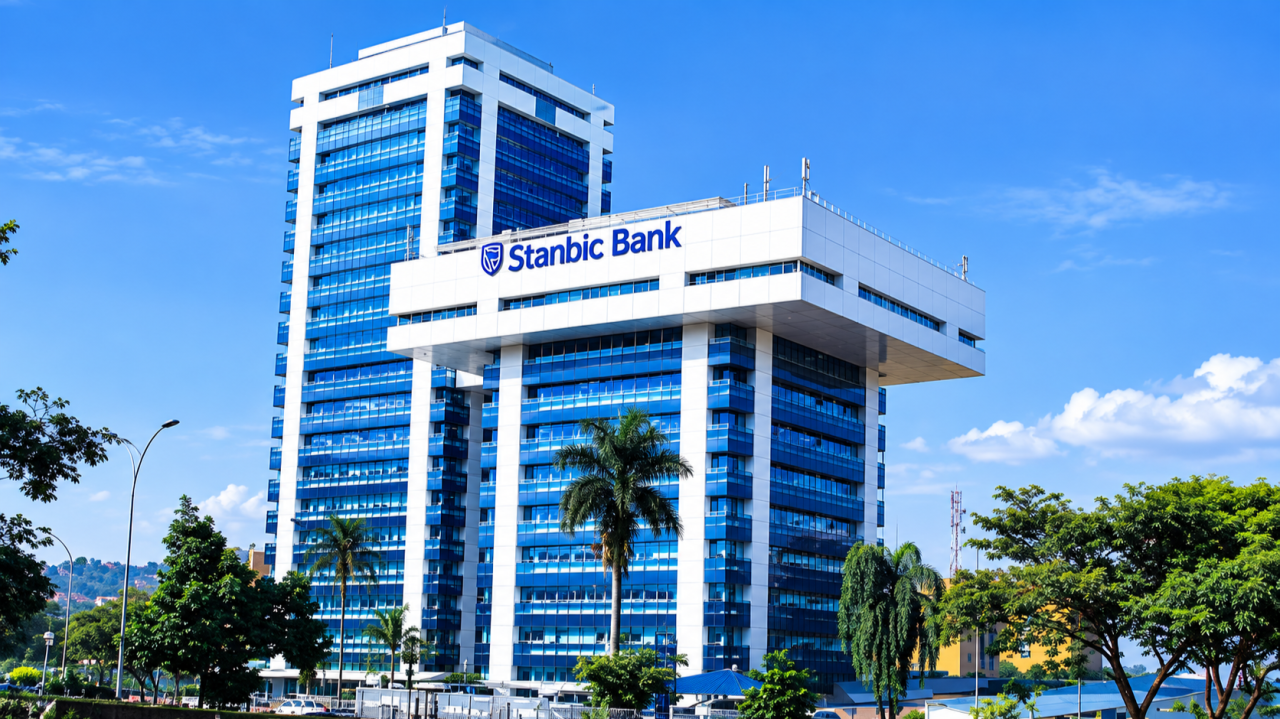
KAMPALA: In 1991, investing in Uganda required a degree of confidence that was not obvious from the condition of the country.
Kampala still carried physical scars from the wars of the previous decade. Industrial towns had lost factories. Roads were in poor condition. A banking crisis was emerging, HIV/AIDS was taking a heavy human toll and armed conflict continued in parts of the country.
It was into that environment that Standard Bank Group deepened its presence in Uganda through the acquisition of Grindlays Bank of East Africa.
Thirty-five years later, Stanbic’s anniversary is being presented as more than a corporate milestone. It is a story about a financial institution whose fortunes became tied to Uganda’s economic recovery.
The early decision was a long-term bet.
Michael Wakabi, who was a young journalist at the time, recalled an economy in which international banks were increasingly concentrating their operations in Kampala and many investors remained uncertain about the future.
Yet Standard Bank saw the possibility of recovery.
That conviction became more important in 2002 when the government privatised Uganda Commercial Bank.
Stanbic’s acquisition and subsequent merger transformed the lender from a relatively niche operation into a bank with a national footprint and a much larger role in the economy.
The transition was overseen by a succession of executives, beginning with international leaders and later moving toward Ugandan leadership.
Kitili Mbathi became the bank’s first African chief executive in 2001 and steered the institution through the UCB acquisition and integration. Philip Odera later led the bank, followed by Patrick Mweheire, the first Ugandan to head the lender, Anne Juuko, its first female chief executive, Samuel Mwogeza in an interim role, and Mumba Kenneth Kalifungwa, who became substantive chief executive in 2025.
The leadership changes mirrored a broader transformation in Uganda itself.
The country moved from reconstruction toward economic expansion, private enterprise and greater financial sophistication.
Stanbic increasingly positioned itself not merely as a bank but as a financier of productive sectors including agriculture, manufacturing, infrastructure, energy and trade.
Its “Uganda is Home. We Drive Her Growth” purpose statement became a shorthand for that approach.
The significance of the statement lies in what it demands from an institution. If Uganda is home, the relationship cannot be purely transactional. A bank must be concerned with whether the businesses it finances grow, whether households gain access to useful financial services and whether productive sectors receive capital.
Over three and a half decades, the institution has also expanded initiatives aimed at women entrepreneurs, farmers, young people and businesses moving from informal to formal operations.
Today, the country’s problems are different from those of 1991, but the underlying question remains remarkably similar.
How does Uganda turn potential into broad-based prosperity?
The next phase will require more industrialisation, stronger regional trade, greater energy supply, better infrastructure and productive employment for a rapidly growing population.
For Stanbic’s current leadership, the 35-year milestone is therefore less about looking backwards than demonstrating that the institution remains willing to invest in Uganda’s next chapter.
The original decision was made when certainty was scarce.
Its legacy will ultimately depend on whether the same long-term confidence can be applied to the opportunities and challenges now emerging.
Thirty-five years after the first bet, Uganda is no longer the fragile economy it was in 1991.
The bank that arrived during reconstruction has grown alongside the country.
That shared history is the real anniversary story.
Send Us Your Story
If you would like your article or opinion published on The New Light Paper, one of Uganda’s trusted news platforms, send your submission to thenewlightpaper@gmail.com.


