Politics
Adokorach Demands Level Playing Field in National Women Council Race

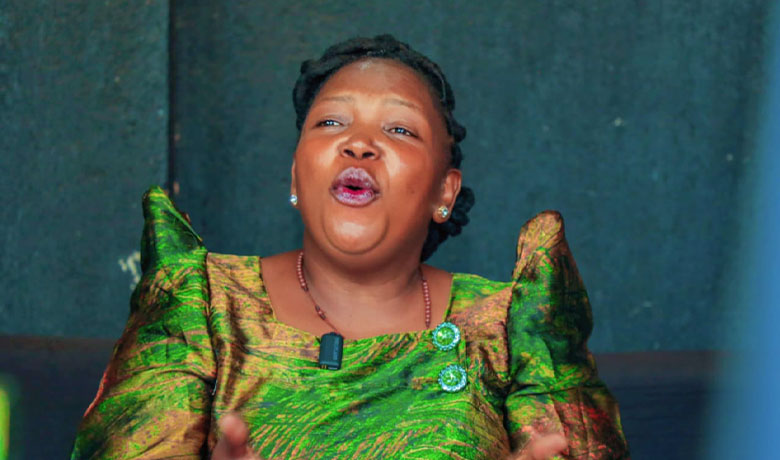
KAMPALA — The contest for leadership of Uganda’s National Women Council has opened a debate about one of the most basic requirements of an election: whether candidates are able to meet the people who will choose between them.
National chairperson aspirant Irene Adokorach has appealed for a level playing field, asking authorities to ensure that all candidates have equal access to delegates so they can present their programmes and answer voters’ questions.
Her appeal is directed at President Yoweri Museveni, the NRM Secretariat and the Electoral Commission, whose roles intersect with the organisation of the electoral process.

Adokorach says some delegates are allegedly being kept away from candidates and that communication has been made more difficult in some instances by phones being switched off.
Her concern is practical.
A candidate cannot effectively campaign to voters she cannot meet.
“If you don’t have access to delegates, how are you going to put your manifesto where all the delegates are kept?” she asked.
She also called for clarification and enforcement of the rules governing candidates’ access to delegates, noting that the Electoral Commission had previously indicated that no contestant should be allowed to keep delegates.
The dispute over access comes as the National Women Council attracts greater political attention.
Adokorach argues that the council should remain a grassroots platform where women from different regions can debate their priorities and choose leaders based on programmes rather than wealth or political sponsorship.
Her campaign places particular emphasis on women in rural communities.
She cited districts including Kiryandongo, Gulu and Mbarara as examples of places where women’s concerns should be represented more directly in national conversations.
Her broader question is one that has confronted women’s empowerment programmes for years: who exactly benefits from them?
Adokorach says national policy should not focus only on urban and already organised groups while women in villages remain less visible in decision-making.
She also criticised what she described as the growing influence of money in political contests.
Her argument is that leadership should be judged on competence, ideas, record and the ability to solve problems rather than the size of a candidate’s financial resources or the strength of political connections.
That position is particularly relevant in internal elections where access to organisational networks can shape a candidate’s ability to reach delegates.
Adokorach said some aspirants do not have powerful sponsors or what she called “godfathers” but should still be given the opportunity to compete.
The aspirant also congratulated women who won district-level contests and encouraged those who lost not to abandon political participation.
She credited the outgoing leadership with helping raise the profile of the Women Council, saying the recent electoral experience had demonstrated that the institution is no longer treated as a minor political structure.
She also acknowledged Hajjat Hadijah Namyalo for giving her opportunities to participate in NRM mobilisation activities.
The immediate issue, however, remains the electoral process.
Whether Adokorach’s concerns result in changes will depend on how the relevant authorities respond and whether candidates are ultimately given comparable access to the delegates who will determine the outcome.
For the Women Council, the larger test is credibility.
An institution intended to represent women can only command confidence if its own leadership contests are regarded as open, competitive and fair.
That means access to voters cannot be treated as a privilege for a few candidates.
It is the foundation on which the legitimacy of the final result will rest.
Send Us Your Story
If you would like your article or opinion published on The New Light Paper, one of Uganda’s trusted news platforms, send your submission to thenewlightpaper@gmail.com.