Environment
ECOTRUST Takes Quality-First Approach To Commercial Forestry As Termite Threat Undermines Uganda’s Tree Planting Gains

By Gad Masereka
Uganda has planted millions of trees in recent years, but a persistent and largely invisible enemy has been quietly undoing much of that work. Termite infestations continue to kill young seedlings before they can take root, not because farmers lack the will to plant, but because the pesticides most widely available to them do not work well enough. A training session held in Hoima on March 25 marks the beginning of a concerted effort to change that reality.
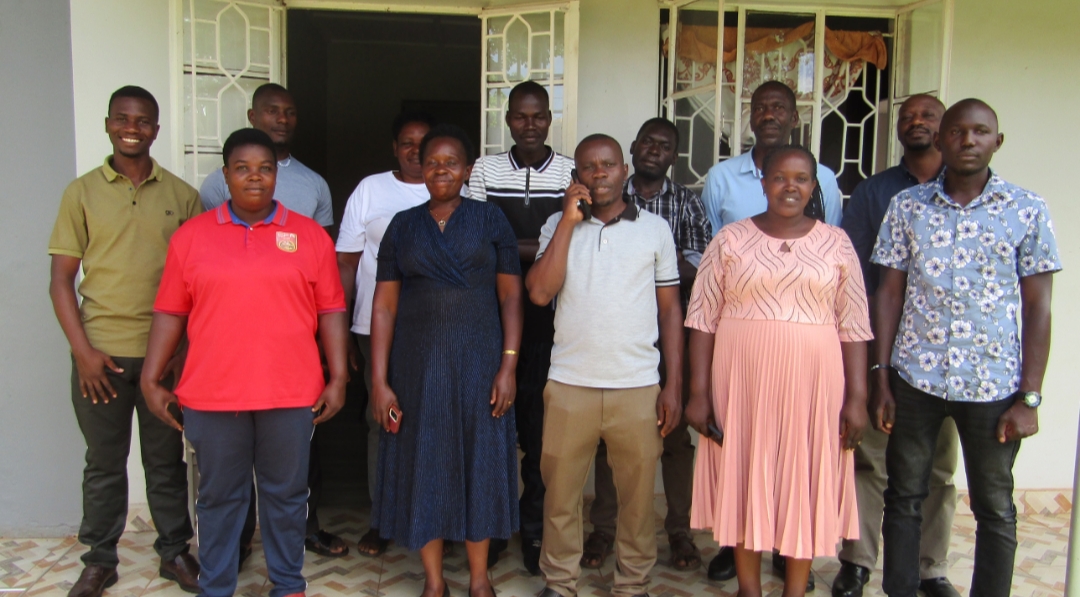
The Environmental Conservation Trust of Uganda convened a Training of Trainers session at its Hoima offices, gathering programme officers, forest assistants and nursery managers from ECOTRUST, NIRAS International Consulting Uganda and Green Life International. These three organisations are key implementing partners under the Investing in Forests and Protected Areas for Climate-Smart Woodlots programme, known as IFPA-CD, a government-led initiative implemented through the National Environment Management Authority with technical and financial support from the World Bank.
The session was designed to equip frontline practitioners with the knowledge and skills they will pass directly to farmers engaged in commercial tree planting across Uganda.
As the primary link between the project and the communities it serves, these trainers carry significant responsibility: the quality of guidance they provide will determine whether woodlots survive or fail.
Paul Edyangu, an experienced tree crop farmer who facilitated the session, brought the core challenge into sharp focus. The problem, he explained, is not simply that termites exist, but that the pesticides farmers most commonly reach for are fundamentally the wrong tools for the job. Products such as Ambush, Rabada and Imida are widely available and affordable, but they work by repelling termites rather than eliminating them, allowing colonies to survive, regroup and return to cause further damage.

The project is promoting an alternative: Termidor, a non-repellent pesticide that operates on an entirely different principle. Because termites cannot detect its presence, they carry it back into the colony, spreading it among fellow insects over time until the colony is effectively eliminated.
According to officials, a single application protects seedlings for up to 90 days, a window that Edyangu described as critical for early tree establishment, and the treatment remains active in the soil for up to ten years. One litre, he noted, is sufficient to treat 64 hectares.
“The selection of Termidor against other pesticides in the market is because of its intricate value. It doesn’t kill instantly, allowing termites to spread 50 metres from the pit where it is applied, allowing the treatment throughout the colony and killing others. Most importantly, a single application guards seedlings for up to 90 days, a critical window for young trees to establish themselves,” Edyangu told participants.
The implications for Uganda’s forest cover are significant. “By using quality termite control, we ensure the trees actually survive to maturity. This is how we move from simply planting trees to actually growing a forest,” he added.
The training also addressed the choice of tree species, spotlighting Eucalyptus as a strategic fit for the project’s dual goals of environmental restoration and economic return. Eucalyptus trees grow rapidly, offering farmers a return on investment within five years in the form of timber and poles for local construction, and maturing into higher-value products including transmission poles, plywood and heavy construction timber by the ninth year.
The combination of fast growth and reliable termite protection is central to the project’s argument that commercial forestry can be both ecologically sound and financially viable for rural communities.
Because Termidor is a potent chemical, a substantial portion of the training was dedicated to safe handling and application protocols. Participants were taken through the correct procedures for personal protection and environmental safety, and those protocols will form part of the guidance passed on to farmers.
The initiative reflects the project’s recognition that equipping people with a powerful tool carries an equal obligation to ensure they can use it without harm to themselves or the ecosystems they are working to restore.
The IFPA-CD Woodlot Project sits within a broader national effort to reverse decades of forest degradation in Uganda. By addressing one of the most common and underestimated causes of seedling mortality, the March 25 training in Hoima represents a practical step toward closing the gap between trees planted and trees that actually grow.
For the farmers at the end of this supply chain, the difference between a thriving woodlot and a field of dead stumps is not just an environmental question. It is the difference between a sustainable livelihood and a wasted investment.



