
News
Hajjat Namyalo Hails Supreme Court Ruling: ‘A Victory For Uganda’s Democracy And Judicial Independence

By Gad Masereka
In a historic decision that has sparked nationwide discourse, Uganda’s Supreme Court has unanimously ruled to end the trial of civilians in military courts, a practice that has drawn criticism for decades. The ruling, delivered on January 31, 2025, in the case of Attorney General v. Hon. Michael Kabaziguruka, has been celebrated as a milestone for human rights and constitutionalism.
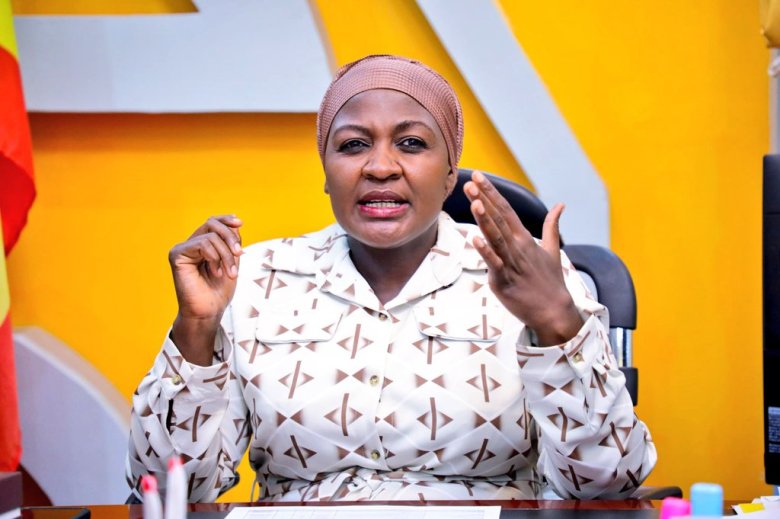
Speaking during NTV Uganda’s Ebigambo Tebitta program, Senior Presidential Advisor on Political Affairs Hajjat Hadijah Namyalo Uzeiye praised the decision, calling it a significant step toward strengthening Uganda’s democracy. “This ruling is a win for both Uganda and the National Resistance Movement (NRM). It demonstrates that our democracy is strong and that our judiciary operates independently,” she stated.
The court’s decision, which prohibits the prosecution of civilians in military courts, has been celebrated by opposition groups and activists who have long criticized the practice as a tool for suppressing political dissent. “This ruling is a testament to the strength of our judiciary and its commitment to upholding the rule of law,” said Dr. Livingstone Ssewanyana, a prominent human rights lawyer and executive director of the Foundation for Human Rights Initiative (FHRI). “It sends a clear message that no one is above the law, and that justice must be administered fairly and transparently.”
However, the ruling has also exposed divisions within Uganda’s political landscape. While Senior Presidential Advisor Hajjat Hadijah Namyalo Uzeiye praised the decision as a sign of Uganda’s growing democracy, President Yoweri Museveni has hinted at potential constitutional amendments to allow military trials for civilians accused of possessing illegal firearms. This has sparked concerns among opposition leaders and civil society groups, who fear that such amendments could undermine the court’s ruling and erode judicial independence.
“The Supreme Court’s decision is a step forward, but the government’s response will determine whether this is a genuine commitment to reform or merely a political maneuver,” said Hon. Betty Nambooze, a member of the opposition Democratic Party. “We cannot allow the executive to circumvent the judiciary’s authority through constitutional amendments.”
The ruling has also drawn attention to the broader issue of military influence in Uganda’s governance. Critics argue that the military has played an outsized role in civilian affairs, particularly in cases involving political dissent. “The military should focus on defending the nation, not prosecuting civilians,” said Dr. Sarah Bireete, director of the Center for Constitutional Governance. “This ruling is an opportunity to reassert the principle of civilian control over the military and ensure that justice is administered by civilian courts.”
As Uganda grapples with the implications of the Supreme Court’s decision, the coming months are likely to be pivotal for the country’s judicial and political landscape. With President Museveni’s proposed constitutional amendments and ongoing debates over the separation of powers, the ruling has set the stage for a broader conversation about the future of democracy and governance in Uganda.
For now, the Supreme Court’s decision stands as a milestone in Uganda’s legal history, but its long-term impact will depend on how the government and civil society respond to the challenges and opportunities it presents.