
Sports
Ebola Travel Curbs Threaten To Lock African Fans Out Of 2026 World Cup As DR Congo Demands Ticket Refunds From FIFA

By Gad Masereka
A wave of Ebola related travel restrictions imposed by host nations of the 2026 FIFA World Cup is threatening to shut thousands of African football fans out of the tournament, triggering anger across the continent and prompting the Democratic Republic of Congo to formally ask FIFA to refund supporters who can no longer travel to the United States. The standoff has turned what should have been a historic footballing moment for Central and East Africa into a bitter debate about fairness, public health and the cost of access to the global game.
At the centre of the crisis is a public health emergency declared by the World Health Organization on May 16, 2026, following an outbreak of the rare Bundibugyo strain of Ebola, which has not been seen in over a decade and for which there is currently no approved vaccine.
Health officials say more than 900 suspected cases and over 220 suspected deaths have been recorded since the outbreak began, with the vast majority concentrated in the Democratic Republic of Congo, particularly in rural eastern districts such as Ituri.
In response, the United States Centers for Disease Control and Prevention announced a 30 day entry ban barring foreign nationals who have been in the Democratic Republic of Congo, Uganda or South Sudan within the previous 21 days.
The United States embassies in Kinshasa, Kampala and Juba have since suspended visa services, a move that effectively strands fans from those countries weeks before the tournament kicks off in the United States, Canada and Mexico in June.
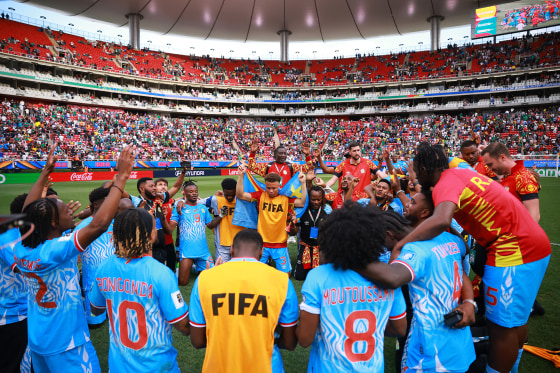
The timing has proved devastating for the Democratic Republic of Congo, whose national team, the Leopards, qualified for the World Cup for the first time since 1974, when the country competed as Zaire. The team itself is still expected to travel and is scheduled to face Portugal on June 17 in Houston, but its supporters now face the prospect of watching from home. To comply with the American restrictions, Congolese fans would have needed to leave the region several weeks in advance, an option few could afford or arrange.
Veron Mosengo-Omba, president of the Congolese football federation Fecofa, said the federation had appealed directly to world football’s governing body for help. “We asked FIFA if it is possible to take this into consideration, because the tickets are a little bit expensive,” he said. “They are punished because they cannot get in to support their team. We don’t want that.” His appeal points to a deeper grievance, that fans who invested heavily in tickets and travel are now bearing the financial cost of a decision taken far above them.
That financial burden is significant. The 2026 World Cup is operating under FIFA’s dynamic pricing system, which has pushed some ticket prices to as much as seven times the cost of equivalent seats at the 2022 tournament in Qatar. For many African supporters who saved for months or years to attend, the combination of steep prices and sudden entry bans has felt like a double penalty. When contacted by international media, FIFA said only that it would look into the matter in due course, noting that its general policy favours ticket resale or transfer rather than refunds except in exceptional circumstances.
Across the continent, the restrictions have revived painful memories of previous health crises, when blanket travel bans disrupted African trade, movement and sport even though outbreaks were often localised. Football followers in Ghana, Nigeria and other nations far from the affected zones have viewed the sweeping measures through that familiar lens, arguing that an entire region is being treated as dangerous because of an outbreak confined largely to specific rural areas of one vast country.
Critics have also questioned the proportionality of the measures, pointing out that the World Health Organization itself has not recommended travel restrictions. “Because Congo is big, it is not because you are from the DRC that you get Ebola immediately,” one football official noted, stressing that Congo has more experience containing the disease than almost any nation on earth. Uganda, too, has a long record of detecting and defeating Ebola outbreaks, having contained multiple episodes over the past two decades through rapid response systems widely praised by global health agencies.
Host nations have offered differing responses. Mexican President Claudia Sheinbaum confirmed on May 25 that her government would implement strict epidemiological surveillance and sanitary screening for tourists and members of the Congolese delegation, rather than an outright ban, while Mexico’s health ministry issued travel advisories for the DRC and Uganda without barring entry. In the United States, local officials in Houston, where Congo will be based, have sought to calm public anxiety, with Harris County Judge Lina Hidalgo insisting the region is prepared and that Ebola should not be a problem for the matches.
For now, the dispute leaves a continent caught between celebration and exclusion. The Leopards will represent Africa on the world stage after a 52 year absence, yet many of the fans who longed to witness that return may never make it through the stadium gates.
As FIFA weighs the refund request and host governments fine tune their screening regimes, the episode has exposed an uncomfortable question that is likely to outlast this tournament, namely whether the global game truly opens its doors to all of its supporters equally, or only to those fortunate enough to be deemed safe.


