
News
Explosions Rock Tehran, Retaliatory Missiles Hit Israel And Gulf States

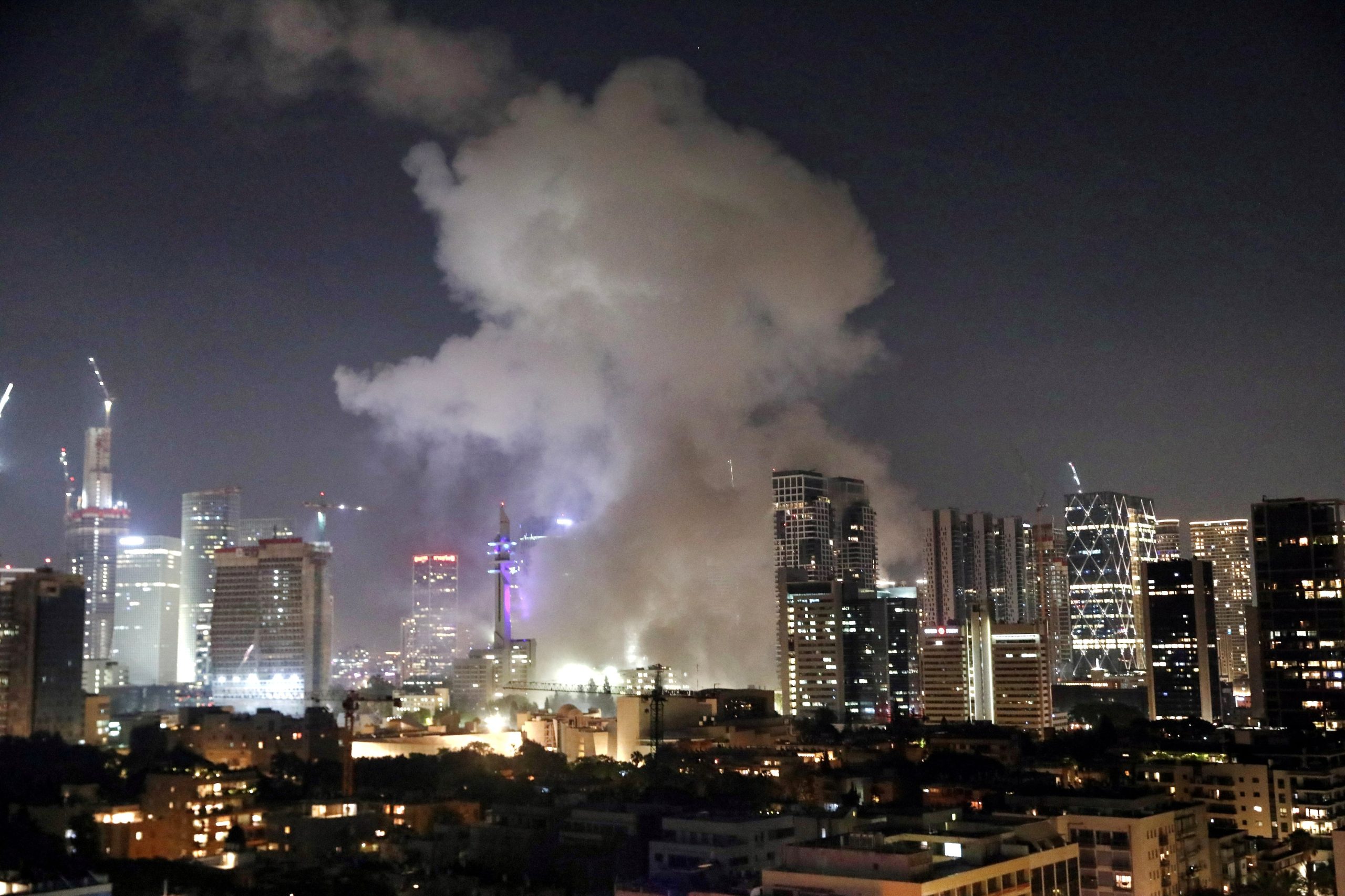
A major regional conflict erupted overnight after the United States and Israel launched coordinated military strikes on Iran, triggering explosions across Tehran and prompting retaliatory missile fire that rattled northern Israel and several Gulf states hosting American military assets.
The attacks began late in the evening when blasts were reported along University Street and in the Jomhouri district of Tehran. Iranian news agencies, including Fars and Tasnim, said multiple sites in the capital were hit, with smoke rising over parts of the city. Explosions were also reported in the northern Seyyed Khandan area and in western Ilam province, as Israel’s military confirmed it was conducting operations in western Iran. On the ground, communications in parts of Tehran were disrupted, with residents reporting difficulty making phone calls as emergency services scrambled to respond.
According to Iran’s Foreign Ministry, the strikes targeted a mix of military and defence installations as well as civilian infrastructure in several cities. State run IRNA reported that an Israeli strike hit a girls’ elementary school in Minab in Hormozgan province, killing at least 40 people. The report could not be independently verified, but images circulating on Iranian media showed damaged buildings and rescue workers searching through debris.
In Washington, US President Donald Trump confirmed that American forces were participating in what he described as a major combat operation. “Our objective is to defend the American people by eliminating threats from the Iranian regime,” he said in a televised address, arguing that the action was aimed at neutralising imminent security risks. Israeli Prime Minister Benjamin Netanyahu echoed that stance, calling the operation a joint effort to remove what he termed an existential threat. He said cooperation between Israel and the United States would create conditions for long term security in the region.
Iran swiftly signalled retaliation. A senior Iranian official told regional media that all American and Israeli interests in the Middle East had become legitimate targets. State television reported that Tehran was preparing a strong response, while another official described the planned retaliation as crushing. Within hours, explosions were heard in northern Israel as air defence systems were activated to intercept incoming missiles. The Israeli military issued public alerts urging citizens to seek shelter, and a state of emergency was declared. Airspace was closed to civilian flights, with authorities advising travellers to stay away from airports.
The conflict quickly spilled beyond the immediate parties. Blasts were reported in Bahrain, Kuwait, the United Arab Emirates and Qatar, countries that host US military facilities. Iran’s Fars News Agency said Iranian forces had targeted bases including Al Udeid Air Base in Qatar and the headquarters of the US Navy’s Fifth Fleet in Bahrain. Qatar’s Defence Ministry said it had successfully thwarted several attempted attacks on its territory, while authorities in Abu Dhabi confirmed one fatality following missile interceptions.
Security analysts say the scope of the retaliation suggests Iran is seeking to raise the cost of involvement for countries aligned with Washington. Muhanad Seloom, an assistant professor in critical security studies at the Doha Institute for Graduate Studies, said Tehran appeared intent on widening the pressure. “They are trying to draw other countries in the region into this war,” he said. “The aim is to increase the burden on governments that host US forces and push them to reconsider their position.”
The confrontation comes against the backdrop of strained negotiations over Iran’s nuclear programme. A US official familiar with the planning told international media that the joint operation had been prepared over several months, even as diplomatic channels remained open. Mehran Kamrava, director of the Iranian studies unit at the Arab Center for Research and Policy Studies, said the timing suggested an attempt to derail or reshape the talks. “This appears designed to alter the negotiating environment fundamentally,” he noted.
As dawn broke, uncertainty hung over the region. Markets reacted nervously, and governments across the Middle East issued travel advisories and heightened security around strategic installations. While casualty figures remain fluid and independent verification is limited, the scale and coordination of the strikes mark one of the most direct confrontations between the United States, Israel and Iran in recent years.
Whether the situation escalates into a broader regional war or returns to a tense standoff will depend on decisions made in the coming hours. What is clear is that the strikes have shifted the balance of risk in a volatile region, placing civilian populations, energy infrastructure and diplomatic efforts under renewed strain.