
News
Museveni Orders Immediate Enforcement Of Sugar Act To Protect Bunyoro Farmers

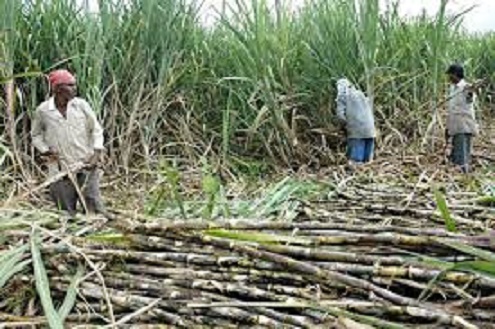
As the sun rose over Masindi, the fields of sugarcane stretching across Bunyoro seemed to mirror both the potential and the frustration of Uganda’s long-troubled sugar industry.
Speaking to thousands of supporters on Wednesday, President Yoweri Kaguta Museveni issued a firm directive to Prime Minister Robinah Nabbanja, urging immediate enforcement of the Sugar Act and decisive action against land grabbing that has long undermined communities in sugarcane-producing regions.
Farmers in Bunyoro and other sugar belts have endured years of inequity. A handful of dominant millers, often referred to as the Big Four, have historically controlled pricing, weighing, and access to markets, leaving smallholder out-growers vulnerable to delayed payments, under-weighing, and exclusion from key decisions. The imbalance has perpetuated cycles of poverty and indebtedness, particularly in Busoga, Buganda, northern districts, and Bunyoro.
The Sugar Act, enacted by Parliament to protect farmers and regulate miller-farmer relations, was intended to introduce independent weighbridges, fair pricing, transparent operations, and zoning rules to reduce conflicts. Yet despite its passage, slow implementation and resistance from entrenched millers have limited its impact.
Museveni’s public call signals a renewed political commitment to ending these longstanding inequities. “Our people must be protected. The Sugar Act must be enforced immediately to stop exploitation of sugarcane farmers,” he said, emphasising that negotiation or delay was no longer acceptable.
Farmers and industry observers point to Victoria Sugar Ltd, based in Luweero, as a model for reform. Unlike traditional mills, Victoria Sugar introduced fair pricing, transparent weighing procedures, prompt payments, and direct engagement with farmer groups.
The company also supports community-owned weighbridges, offers agricultural training, and invests in local infrastructure, demonstrating a model aligned with the intent of the Sugar Act. Farmers describe these interventions as restoring dignity and profitability to a sector long marked by inequity.
President Museveni tasked PM Nabbanja with fast-tracking the operationalization of the Act, ensuring millers adhere to fair pricing and weighing standards, resolving long-standing land disputes, and protecting out-growers from predatory practices. The directive reflects both a recognition of past failures and a clear expectation for immediate, tangible results.
For communities that have long felt marginalised, the announcement has kindled cautious optimism. Analysts note that if enforced effectively, the Sugar Act could mark a turning point, enabling transparency, competition, and equitable distribution of profits within the sector.
Farmers in Bunyoro expressed hope that the era of manipulation and delayed payments might finally give way to one where their labour is fairly valued and their livelihoods secured.
With political backing, community advocacy, and examples from reform-minded mills like Victoria Sugar, Uganda’s sugar industry may be on the cusp of meaningful transformation. The challenge will lie not in drafting legislation but in implementing it rigorously, ensuring that the benefits promised on paper translate into tangible improvements for the thousands of farmers who sustain the country’s sugar economy.