
Business
UN Women, Equity Bank Uganda Sign Two-Year Pact to Expand Women’s Economic Power

By Gad Masereka
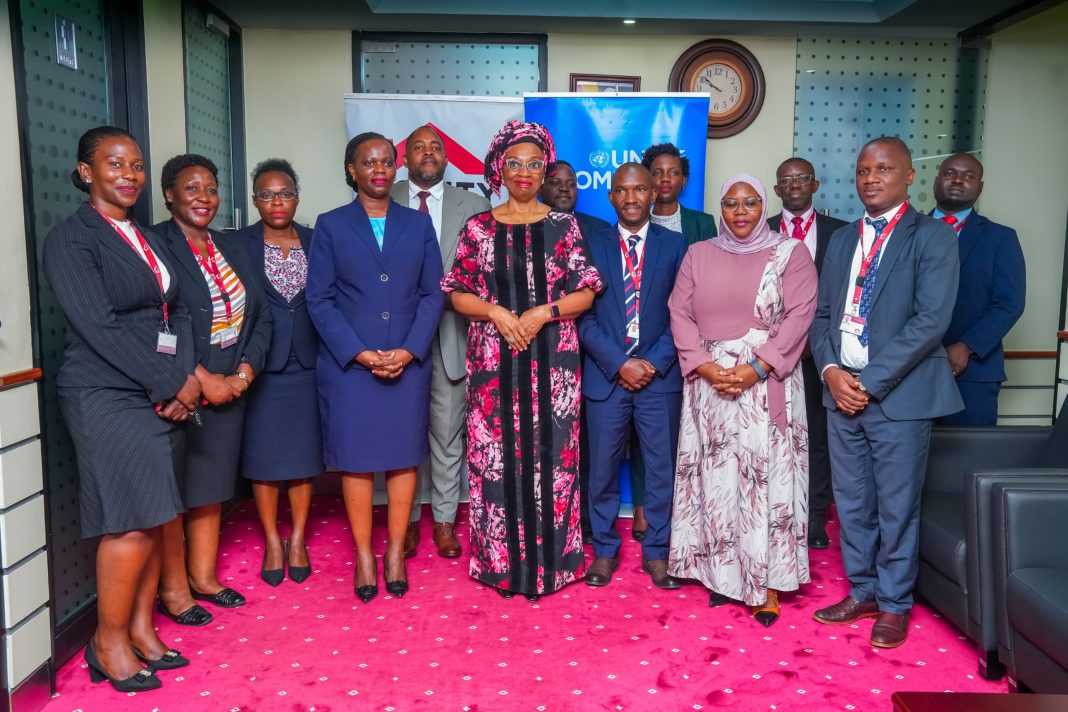
In a boardroom at Church House along Kampala Road on Wednesday, April 1, 2026, two institutions with different mandates but a shared ambition signed an agreement that could reshape economic opportunities for thousands of Ugandan women. UN Women and Equity Bank Uganda Limited formalized a two-year strategic partnership running from April 2026 to March 2028, combining the global agency’s technical expertise with the bank’s financial reach to address some of the most stubborn barriers women face in Uganda’s economy.
The partnership is structured around five areas of focus: expanding access to financial services for women and underserved communities, delivering training in financial literacy, entrepreneurship and digital skills, supporting women-led agribusinesses and cooperatives, promoting clean energy financing solutions for low-income and rural households, and strengthening social protection in refugee-hosting districts. Together, these pillars form what both parties describe as a comprehensive approach to women’s economic inclusion, one that goes beyond issuing loans and instead addresses the ecosystem of constraints that limit women’s participation in formal markets.

Adekemi Ndieli, UN Women’s Deputy Country Representative in Uganda, spoke at the signing ceremony about the necessity of drawing in the private sector to make gender equality gains sustainable. “This partnership reflects our shared commitment to ensuring that women, especially those in underserved and vulnerable communities, have the tools, resources and opportunities to thrive economically,” she said. She added that such collaborations are essential for accelerating progress toward inclusive growth and sustainable development.
Gift Shoko, Managing Director of Equity Bank Uganda, framed the bank’s involvement in terms of a broader institutional philosophy. “Equity Bank Uganda is proud to partner with UN Women to dismantle barriers that prevent women from achieving economic autonomy,” he said. “Our commitment goes beyond financial products. We are offering training, digital literacy and clean energy solutions to ensure women can compete and succeed in today’s economy.” He reinforced the point by describing inclusive finance as the foundation upon which inclusive growth must be built.
The operational model for the partnership assigns distinct but complementary roles to each institution. UN Women will lead on technical guidance, community mobilization and policy advocacy, while Equity Bank Uganda will develop and deliver tailored financial products, advisory services and training programs. A jointly developed work plan with measurable targets will guide implementation and track outcomes.
One dimension of the partnership that stands out is its explicit attention to refugee-hosting communities. Uganda hosts one of the largest refugee populations on the African continent, and women in those communities often face compounded vulnerabilities, including limited documentation, restricted mobility and exclusion from formal financial systems. By designing programs that reach into these areas, the two institutions are signalling that economic empowerment cannot be confined to urban centers.
The initiative also aligns with the African Continental Free Trade Area framework, which holds the potential to significantly expand market access for women-led enterprises. By building financial capacity and digital skills at the grassroots level today, the partnership aims to prepare Ugandan women to participate meaningfully in regional trade as those opportunities open up. With over 2.3 million customers served through 50 branches and more than 9,000 agents across the country, Equity Bank Uganda is well-positioned to serve as the financial infrastructure through which that potential is realized.
─────────────────────────────────────────────────────────


