
Politics
President Museveni Proposes Flat-Rate Cattle Compensation To Rebuild Northern Livelihoods

By Gad Masereka
President Yoweri Kaguta Museveni has floated a new proposal that could reshape how government addresses long-standing demands for cattle compensation in northern Uganda.
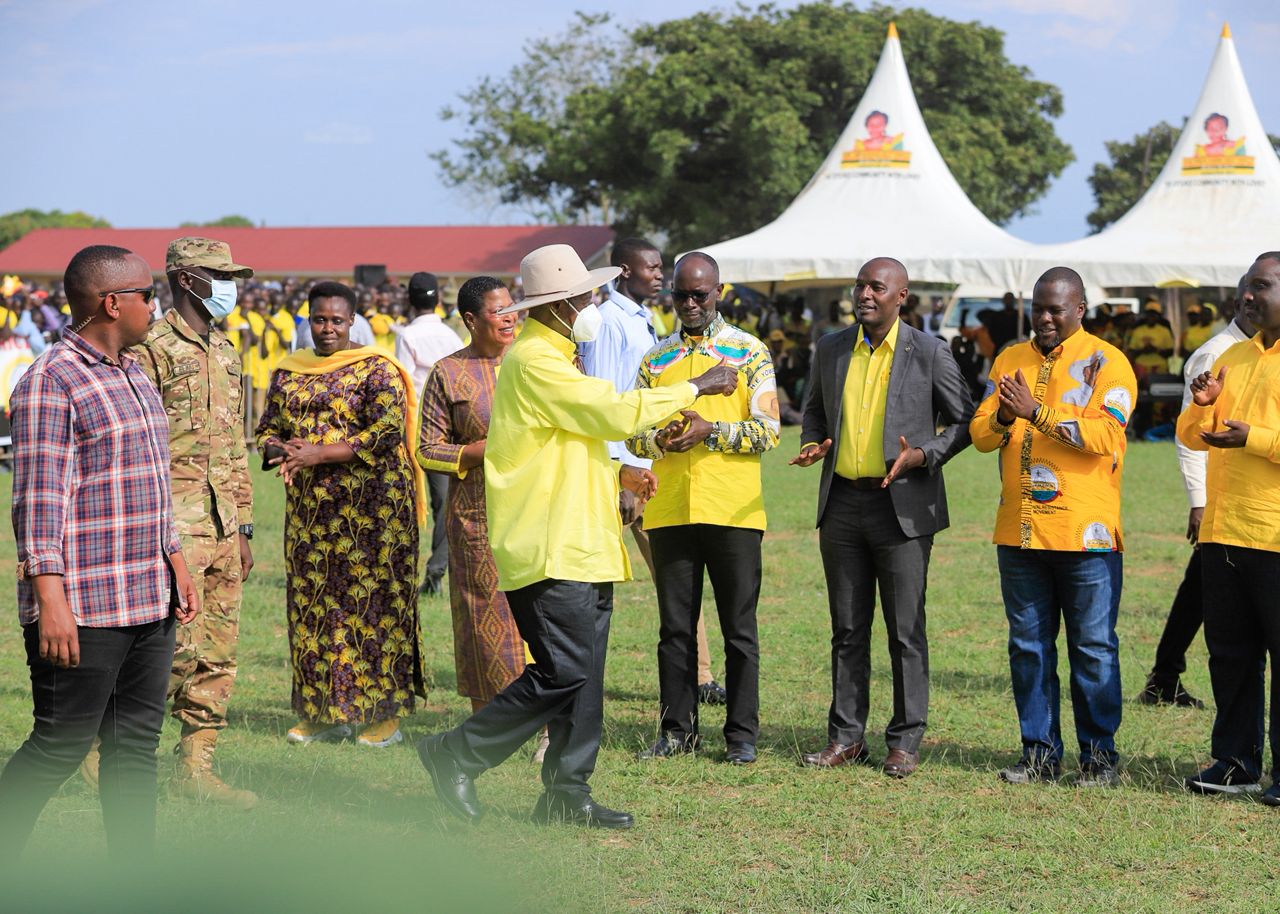
Speaking to supporters in Alebtong and Otuke on Thursday, the President suggested that instead of maintaining an open-ended system of claims, households across the affected sub-regions could receive a flat allocation of livestock as restitution for herds lost during years of insurgency and cattle raids.
The plan, still in its early stages, would see each eligible family receive five cows, a measure Museveni described as practical, equitable and less prone to dispute. “I raised this idea with leaders in Lango, and while some had doubts, the ordinary people welcomed it, saying Museveni is right. Teso leaders have already agreed, Lango has embraced it, and I am waiting to hear from Acholi,” he said, adding that government has begun preparing for its rollout. For many residents, whose memories of wealth before the wars are tied to the size of their herds, the proposal could mean the first structured attempt at rebuilding livelihoods after decades of devastation.
In his address, Museveni framed the initiative as more than a policy response. He portrayed it as part of a larger effort to restore dignity to the north by replenishing a source of pride and survival that had been wiped out by conflict.

He reminded the crowds that peace remains the cornerstone of prosperity. “Nobody will be allowed to undermine the hard-earned stability we have built. National unity is the bedrock of our progress,” he declared, drawing loud applause from the rallies.
The President also turned to the question of oil wealth, a subject that has often drawn public curiosity and skepticism. He reassured the people that Uganda’s petroleum revenues would not be squandered on extravagance but will be invested in what he called the pillars of transformation. “When oil comes, I will not allow it to be wasted on whiskey or perfumes. That money is for roads, the railway, electricity, schools, hospitals and security,” he insisted.
In Alebtong, Museveni showcased what he described as government’s development record in the district, pointing to ongoing electrification efforts, improvements to the Lira–Aloi–Apala–Alebtong–Abim road that is lined up for upgrade, and education infrastructure that includes 76 government UPE schools, more than 120 private schools and seven USE secondary schools.

He also highlighted initiatives such as the Parish Development Model, Emyooga, the Women Fund and the Youth Livelihood Fund, arguing that these are designed to help families break out of subsistence living. But he cautioned against the temptation to rely solely on public projects. “Even if the road is tarmacked, you do not sleep on it. Poverty can still follow you home unless you use programmes like PDM and Emyooga to build wealth,” he said.
Uganda’s oil sector, anchored in the Albertine Graben, is advancing through joint ventures with international partners. Production facilities are under construction alongside the East African Crude Oil Pipeline that will carry crude to Tanzania’s Tanga port. Once oil production begins, the country expects billions in revenue, which Museveni said would be strictly directed into infrastructure and social services.
For the northern region, however, the promise of five cows per household represents more than a statistic in government planning. It revives a vision of replenished kraals and restored wealth, a vision that has eluded families since the wars and raids dismantled the herding traditions that once sustained them. Whether this proposal takes root will depend on the government’s capacity to deliver, and on whether communities view five cows as a fair return for generations of loss. But for now, the promise has rekindled a conversation about recovery that is as much about memory and identity as it is about economics.


