
Africa
Kabila Sentenced to Death as DRC Military Court Rules on Treason and War Crimes

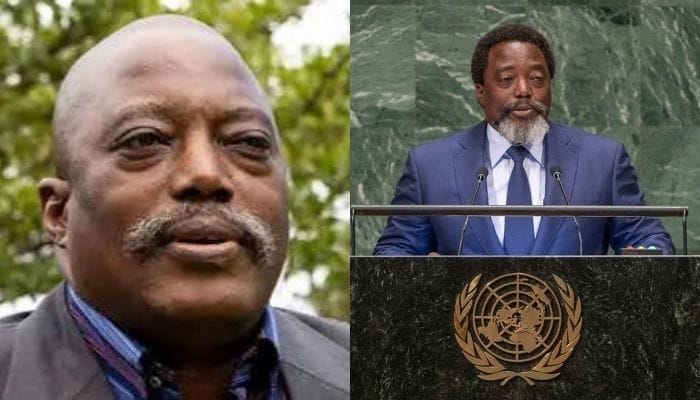
Kinshasa, DRC – The sentencing of former president Joseph Kabila to death by a Congolese military court has jolted the Democratic Republic of Congo into a moment of rare uncertainty, underscoring the deep fault lines that continue to shape the country’s politics six years after he left power. The ruling, delivered in Kinshasa, found Kabila guilty of treason, war crimes, conspiracy, and orchestrating an insurrection in collusion with the M23 rebels, a judgment that has already stirred sharp reactions both inside and outside the country.
For many Congolese, the case illustrates how political rivalries and the country’s protracted conflict in the east are now colliding in courtrooms. The prosecution argued that Kabila had provided support to the Rwanda-backed M23 movement, which has captured key towns in North and South Kivu in recent months. The court also imposed a staggering financial penalty, ordering him to pay 29 billion dollars in damages to the state and additional billions to the two provinces most affected by rebel activity.
Kabila, whose whereabouts remain unknown, has consistently dismissed the charges as politically motivated. In earlier statements, he denounced the trial as an attempt to silence opposition voices and punish him for challenging the current administration. His allies echo this view, warning that the verdict risks deepening divisions in a nation already fractured by conflict and economic hardship. “This is less about justice and more about eliminating a political rival,” one of his close associates told local reporters shortly after the judgment.
The government, however, has defended the proceedings, insisting that no individual should be above the law. Officials argue that Kabila’s actions amounted to betrayal at the highest level, accusing him of undermining the sovereignty of the very state he once led. The repeal of his immunity earlier this year by the senate paved the way for the case to proceed, a move his supporters described at the time as dictatorial but one his critics called overdue accountability.
Reactions beyond Congo’s borders have been cautious. Regional observers fear that the ruling could inflame tensions in the east, where M23’s advance has already displaced thousands. International human rights groups, while acknowledging the seriousness of the allegations, have expressed concern about the transparency of the proceedings and the use of the death penalty, urging the Congolese authorities to ensure that justice does not come at the cost of fairness.
Kabila, who ruled from 2001 to 2019, has remained a polarizing figure since stepping down. His years in power were marked by both attempts at rebuilding institutions and accusations of corruption, authoritarianism, and failure to end cycles of violence in the east. His brief return to Goma earlier this year, a city now held by M23 fighters, fueled speculation about his role in the ongoing conflict and further complicated his political legacy.
As the verdict reverberates, Congolese citizens remain divided between those who see it as a milestone in accountability and others who view it as a dangerous precedent of settling scores through judicial means. The outcome has not only cast a long shadow over Kabila’s legacy but also raised pressing questions about whether justice in the Democratic Republic of Congo can ever be separated from the shifting sands of politics.