
News
Protests Rock Madagascar as Citizens Demand Rajoelina’s Resignation

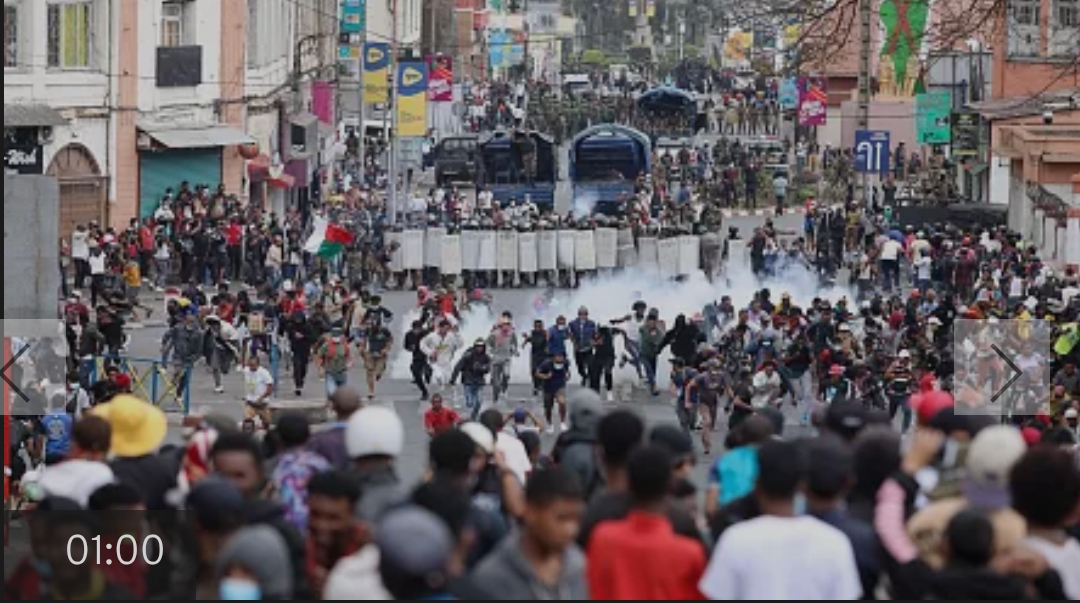
Antananarivo, Madagascar – A wave of anger has swept through Madagascar’s capital as thousands of demonstrators continue to call for President Andry Rajoelina to resign, marking one of the country’s most turbulent moments in recent years. The protests erupted after Rajoelina abruptly dismissed Prime Minister Christian Ntsay and his cabinet, a decision that many citizens saw as a sign of deepening political crisis rather than a step toward reform.
What began as scattered gatherings over power cuts and water shortages quickly escalated into full-scale demonstrations, with young people in particular seizing on social media to mobilize. In Antananarivo’s central square, protesters waved placards denouncing poverty and unemployment, chanting that the government had failed to deliver on basic services. “We are tired of living in the dark, tired of waiting for water that never comes. This is not the future we were promised,” said one university student who joined the protests for the first time.
The United Nations human rights office reported that at least 22 people have been killed and more than 100 injured in confrontations between demonstrators and security forces, describing the state’s response as violent and excessive. Authorities in Madagascar dismissed those figures as inaccurate but did not provide alternative data, fueling criticism of government transparency. Rights groups warn that without credible information and dialogue, tensions could spiral further.
A nighttime curfew has been imposed in Antananarivo and other cities, yet crowds continue to defy it, often gathering in smaller clusters to avoid dispersal. Many protesters have adopted slogans and symbols associated with youth-led uprisings in other parts of the world, giving the demonstrations a defiant and transnational character. Analysts say the persistence of these rallies reflects not only discontent with Rajoelina’s leadership but also growing despair over living conditions in a country where nearly 70 percent of urban residents now live in poverty.
Rajoelina, who first took power in 2019 and secured re-election last year in a highly contested vote, has so far resisted calls to resign, insisting his government remains legitimate. In a brief address, he accused unnamed groups of seeking to destabilize the country, though he acknowledged that economic hardships have intensified frustrations. His words did little to calm the unrest.
Diplomatic missions in Madagascar have urged restraint, while regional observers warn that prolonged instability could undermine efforts to attract investment in one of the world’s poorest nations. With essential services faltering and public confidence in leadership at a low point, Madagascar now stands at a crossroads, its streets echoing with demands for accountability that show no signs of abating.