
Politics
The Rise Of Nkwanga Michael: From Student Leader To Uganda’s Youngest Presidential Hopeful In 2026 Race

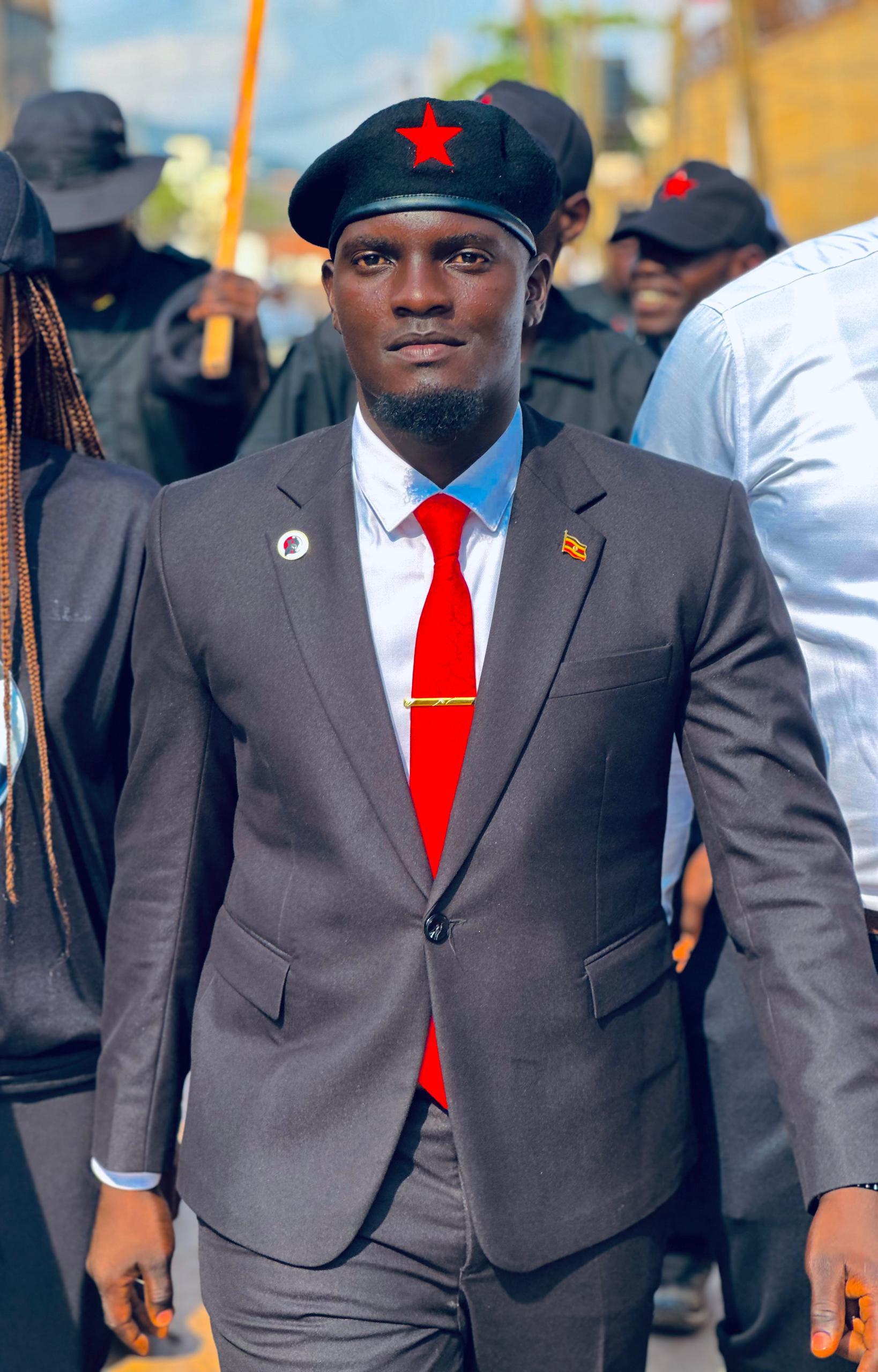
By Gad Masereka
Born on April 12, 1997, in Iganga District, Nkwanga Michael has steadily carved out a place for himself as one of the boldest emerging voices in Uganda’s public life.
At just 28, he has already combined an academic journey steeped in accounting, finance, law, and computer science with a political career that has placed him at the centre of national debate.
His declaration to run for the presidency in 2026 has brought him into the limelight, positioning him as both a challenger to Uganda’s established order and an emblem of youthful ambition.

Nkwanga’s path reflects a blend of scholarly commitment and grassroots activism. A graduate of Kyambogo University with a Bachelor of Science in Accounting and Finance, he has continued to pursue advanced education, including a Master’s in Business Administration with a focus on accounting and finance, and professional studies with ACCA.
At the same time, he enrolled for a Diploma in Law at the Law Development Centre and a Diploma in Computer Science at the Uganda Institute of Information and Communications Technology, showing an unusual appetite for multi-disciplinary knowledge. “For me, education is not just about degrees. It is about building capacity to understand and solve the problems of our society,” he remarked in one of his recent addresses.

His professional journey began with a modest posting as a junior accountant at Royal Milk Enterprises between 2020 and 2021. From there, he ventured into leadership spaces that combined service and advocacy.
He served as Public Relations Officer at Pan African Pyramid in 2023 before rising to Lieutenant Governor for District 001 Uganda under Kiwanis International in 2024.
These roles broadened his platform, allowing him to interact with diverse communities and refine the skills he would later apply in national politics.
Leadership has been central to Nkwanga’s story. He contested for the guild presidency at Kyambogo University in 2022, a race that introduced him to the world of student politics and sharpened his ability to mobilise and articulate issues.
Though unsuccessful in that bid, he went on to become guild president at UICT in 2024, where his leadership was marked by advocacy for youth empowerment and innovative policy debates.

His peers describe him as persistent and uncompromising on issues of justice. In 2025, he was elected chairperson of the St. Lawrence Old Students Association Foundation, consolidating his influence among alumni networks.
But it is his foray into authorship that has further distinguished him. His book, “The Plight of an African Child”, launched in 2025, takes an unflinching look at the struggles of Africa’s children, arguing against narratives of pity and instead championing resilience and self-determination. “No one is coming to save Africa and nobody needs to,” he wrote. “We are the ones and we are enough.” The book has been praised for reframing Africa’s story and is already being cited as a manifesto of hope and renewal.
That intellectual foundation has shaped the philosophy behind his presidential campaign. At the launch of his bid in Kireka, he unveiled the red star of liberation as his symbol, with each of its five points representing peasants, workers, intellectuals, the marginalised, and neutralists who have disengaged from politics.
He described his movement as anchored in four pillars: political freedom, economic independence, social transformation, and ideological renewal. “This is not just one dream. This is the collective will of Ugandans who have suffered long enough and are now saying enough is enough,” he declared.
Supporters say what sets him apart is his insistence on inclusivity. Unlike many politicians who appeal to specific classes or groups, Nkwanga argues that his campaign speaks to the entire population at once.
His rhetoric, often fiery, blends radical calls with deeply personal reflections. He criticises what he calls “colonial diplomas” that churn out jobless graduates, calling for a redefinition of education to serve national realities.
He has also promised reforms in agriculture, healthcare, and governance, arguing that Uganda must stop depending on foreign aid while seated on abundant resources.
While sceptics see him as an ambitious newcomer with untested ideas, his supporters insist he is a fresh voice unafraid to challenge entrenched systems.
During the signature collection for his nomination, he confronted the monetisation of politics head-on, refusing to pay for support and instead urging citizens to value their civic rights. “People are selling the future of their children for a few shillings,” he said. “Politics must once again shape economics, not the other way around.”

As the 2026 elections draw closer, the presence of Nkwanga Michael in the race has injected new energy into Uganda’s political landscape. Whether his campaign for liberation will translate into votes remains uncertain, but his journey from a small-town boy in Iganga to a national contender underscores the possibilities of a generation that refuses to be silent.
His words, writings, and leadership all circle back to a conviction that resonates with many of his supporters: that Uganda’s future must be written by Ugandans themselves, and that the time for that rewriting has come.