
Politics
Why Anita Annet Among Deserves a Second Term as Speaker

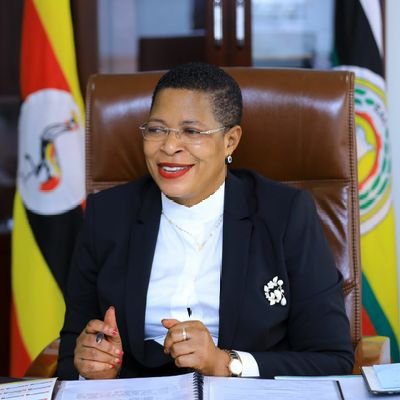
By Hason Mutunzi Bwambale, Political Commentator & Journalist, Newlight Paper
As Uganda enters a sensitive phase in its political cycle, the leadership of Parliament is no longer a procedural question. It is a strategic one. The decision on who presides over the 12th Parliament must be guided not by sentiment or novelty, but by stability, coherence, and institutional reliability. On these measures, Rt. Hon. Anita Annet Among remains the most suitable choice for Speaker.
Her tenure in the 11th Parliament marked a decisive shift from the confrontational posture that had increasingly defined parliamentary politics. Anita Among restored order, predictability, and purpose to the House. Parliamentary business moved with efficiency. Government Bills were processed without unnecessary obstruction. Committees operated with clearer mandates. Oversight continued, but without degenerating into institutional warfare.
This balance is not accidental. It reflects deliberate leadership. While Parliament must remain independent, it must also function. The latter years of the Rebecca Kadaga Speakership, though historically significant, were marked by growing friction between Parliament and the Executive. The House increasingly projected itself as a parallel power centre, resulting in delays, tension, and policy uncertainty. Anita Among corrected this trajectory by re-anchoring Parliament within its constitutional role—firm, orderly, and functional.
Crucially, her leadership has been affirmed not only by outcomes but by party structure. The NRM Central Executive Committee endorsed Anita Annet Among as the party’s sole flag bearer for Speaker, alongside Rt. Hon. Thomas Tayebwa for Deputy Speaker. In a movement that prizes discipline and consensus, CEC endorsement is a political signal of confidence and continuity. It reflects an understanding that institutional stability begins with clear internal alignment.
Against this backdrop, suggestions that Norbert Mao could be a viable alternative merit serious scrutiny. Mao is an experienced politician, but he remains the president of the Democratic Party, an opposition entity. The cooperation agreement between DP and NRM, while politically useful, is transactional by nature. It is not a constitutional anchor.
Placing the leadership of Parliament in the hands of an opposition party leader, cooperation agreement notwithstanding, would inject uncertainty into the legislative process. Agreements can shift; institutions must endure. At a time when Uganda faces economic pressures, regional security concerns, and an approaching leadership transition, Parliament cannot afford strategic ambiguity at its helm.
Anita Among’s political alignment further reinforces her suitability. She is a known loyalist of Gen. Muhoozi Kainerugaba, a central figure in the NRM’s future political trajectory. In periods of transition, cohesion across state institutions is not optional—it is essential. Her positioning ensures that Parliament remains predictable, coordinated, and aligned with the broader governance framework.
This is not blind loyalty. It is institutional assurance. It signals to the Executive, security agencies, and development partners that Parliament will remain a stabilising force rather than a disruptive arena.
Equally important is Among’s command of parliamentary procedure and temperament. She managed a diverse, media-driven, and often unruly House with firmness and consistency. Minority voices were heard, rules were enforced, and theatrics were contained. These are the attributes that sustain legislative credibility.
Handing Parliament to opposition leadership—even under the guise of cooperation—would embolden radicalism, complicate executive-legislative relations, and risk legislative paralysis. Uganda has experimented before with institutional antagonism. The costs were high.
This is not the moment for experimentation. It is the moment for continuity.
Anita Annet Among has demonstrated competence, control, and political maturity. Backed by performance, party consensus, and strategic alignment, she represents stability in an uncertain moment.
For Parliament to function, and for the state to remain coherent, she deserves a second term.