
News
President Museveni Backs Sudhir’s Call for Indian Community Recognition

By Gad Masereka
President Yoweri Kaguta Museveni has pledged to examine the long-standing appeal by Uganda’s Indian community to be formally recognized as one of the country’s tribes, a request recently renewed by prominent businessman Dr. Sudhir Ruparelia.
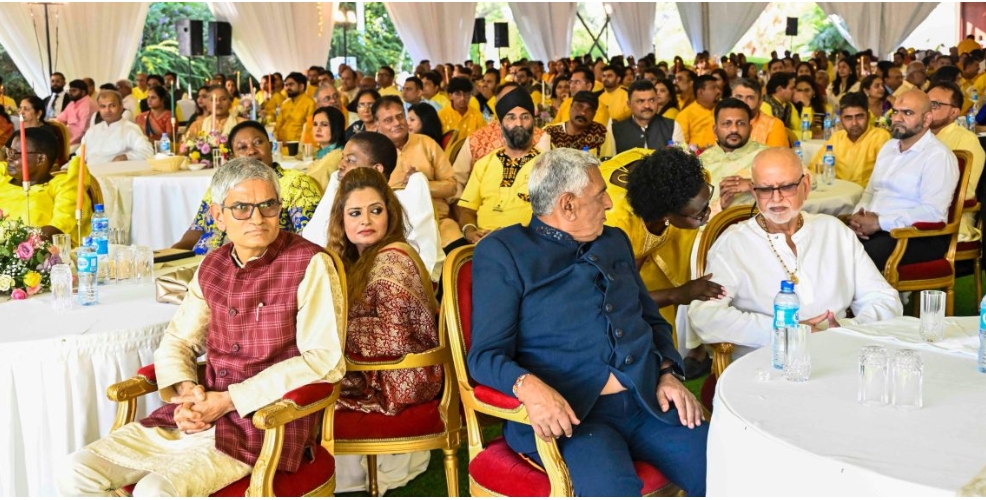
The commitment came during Diwali celebrations at State House Entebbe, where the President and First Lady Maama Janet Museveni hosted hundreds of guests from Uganda’s Indian community in an evening filled with cultural displays and reflection on the community’s journey in Uganda.
In his address, President Museveni praised the Indian community for its enduring contribution to Uganda’s economy and its unwavering confidence in the country even after the painful expulsion of Asians by Idi Amin in 1972.
He reminded the gathering that the government’s decision to welcome them back in the late 1980s was rooted in trust and mutual benefit. “When we called our Indian brothers and sisters back after Amin’s mistakes, they returned and trusted Uganda again,” the President said. “Our economy continues to grow because of their industrious nature. They have helped us create jobs, nurture a skilled middle class, and generate revenue to support services like education and health.”
The President went on to affirm that the government would consider Sudhir’s call for tribal recognition, acknowledging that Uganda’s national identity is a product of diverse origins. “On citizenship, it is simple,” he added. “All Ugandan groups came from somewhere. What matters now is unity and contribution to our shared prosperity.”
Dr. Sudhir Ruparelia, who attended the celebration alongside fellow business leaders from the Asian community, has been vocal in urging the government to formalize their status.
In an interview earlier this month, he argued that after more than a century of settlement, the Indian-Ugandan community deserves formal acknowledgment within Uganda’s cultural framework. “We need an identity in this country just like others who migrated here and got recognized,” he said. “We have deep roots and continue to play a vital role in the nation’s growth.”
Museveni’s remarks mark the first time a sitting President has openly expressed willingness to consider the proposal, signaling what could be a significant shift in Uganda’s multicultural policy.
Political observers note that the move, if realized, would carry symbolic importance by recognizing a community that has transitioned from expulsion to integration. “From being victims of displacement to potential recognition as a Ugandan tribe, this is a profound story of reconciliation and inclusion,” observed a political historian in Kampala.
Over the decades, the Indian community has become deeply woven into Uganda’s economic fabric. Families such as the Ruparelias, Madhvanis, Mehtas, and Mukwanos have established industries that employ thousands of Ugandans and contribute heavily to the national treasury through taxes and investment. Their enterprises span manufacturing, real estate, hospitality, and education, sectors that have been critical to Uganda’s post-war economic recovery.
Should the government proceed with formal recognition, the Indian community would become Uganda’s 66th officially recognized tribe, joining other minority groups such as the Nubians and Rwandese who have since been integrated into the national identity.
Beyond its administrative implications, the gesture would serve as a message of unity, reaffirming Uganda’s commitment to inclusivity and cultural diversity.
For many in attendance at the State House celebration, the President’s message offered more than seasonal greetings. It represented a long-awaited acknowledgment of belonging and a reaffirmation of trust between the government and a community that has helped shape Uganda’s modern economy.
As the evening drew to a close, with fireworks lighting up the Entebbe skyline, the sentiment among the guests was one of hope that after years of quiet contribution, the Indian-Ugandan community may finally be recognized not only for what it gives but for what it has become: an inseparable part of Uganda’s story.


