
Politics
Museveni Urges Artisans to Form Group Companies for Collective Wealth

By Gad Masereka
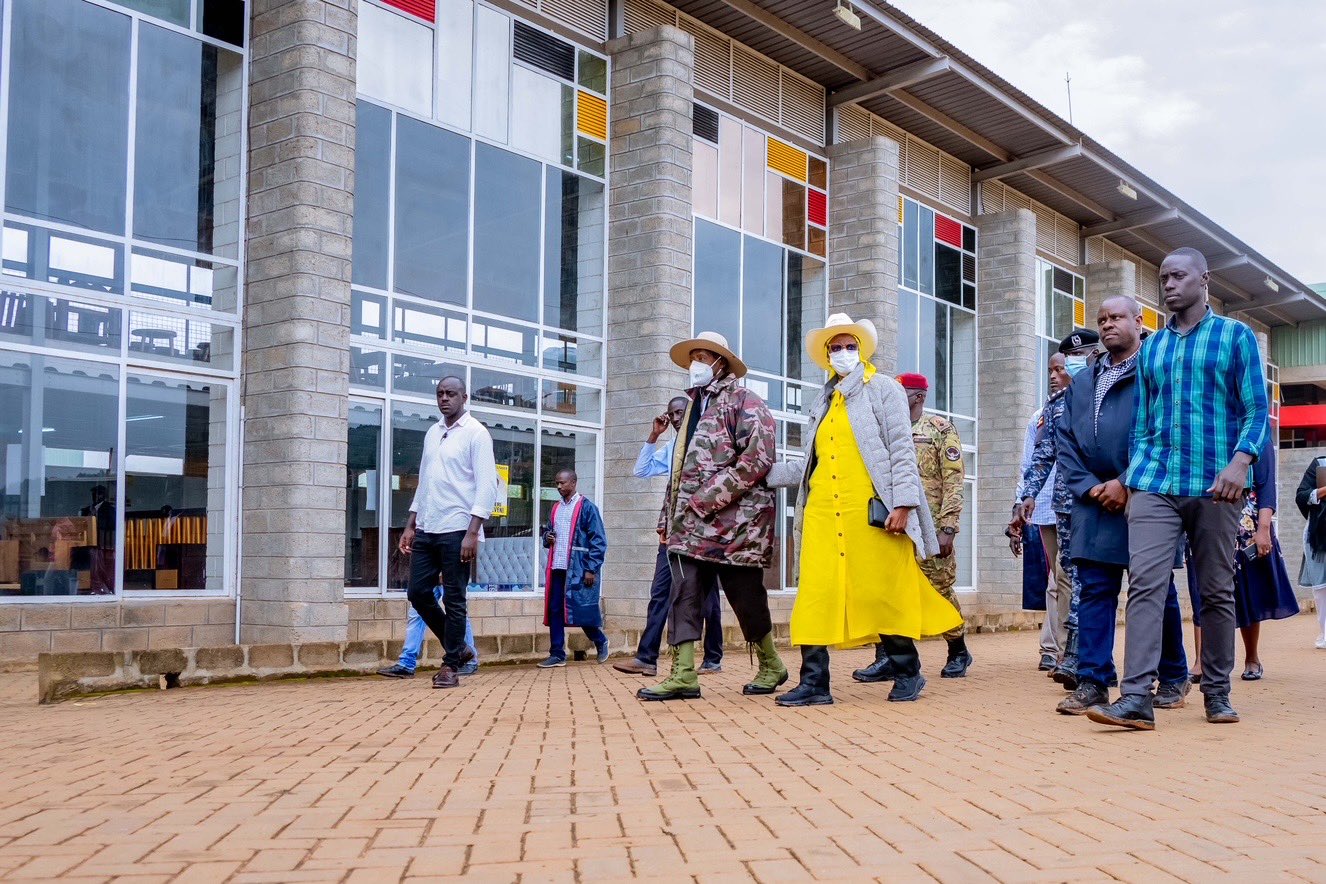
President Yoweri Museveni on Tuesday urged artisans and youth groups to shift away from individualistic work practices and instead form group-owned companies to foster long-term sustainability and wealth creation. His remarks came during a visit to the Kigo Carpentry and Skilling Centre in Wakiso District, part of his ongoing Kampala PDM Wealth Creation Tour.
Accompanied by the First Lady and Minister of Education and Sports, Maama Janet Museveni, the President addressed a gathering of artisans and local leaders, emphasizing that while skills development initiatives have gained momentum, their full potential remains undercut when beneficiaries operate in isolation. “This tendency to work individually is risky,” Museveni cautioned. “We taught the Banyankore not to divide land when the time for inheritance comes but to stay united and work as a family. The same principle should apply here.”
Drawing from historical and personal examples, Museveni noted that land fragmentation has historically undermined productivity and economic progress. He cited his own family’s approach, where a shared company structure allows for collective ownership and profitability. “Europeans developed by forming companies through families. That’s how they advanced. Leave backwardness and embrace that model,” he said, challenging the artisans to adopt more cooperative methods for the sake of economic resilience.
At the event, President Museveni pledged Shs500 million to the centre’s SACCO, aiming to bolster its production capacity and help procure essential raw materials. He also committed to improving road infrastructure in the area to ease access for customers and suppliers, pointing out that logistical support is essential but secondary to the core issue of organized, collective work. “All other issues are easy, but the formula for working together is what matters. If you get it right, everything else will follow,” he told the artisans.
The President further directed Hon. Balaam Barugahara, the Minister of State for Youth and Children Affairs, to work closely with the centre’s management to streamline its operational model. He urged the team to reconsider their current free training structure, proposing a more sustainable framework in which sponsors contribute fees. “You’re becoming donors—it’s too early for that,” he remarked. “Let’s have a formula that benefits both trainers and trainees.”
Centre leadership expressed gratitude for the continued support. Ivan Ainebyoona, chairperson of the Kigo Carpentry Centre, praised the President’s responsiveness during their early challenges. “Whenever it rained or the sun was too much, we were worried, but you came and rescued us. We now work in dignity. We are happy, and history will remember you,” he said.
Adding a deeply personal layer to the centre’s history, Secretary-General Majid Kigundu recalled how their journey began in 2016 when a group of desperate carpenters blocked the President’s convoy in Munyonyo. “You listened and gave us machines, Shs100 million for our SACCO, and even told us you sold your cows to buy us this land,” he recounted. Today, the centre trains youth, pays taxes, and fulfills orders such as beds for the Special Forces Command, demonstrating measurable progress since its inception.
Kigundu also used the platform to advocate for enforcement of the Executive Order against raw timber exports. “We have all the designs. Let people come and support us here instead of exporting raw timber,” he urged, emphasizing the artisans’ readiness to add value locally.
As Museveni continues his Kampala tour, his message remains consistent: real transformation must begin at the household and community level. While infrastructure development is critical, it is the culture of collective enterprise and local innovation that will define Uganda’s economic trajectory.
Located in Kigo Mutungo, Ndejje Parish, Makindye-Sabagabo Municipality, the Kigo Carpentry and Skilling Centre currently boasts 588 members and provides training in carpentry, tailoring, weaving, and metal fabrication. It stands as a model for what can be achieved when skilled Ugandans are empowered with resources and a unifying vision.