
News
Thousands Turn Up As Ruparelia Foundation Launches Free Eye Camp In Bukedea To Honour Rajiv’s Legacy

By Gad Masereka
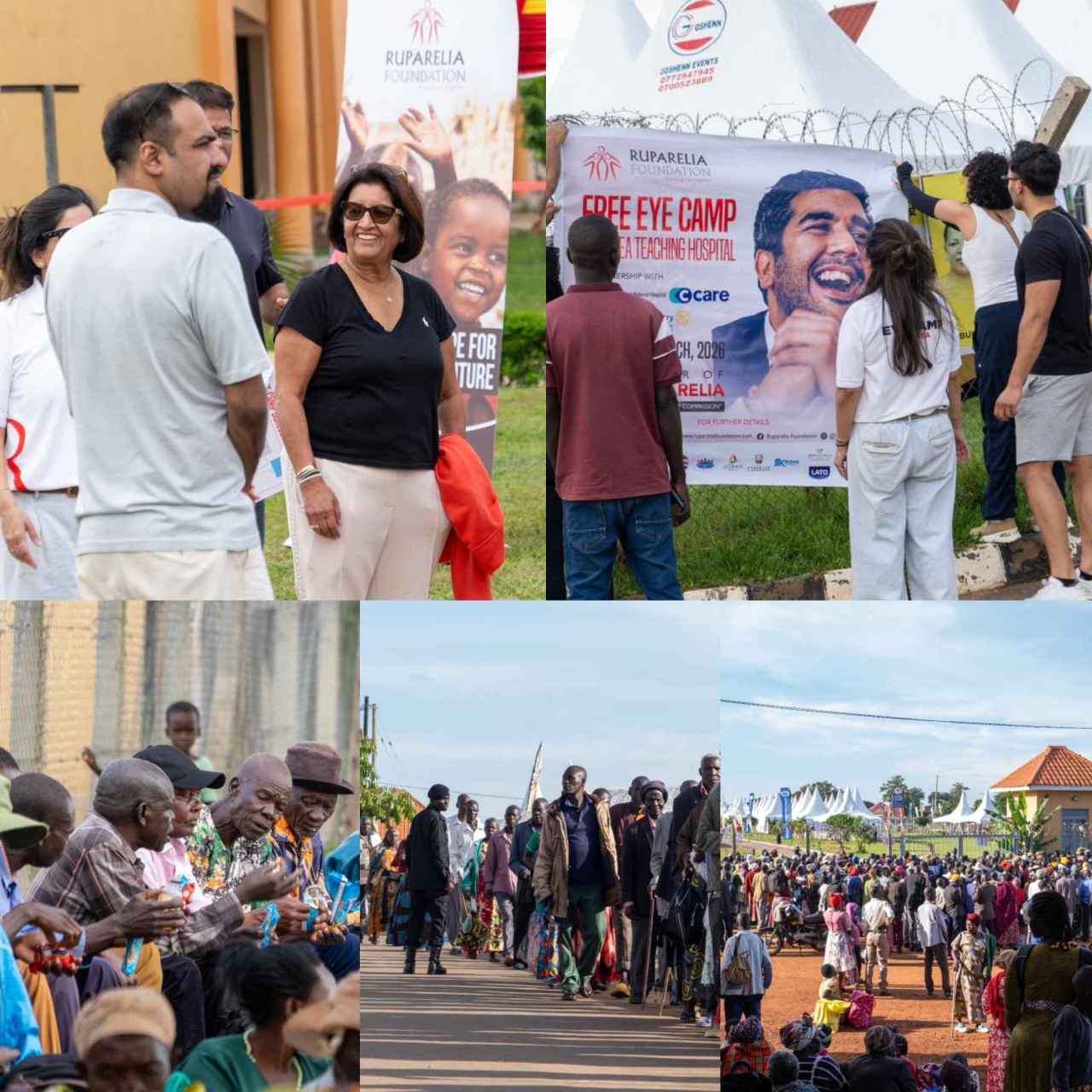
Bukedea Teaching Hospital was a scene of quiet determination on Friday morning 27/03/2026, as thousands of residents, some having walked for hours, converged on the hospital grounds for a free eye medical camp organised by the Ruparelia Foundation in memory of the late Rajiv Ruparelia, the businessman and philanthropist whose death in May last year left a visible void in Uganda’s humanitarian landscape.
The Rajiv Ruparelia Memorial Eye Camp, running under the theme “A Vision of Service, A Legacy of Compassion,” brought together specialist medical teams from Mulago National Referral Hospital, led by Dr. Grace Ssali, alongside health science students from Victoria University who volunteered their time to support the exercise.
The camp is offering free eye screening, diagnosis, treatment, medication, and referrals for patients requiring advanced surgical care.
Foundation Chairman Dr. Sudhir Ruparelia, who has been instrumental in channelling the group’s philanthropic resources toward underserved communities since his son’s passing, said the initiative was never intended to be a one-off event. “Rajiv believed that business must serve people. Everything we do in his name is a commitment to carrying that belief forward,” he said.
Despite light drizzles in the early hours of the morning, residents arrived in their hundreds well before the camp officially opened. The elderly, mothers carrying young children, and people supported by relatives formed long but orderly queues at the various service points set up across the hospital grounds.
For many, the camp represented something rare in rural Uganda: access to a specialist they would otherwise never see.
Esther Chebet, a resident who said she had struggled with deteriorating vision for nearly three years, was among the first to be attended to. “I have been to the health centre twice but they kept telling me to go to the main hospital in town. I had no money for that. Today someone finally looked properly at my eyes and gave me medicine,” she said, clutching a small paper bag of medication.
Health workers at the camp noted a pattern that public health officials have long warned about: a large number of patients presenting with treatable conditions that had been left unattended for years simply because of cost and distance. Cataracts, glaucoma, and refractive errors were among the most commonly identified conditions at the screening points, according to camp staff.
Rajiv Ruparelia died on May 3, 2025, in a road accident along the Entebbe Expressway. He was 35 years old. In the months since, the Ruparelia Group has deliberately anchored several of its community programmes around his name and values, ensuring that his memory translates into ongoing action rather than ceremonial tribute.
Local leaders in Bukedea welcomed the camp as both timely and necessary. “Our people travel very far to access eye care. Most of them give up along the way because of the cost. What the Ruparelia Foundation has done by bringing doctors here is something we genuinely needed,” said one district official present at the grounds.
The camp is expected to run until Sunday, March 29, with organisers projecting that several hundred patients will have received care by the time it closes. Patients requiring surgical intervention will be identified and referred through the Foundation’s existing health linkage structures.
Beyond the numbers, what the Bukedea camp illustrates is a growing recognition among Uganda’s private sector that meaningful philanthropy must go beyond photo opportunities.
The Ruparelia Foundation’s decision to embed this outreach within a memorial framework ties personal loss to public purpose in a way that few corporate initiatives manage to achieve. For the thousands who turned up on Friday, that distinction mattered very little. What mattered was that someone had finally come to them.