
Education
ONC Coordinator Monitors Bubukwanga Secondary School As It Records 96% UCE Pass Rate Amid Challenges

By Gad Masereka
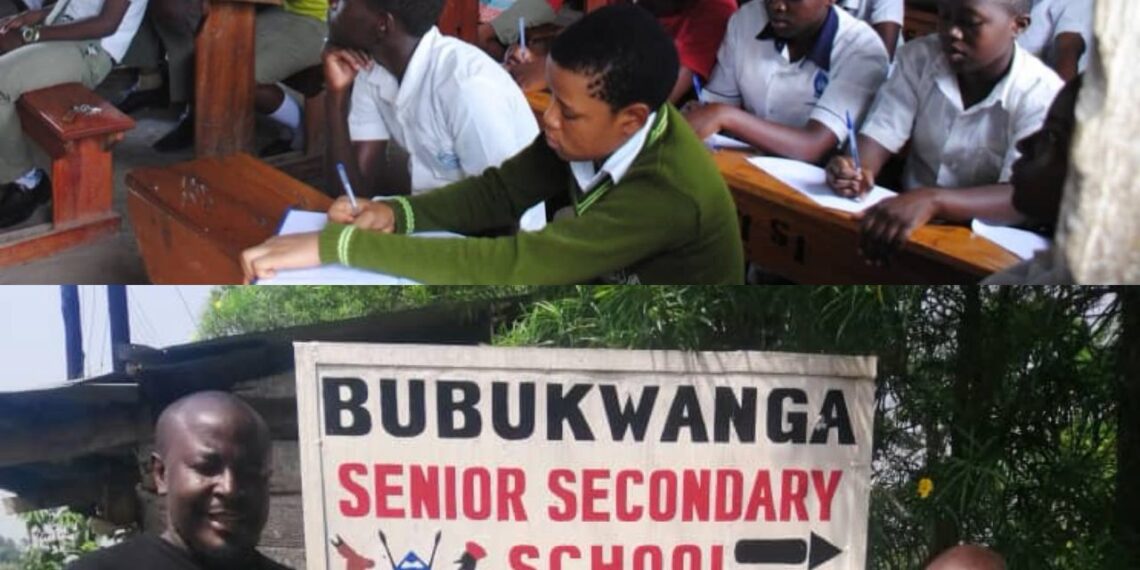
The Office of the National Chairman has intensified its grassroots oversight in the Rwenzori subregion, with a monitoring visit to Bubukwanga Secondary School in Bundibugyo District highlighting both remarkable academic resilience and pressing infrastructure gaps that require urgent intervention.
The visit was conducted by the ONC Coordinator for Rwenzori Subregion, Mr. Kyalimpa Ausen, who represented the In Charge of ONC, Hajjat Hadijah Namyalo Uzeiye. He traveled to Bubukwanga Subcounty earlier this week to assess service delivery at the government aided institution and evaluate the state of education in one of the region’s historically hard to reach areas.
Established in 1999 at the height of the ADF insurgency, Bubukwanga Secondary School began as a private Catholic founded institution before government took it over in 2005. Over the years, it has evolved into a vital education hub serving learners from underprivileged families across the mountainous communities of Bundibugyo. Under the leadership of Headmaster Balyebulya Anthony, the school continues to operate in a setting defined by economic hardship and limited infrastructure.
During his engagement with the administration, Ausen reviewed classroom conditions, staffing levels, student attendance and academic performance. School leaders cited seasonal cocoa farming as a major factor affecting early term attendance, explaining that many students report late or miss initial weeks due to family labor demands. Despite these challenges, the school registered 165 candidates for the 2025 Uganda Certificate of Education examinations, with 159 passing, translating into a 96 percent pass rate.
“This performance demonstrates commitment from both teachers and learners, even in difficult circumstances,” Ausen said after touring the classrooms. He commended the staff for maintaining academic standards but noted that infrastructure constraints continue to undermine progress.
Among the critical needs identified were additional classrooms, a girls’ changing room, a teachers’ house and a functional library. Currently, only 12 teachers are on the government payroll, while 15 teachers and 11 support staff are sustained through parental contributions, a situation administrators say is financially unsustainable for a community with limited income sources.
Ausen also raised concern over stalled projects under the APL1 World Bank initiative, including two classroom blocks and a teachers’ house contracted to Kamua International. The projects, valued at 250 million shillings, have remained incomplete for 16 years. Reviving them, he emphasized, would significantly improve the learning environment and staff retention.
He assured the school leadership that findings from the visit would be formally communicated to Hajjat Hadijah Namyalo to facilitate engagement with the Ministry of Education and other relevant authorities. “Monitoring gives us firsthand information. Our role is to ensure these issues reach decision makers so that practical solutions can be implemented,” he said.
The visit underscores ONC’s broader mandate of tracking government programs at community level to strengthen accountability and service delivery.
For Bubukwanga Secondary School, the inspection not only spotlighted long standing challenges but also affirmed the determination of a rural institution striving to educate its children against considerable odds.