
News
Uganda Wealth Power Index 2026 Reveals 14 Tycoons Control Nearly 16 Percent Of National GDP

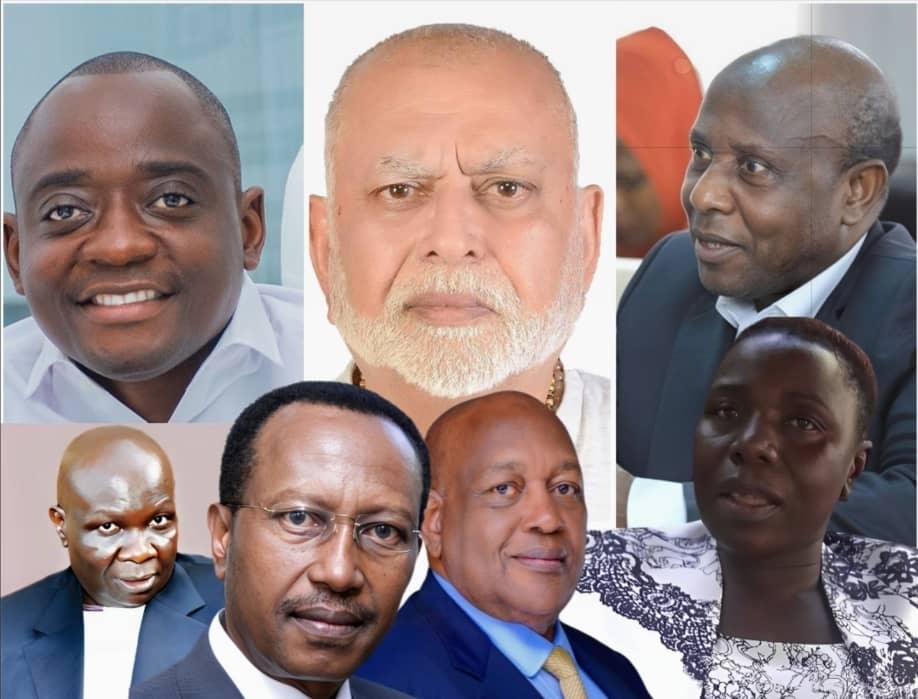
Uganda’s economic landscape has taken a revealing turn with the release of the Uganda Wealth Power Index 2026, an independent asset based analysis showing that just 14 individuals control an estimated 10.325 billion dollars, nearly 15.9 percent of the country’s gross domestic product. Compiled in February 2026 against a national output of about 65 billion dollars in 2025, the index offers a rare window into who holds Uganda’s private capital, how it was built and why its concentration matters in a country where millions still live on modest incomes.
The report comes at a time when Uganda is widely regarded as one of East Africa’s more resilient frontier economies. Since the 1990s, structural reforms and post conflict reconstruction have spurred growth in agriculture, services and trade, drawing private investment into urban centres, especially Kampala. Yet beneath the macroeconomic expansion lies a persistent imbalance. With GDP per capita hovering around 1,070 dollars and many citizens surviving on less than three dollars a day, the widening gap between average households and the financial elite has become an unavoidable part of the national conversation.
At the top of the 2026 ranking is Hamis Kiggundu, whose net worth is estimated at 1.3 billion dollars. Rising from early trading ventures to major commercial property development, Kiggundu built his fortune through the Ham Group of Companies, anchored in prime urban real estate such as Ham Towers and Ham Shopping Mall. His investments extend into agro processing, beverage manufacturing and digital payments, reflecting a strategy rooted in physical asset expansion and industrial value addition. “Uganda’s growth must be driven by ownership of productive assets,” he has previously said, underscoring a philosophy centred on infrastructure and enterprise.

Close behind is Sudhir Ruparelia, long considered a pillar of Uganda’s private sector. With an estimated net worth of 1.2 billion dollars, the founder of the Ruparelia Group maintains diversified interests spanning real estate, hospitality, education and finance. His flagship developments, including Speke Resort Munyonyo and Pearl Kampala Business Park, have shaped Kampala’s skyline and conference economy. Industry observers note that his conglomerate model reflects an earlier wave of post liberalisation entrepreneurs who combined property with financial services to consolidate wealth.

The index further highlights influential property magnates such as John Bosco Muwonge, Drake Lubega and Mansour Matovu, whose combined holdings in commercial and mixed use developments have capitalised on Kampala’s rapid urbanisation. Veteran investor Karim Hirji remains a key figure through the diversified Dembe Group, while Christine Nabukeera and Tom Kitandwe represent a blend of luxury property, telecommunications and agribusiness investments.
A clear pattern runs through nearly all 14 profiles. Real estate dominates as the primary engine of wealth accumulation, supported by hospitality, petroleum, telecommunications and agro processing. Analysts say this reflects both opportunity and limitation. In a capital market that remains relatively shallow, physical assets offer predictable returns and collateral strength, making property development the preferred store of value. As one Kampala based economist observed, “When long term financing instruments are limited, investors naturally gravitate toward land and buildings. It is tangible, bankable and resilient.”
Other notable entrants include Godfrey Kirumira, active in petroleum distribution and manufacturing, and Charles Mbire, whose interests stretch across telecoms, energy and pharmaceuticals. Industrialist Amos Nzeyi has built enduring enterprises in beverages and hospitality, while Ahmed Omar Mandela expanded from hardware retail into fuel distribution and the now regional Café Javas brand. Rounding out the list is Patrick Bitature, founder of the Simba Group, whose footprint spans telecom distribution, power generation and high end real estate.

Yet the rise of a concentrated wealth class also sharpens debate about inequality and inclusive growth. While these enterprises generate employment, tax revenue and infrastructure, their scale relative to national output underscores the uneven distribution of economic gains. The index does not present itself as a celebratory rich list, its compilers insist, but rather as a structural analysis of how private capital interacts with national development.
The timing is significant. Uganda is preparing for expanded oil production, continued infrastructure upgrades and deeper digital financial integration. These shifts could accelerate GDP growth in the coming decade. Whether that growth translates into broader income convergence will depend in part on how this powerful capital class reinvests, innovates and collaborates with public policy.
In that sense, the Uganda Wealth Power Index 2026 serves as both a mirror and a forecast. It reflects a country that has moved decisively beyond its turbulent past to cultivate formidable entrepreneurial success, yet it also highlights the enduring challenge of translating aggregate wealth into shared prosperity. As Uganda advances toward middle income aspirations, the influence and decisions of this small but commanding group of economic titans may shape not only corporate balance sheets, but the trajectory of national development itself.