
News
Iran’s Ali Khamenei Reportedly Killed in Joint US Israel Operation

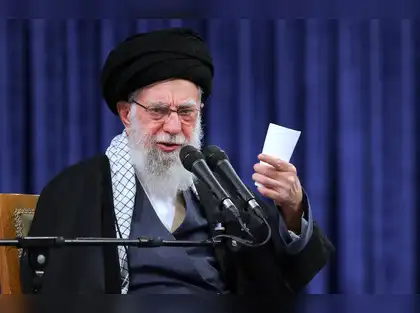
By Gad Masereka
Iran’s political future was thrown into uncertainty on Saturday after multiple Israeli officials and a senior United States intelligence source told the press that Supreme Leader Ali Khamenei is presumed dead following a large scale joint US and Israeli military operation.
The reported development comes amid escalating hostilities between Iran and its longtime adversaries. Israeli Prime Minister Benjamin Netanyahu said earlier in the day that there were “growing signs” Khamenei was “gone” after the mission, though he stopped short of offering definitive confirmation.
An Israeli broadcaster later reported that Netanyahu had been shown a photograph purportedly depicting Khamenei’s body, further fuelling speculation.
In Tehran, scenes of uncertainty and tension unfolded. A CBS News producer on the ground reported that some residents were seen cheering in parts of the capital, though state media and Iran’s Foreign Ministry had not confirmed the death by late Saturday afternoon.
The absence of official acknowledgement from Iranian authorities has left many questions unanswered, particularly regarding succession and the stability of the country’s leadership structure.
The Israel Defense Forces said during a press briefing that seven senior Iranian officials and commanders were killed in the strikes, including Ali Shamkhani, a key adviser to Khamenei. The operation, described by US and Israeli officials as a coordinated military effort, targeted strategic sites linked to Iran’s security establishment. Details about how the strikes unfolded remain limited, but officials indicated that precision attacks were carried out against high value targets.
Khamenei, 86, had served as Iran’s supreme leader since 1989, succeeding Ruhollah Khomeini, the architect of the 1979 Islamic Revolution.
As supreme leader, he wielded sweeping authority over Iran’s armed forces, judiciary and state institutions, shaping the country’s domestic and foreign policy for nearly four decades. His influence extended beyond politics, as he was widely regarded as the nation’s highest religious authority.
The potential death of Khamenei marks a pivotal moment not only for Iran but for the broader Middle East. Analysts say the absence of a confirmed successor could trigger internal power struggles within Iran’s clerical and military elite. Under Iran’s constitution, the Assembly of Experts is responsible for appointing a new supreme leader, yet the process is often shaped by complex political negotiations behind closed doors.
Regional capitals and global powers are closely monitoring developments, aware that leadership uncertainty in Tehran could alter the trajectory of ongoing conflicts and diplomatic efforts.
For now, the lack of official confirmation from Iranian authorities keeps the situation fluid, leaving citizens and the international community awaiting clarity on who will assume the mantle of one of the most powerful positions in the Islamic Republic.