
Business
Sudhir’s New 21-Storey Tower Signals Kampala’s Vertical Future

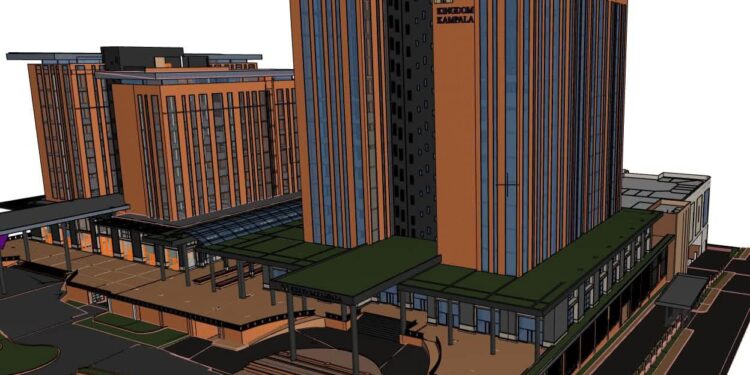
The skyline of Kampala is poised for a striking transformation as the Ruparelia Group officially launches Phase Two of its flagship Kingdom Kampala development. Spearheaded by businessman Sudhir Ruparelia, the project introduces a 21-storey mixed-use tower at the heart of the Central Business District, complete with a rooftop helipad, signaling both ambition and a new approach to urban development in the capital.
The tower is envisioned as an integrated hub, combining luxury hotel accommodation, high-end apartments, office space, and retail outlets. Urban planners and developers argue that such vertical expansion is increasingly necessary to address the pressures of a rapidly growing population within Kampala’s limited city centre land. By concentrating living, work, and commercial activity in a single footprint, the project aims to reduce commuting times while maximizing the use of prime real estate.
Phase One of Kingdom Kampala, completed in 2019, had already redefined a section of Nakasero with modern retail and office facilities. Phase Two moves the concept upward, introducing a high-rise component that not only expands available space but also incorporates a helipad. With Entebbe International Airport some forty kilometres from the city centre and Kampala’s traffic congestion notoriously unpredictable, the rooftop facility is intended to offer a direct, efficient access point for high-level executives, multinational investors, and oil and gas industry leaders.
Economic analysts point to the broader impact of the development beyond its architectural statement. Construction alone is expected to generate hundreds of jobs, with further opportunities in hospitality, property management, security, and retail once the building is operational. Observers also note that high-profile developments can elevate surrounding property values, stimulate investment in adjacent areas, and reinforce Kampala’s competitiveness against regional hubs like Nairobi and Kigali.
For Sudhir Ruparelia, whose investments span real estate, hospitality, and education, Kingdom Kampala Phase Two represents a continuation of decades-long influence on the city’s commercial landscape. “This is about creating an integrated, modern hub that reflects the potential of Kampala as a regional business destination,” a company spokesperson said, highlighting the project’s strategic positioning.
The tower also sparks debate about urban inequality. Critics argue that luxury developments serve a limited segment of the population and may not directly address the needs of the city’s informal economy. Proponents counter that formal sector expansion ultimately broadens the tax base, boosts economic activity, and lays the foundation for long-term growth.
As construction progresses, the 21-storey tower stands as a tangible expression of the city’s aspirations for modernization. For the developers, the reasoning is straightforward: integrated, vertical development represents the future of Kampala’s urban evolution. Whether the capital’s infrastructure and planning frameworks will rise to meet that vision remains an open question, but the skyline is already beginning to tell a new story.