
News
Controversial CN Sugar Project Puts Sugar Sector Governance Under Spotlight

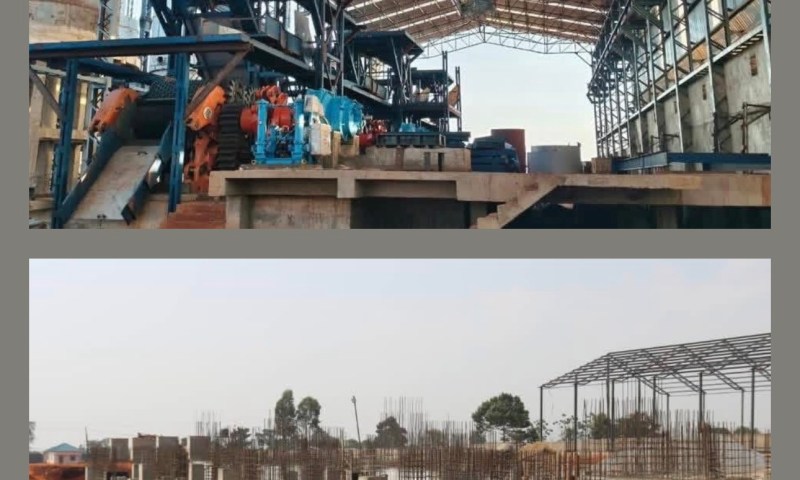
In the quiet farming village of Kifuyo in Namayingo District, towering steel structures now dominate the skyline, a symbol of investment to some and defiance to others. At the centre of the storm is CN Sugar Limited, whose factory project has reignited debate over the authority of the courts, the role of regulators and the limits of political influence in Uganda’s sugar industry.
The controversy traces back to a High Court ruling delivered in January last year by Justice Douglas Singiza Karekona, who found that the licences under which CN Sugar was operating were illegal. The court cancelled the Letters of No Objection that had been used to authorise the project, halted milling operations and ordered the removal of mills erected in prohibited zones. It further directed the Minister of Trade, Industry and Cooperatives to operationalise the Uganda Sugar Board within three months and instructed police to enforce compliance.
Despite that ruling, construction at the site has resumed and is reportedly nearing completion. Heavy machinery has been installed and workers continue to move in and out of the premises, even as legal questions linger. The factory sits within a radius contested under the National Sugar Policy of 2010, which provides for a 25 kilometre zoning restriction to prevent unhealthy competition and protect existing mills.


The case was initiated by the Uganda Sugar Manufacturers Association, whose members include industry heavyweights such as Kakira Sugar Works and Kinyara Sugar Works. The association argued that following the enactment of the Sugar Act, only the Uganda Sugar Board has the statutory mandate to license mills. In its ruling, the court agreed, holding that in the absence of a properly constituted board, neither the ministry nor any other agency could lawfully issue licences.
CN Sugar subsequently secured a stay of execution pending appeal, temporarily shielding it from enforcement of the orders. Legal experts note that a stay suspends implementation but does not overturn the substantive findings of illegality unless reversed by a higher court. “A stay preserves the status quo pending appeal. It does not automatically validate what was declared unlawful,” one Kampala based lawyer observed.
On the ground in Namayingo, however, the legal nuances are overshadowed by economic expectations. Some residents welcome the project as a potential source of jobs and market access for cane growers. Others fear that allowing construction to proceed sends a troubling message about compliance with judicial decisions. Political undertones have further complicated the picture, with allegations that local leaders have been drawn into the debate, framing the factory as a development lifeline.
The broader issue extends beyond one investor. The High Court criticised the failure to operationalise the Uganda Sugar Board, describing it as a breach of statutory duty that created a regulatory vacuum. Analysts argue that such gaps leave room for administrative improvisation, blurring the line between lawful discretion and overreach.
As steel beams continue to rise in Kifuyo, the dispute has evolved into a test of institutional coherence. Can regulatory frameworks be enforced consistently when economic interests and local politics converge? Does substantial investment alter the legal position once a court has spoken? For now, the appeal process will determine the immediate fate of the factory.
What remains clear is that the matter has moved beyond a zoning dispute. It has become a focal point in the ongoing conversation about governance, accountability and the credibility of judicial pronouncements. In Namayingo, the future of one sugar factory now carries implications far wider than its gates.