
Africa
Gadhafi’s Son Seif Al Islam Killed In Western Libya, Officials Say

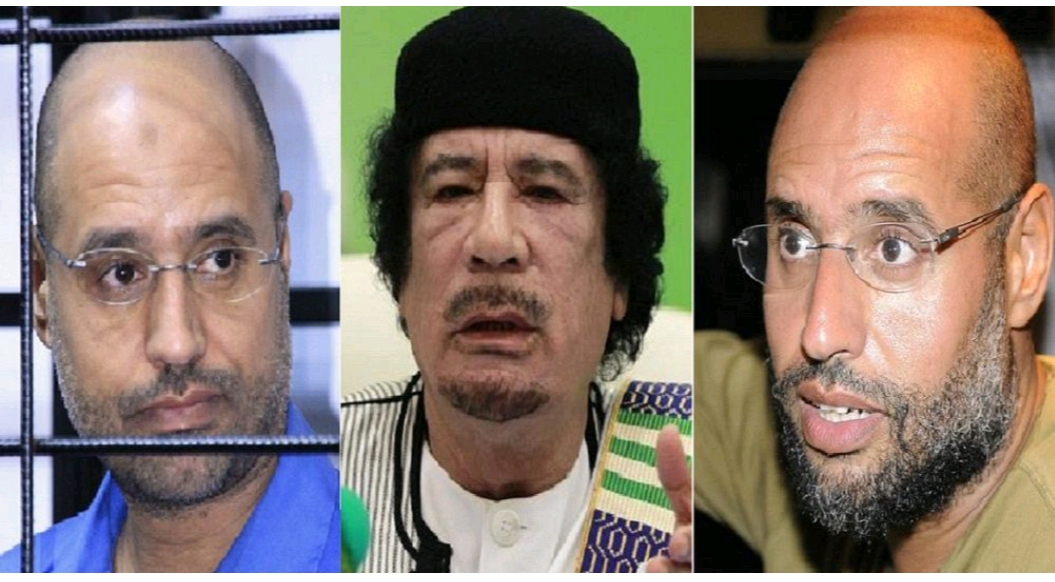
Libya was plunged into renewed uncertainty on Tuesday after officials confirmed the death of Seif al Islam Gadhafi, the son of the country’s former strongman Moammar Gadhafi, in the western town of Zintan, a place that had long symbolised both his survival and the unresolved legacy of the 2011 uprising.
Authorities did not immediately disclose the circumstances surrounding his killing, but reports from local media suggested that armed men attacked him at his residence, bringing to a sudden end a life that had remained a potent political symbol more than a decade after his father’s fall.
Seif al Islam, born in June 1972, had for years occupied a complex space in Libya’s fractured national story. Educated abroad and holder of a doctorate from the London School of Economics, he was once promoted as the modern and reform minded face of the Gadhafi regime, speaking the language of political openness while remaining firmly within the ruling family’s grip on power.
To his supporters, he represented a possible bridge between the old order and a reformed Libya. To his critics, he was inseparable from the violence that accompanied the regime’s final days.
His death revives memories of the dramatic collapse of his father’s rule in 2011, when a NATO backed popular revolt ended more than four decades of authoritarian leadership.
Moammar Gadhafi was killed that same year as the country slid into armed conflict, a descent that would fracture state institutions and leave rival governments and militias competing for control.
In the chaos that followed, Seif al Islam was captured while trying to flee towards neighbouring Niger, a moment that many believed marked the definitive end of the Gadhafi era.
Instead, his story took another turn. Detained by fighters in Zintan, he remained out of public view for years before being released in June 2017.
From that point, he continued to live in the same town, largely removed from day to day politics but never far from the national conversation.
A Libyan court had earlier convicted him in absentia for inciting violence and for the killing of protesters during the uprising, handing down a death sentence in 2015. Beyond Libya’s borders, the International Criminal Court had also sought his arrest on charges of crimes against humanity linked to the 2011 unrest.
News of his killing has drawn mixed reactions across the country, reflecting Libya’s deep divisions. Some residents of Tripoli described the development as the closing of a painful chapter. One local analyst said it underscored how unresolved grievances from the revolution continue to shape the present. Others warned that the manner of his death could inflame tensions, particularly in areas where loyalty to the former regime still runs deep.
As investigators work to establish who was responsible and why, Seif al Islam’s death stands as a stark reminder that Libya’s past remains tightly bound to its future.
More than a decade after the uprising promised a new beginning, the country continues to grapple with the shadows of its history, where old figures still carry the power to unsettle a fragile peace.


