
News
At 70, Dr. Sudhir Ruparelia Reflects on Five Decades of Enterprise

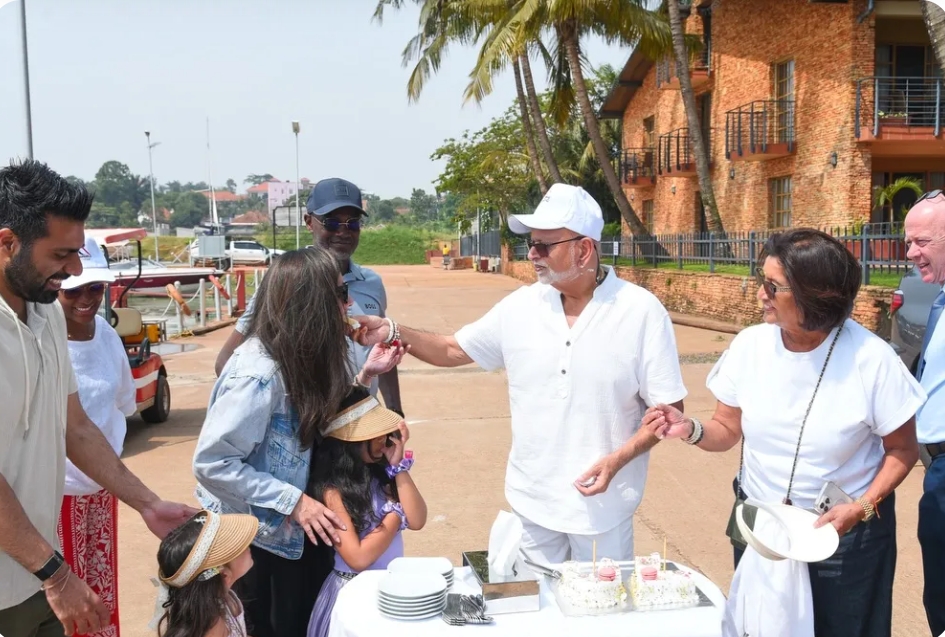
At Speke Resort Munyonyo in Kampala, celebration gave way to reflection as businessman Sudhir Ruparelia marked his 70th birthday in a manner that surprised even some of his closest associates. Instead of occupying the centre of ceremony, he moved among staff, personally serving cake to employees who have worked across his hotels, schools and corporate offices. Family members, including his wife Jyotsna and their children, stood nearby, but the spotlight subtly shifted to the workforce that has long powered his enterprises.
The gesture, simple on the surface, carried deeper symbolism in a country where corporate hierarchies are often rigid. For many staff members at Speke Resort Munyonyo, it was a rare reversal of roles. “We are used to serving guests and management,” said one hospitality supervisor. “Seeing him serve us was unexpected and humbling.”
Ruparelia’s journey to that moment spans five decades of upheaval, risk and reinvention. Born in Kasese District to a family of Indian descent, he grew up in a trading community where discipline and enterprise were woven into daily life. The 1972 expulsion of Asians under Idi Amin forced him into exile in the United Kingdom, a period he has previously described as both harsh and formative. Working modest jobs while observing Western banking systems, he gained insights into credit, liquidity and capital management that would later shape his approach to business.
When he returned to Uganda in the early 1980s, the economy was fragile and investor confidence low. Yet Ruparelia saw opportunity in the gaps. Beginning with foreign exchange trading, he built capital steadily before expanding into banking, real estate and hospitality. Over time, the Ruparelia Group grew into one of Uganda’s most diversified conglomerates, with interests spanning education, insurance, agriculture and tourism.
His properties now form a visible imprint on Kampala’s skyline, while hospitality investments have positioned Uganda as a venue for regional conferences and international events. Even during turbulent periods, including the high profile closure of Crane Bank, Ruparelia maintained a steady presence in the market. Associates say his strategy has often combined patience with a willingness to recalibrate.
Business analysts describe him as measured rather than flamboyant. “He is not a man of loud declarations,” said a Kampala based financial consultant. “His influence comes from consistency and long term positioning.”
Beyond corporate performance, Ruparelia’s philanthropy has extended into education sponsorships, health initiatives and quiet interventions during national emergencies. Those close to him say he prefers results over recognition. Employees often cite accessibility as one of his defining traits, noting that senior managers are expected to remain accountable and visible.
As he enters his eighth decade, succession within the family has become increasingly structured. His children have taken on operational roles across various arms of the group, signalling a deliberate effort to institutionalise leadership beyond a single personality. Observers say this transition reflects a broader understanding that legacy depends not only on assets but on systems and stewardship.
The birthday celebration at Speke Resort Munyonyo therefore served as more than a milestone. It offered a glimpse into the ethos that has shaped one of Uganda’s most recognisable business figures. In an economy still navigating volatility and ambition, Ruparelia’s story continues to illustrate how endurance, adaptation and understated service can coexist with commercial success.