
Politics
Namyalo Urges Ugandans To Safeguard Peace As Museveni Marks 40 Years In Power

By Gad Masereka
As Uganda marked 40 years since the 1986 liberation, the message emerging from Kyambogo and Kololo was less about ceremony and more about continuity, with peace, discipline and economic inclusion framed as the country’s most valuable assets.
Speaking days after the celebrations, the Head of the Office of the National Chairman, Hajjat Hadijah Namyalo Uzeiye, placed President Yoweri Museveni’s leadership at the centre of what she described as a rare record of stability in a region and world still grappling with conflict.
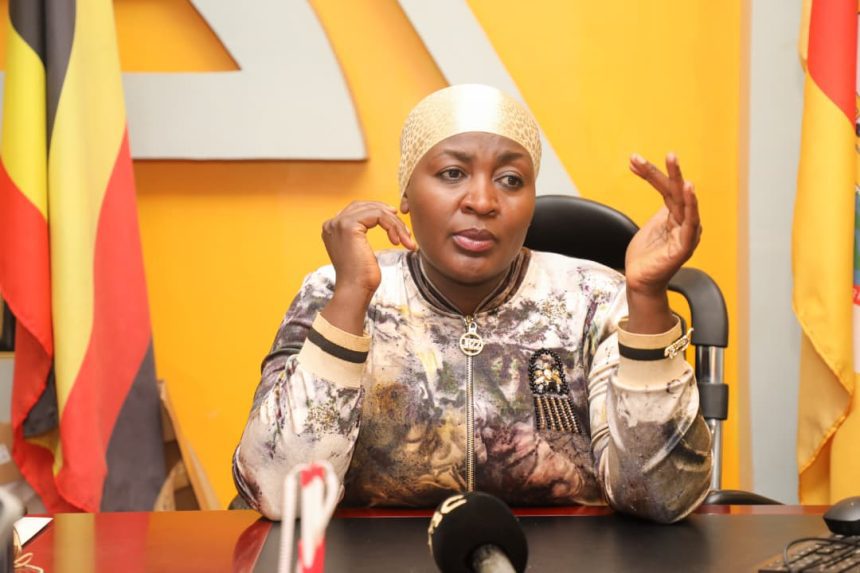
Addressing journalists at her office in Kyambogo, Namyalo said the significance of the Liberation Day anniversary lay not only in history but in the choices Uganda continues to make.
She echoed President Museveni’s remarks at Kololo, arguing that peace should be actively protected rather than assumed, especially at a time when countries such as the Democratic Republic of Congo, Sudan and South Sudan remain trapped in cycles of violence.
Uganda’s experience, she said, showed that political stability is the starting point for any meaningful economic transformation. Without it, she warned, development plans collapse and livelihoods suffer.
Her remarks carried a pointed caution to political actors who mobilise through confrontation and post election unrest, which she said undermines national progress and opens space for foreign interests bent on destabilisation.
She urged leaders and citizens alike to remember the sacrifices that led to liberation in 1986, calling on Ugandans to prioritise national unity over personal ambition. In her view, true patriotism today means safeguarding peace and focusing energy on wealth creation rather than division.
Namyalo’s comments followed President Museveni’s address at Kololo National Ceremonial Grounds, where the country commemorated Liberation Day under the theme of honouring patriots who ushered in fundamental change. The event came shortly after the President was declared winner of the recent presidential elections with 71 percent of the vote, an outcome he described as a political victory tempered by concern over voter turnout.
In his speech, Museveni thanked God and Ugandans for what he called a peaceful electoral process, while expressing disappointment that many supporters did not cast their ballots.
He said although the National Resistance Movement commands a large support base, a significant number of its followers stayed away from polling stations, partly due to intimidation and internal indiscipline.
The President linked these challenges to a broader call for responsibility within both political leadership and law enforcement, questioning why threats against voters were sometimes ignored. He dismissed opposition criticism, insisting that the election outcome would have been even more decisive had all supporters voted.
Beyond politics, Museveni focused heavily on the economy, presenting data to illustrate what he called steady transformation over four decades of NRM rule. He said about 70 percent of Ugandans are now participating in the money economy, a sharp rise from the situation at independence when only a small fraction earned cash incomes.
Tracing the evolution from post war recovery to diversification and value addition, Museveni pointed to government interventions such as Entandikwa, Operation Wealth Creation and the Parish Development Model as deliberate efforts to move households away from subsistence production. While acknowledging progress, he said about 30 percent of Ugandans remain outside the money economy and require targeted support.
The President was particularly firm on the Parish Development Model, warning against misuse of funds and elite capture at the local level. He said cases of abuse had already led to arrests and promised stricter enforcement, amendments to guidelines and increased funding, especially in urban parishes with large populations.
Oil production, he added, is expected to accelerate economic growth beyond the current seven percent, but only if discipline and accountability are maintained. He stressed that development must be inclusive, cautioning against a scenario where prosperity benefits some while leaving others behind.
Echoing this outlook, Namyalo said the message from Liberation Day was clear and consistent. Uganda’s future, she noted, depends on unity, vigilance and a collective commitment to economic transformation anchored in peace. For her, the lesson of four decades of NRM leadership is that stability is not an accident, but a responsibility that must be renewed by every generation.


