
Africa
Muhoozi Kainerugaba’s ‘Kill on Sight’ Remarks Spark Political and Human Rights Alarm

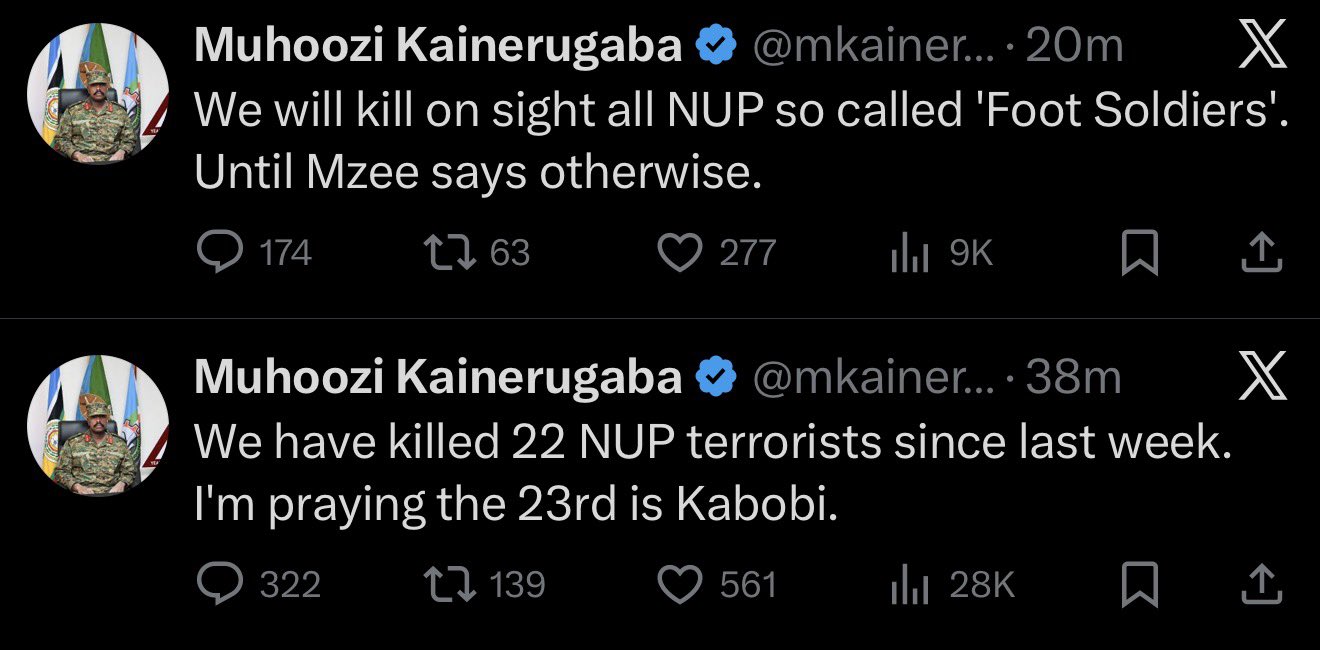
Uganda’s Chief of Defence Forces, Gen. Muhoozi Kainerugaba, has ignited a fresh political storm after posting a series of highly inflammatory messages on X (formerly Twitter), in which he appeared to threaten supporters of the opposition National Unity Platform (NUP) and claimed that dozens of people linked to the party had been killed.
In one post shared on Tuesday, Gen. Kainerugaba wrote: “We will kill on sight all NUP so-called ‘Foot Soldiers’. Until Mzee says otherwise.”
In another message posted shortly before, he claimed: “We have killed 22 NUP terrorists since last week. I’m praying the 23rd is Kabobi.” The posts, made from the general’s verified account, spread rapidly online and triggered outrage across the political divide, with opposition leaders, lawyers, and civil society organisations warning that the statements amount to open incitement to violence and a justification for extrajudicial killings.
Opposition condemnation
The National Unity Platform strongly rejected the claims, saying its members and so-called “foot soldiers” are unarmed civilian supporters engaged in political mobilisation, not terrorists. Party officials accused the army chief of using dehumanising language to legitimise violence against opposition supporters, particularly young people.“
This is a direct threat to the lives of Ugandans whose only ‘crime’ is supporting an opposition party,” one senior NUP official said, adding that the remarks deepen fear at a time when the country is already politically tense.
Human rights alarm
Human rights advocates described the statements as unprecedented coming from a serving head of the armed forces. Several organisations warned that publicly declaring a “kill on sight” posture violates Uganda’s Constitution, the UPDF Act, and international human rights law, all of which require due process and strictly regulate the use of lethal force.
Legal experts also questioned the claim that 22 people had been killed in operations against alleged NUP “terrorists,” noting that no official police or military statement had been issued to confirm such incidents, their locations, or the identities of those involved.“If killings of that scale had occurred lawfully, the public would expect formal briefings, investigations, and accountability,” said a Kampala-based constitutional lawyer. “Social media declarations are not a substitute for the rule of law.”
Questions over command and accountability
Gen. Kainerugaba’s reference to “Mzee” widely understood to mean President Yoweri Museveni, who is also the commander-in-chief has raised further questions about whether the statements reflect official government policy or the personal views of the army chief. In previous instances, controversial social media posts by Gen. Kainerugaba have later been downplayed by government officials, but critics argue that repeated silence from authorities only fuels uncertainty and fear.
By the time of publication, neither State House nor the Ministry of Defence had issued a statement clarifying or distancing the government from the remarks.
Heightened political tension
The controversy comes amid ongoing disputes over electoral processes and long-standing complaints by opposition parties about arrests, intimidation, and restrictions on political activity. Analysts warn that rhetoric from senior security officials that frames political opposition as an enemy to be eliminated risks further polarising the country and undermining prospects for peaceful political engagement.Civil society groups are now calling on Parliament, the Uganda Human Rights Commission, and the courts to intervene, demand explanations, and reaffirm the supremacy of the Constitution and the protection of civilian life.
As the posts remain online and continue to circulate widely, they have intensified debate over the conduct of Uganda’s security leadership, the boundaries of political speech, and the shrinking space for dissent in the country’s democratic landscape.


