
Education
NRM Committed Cadres Rally Millions Of UPE Graduates Ahead Of Kololo Thanksgiving Ceremony

By Gad Masereka
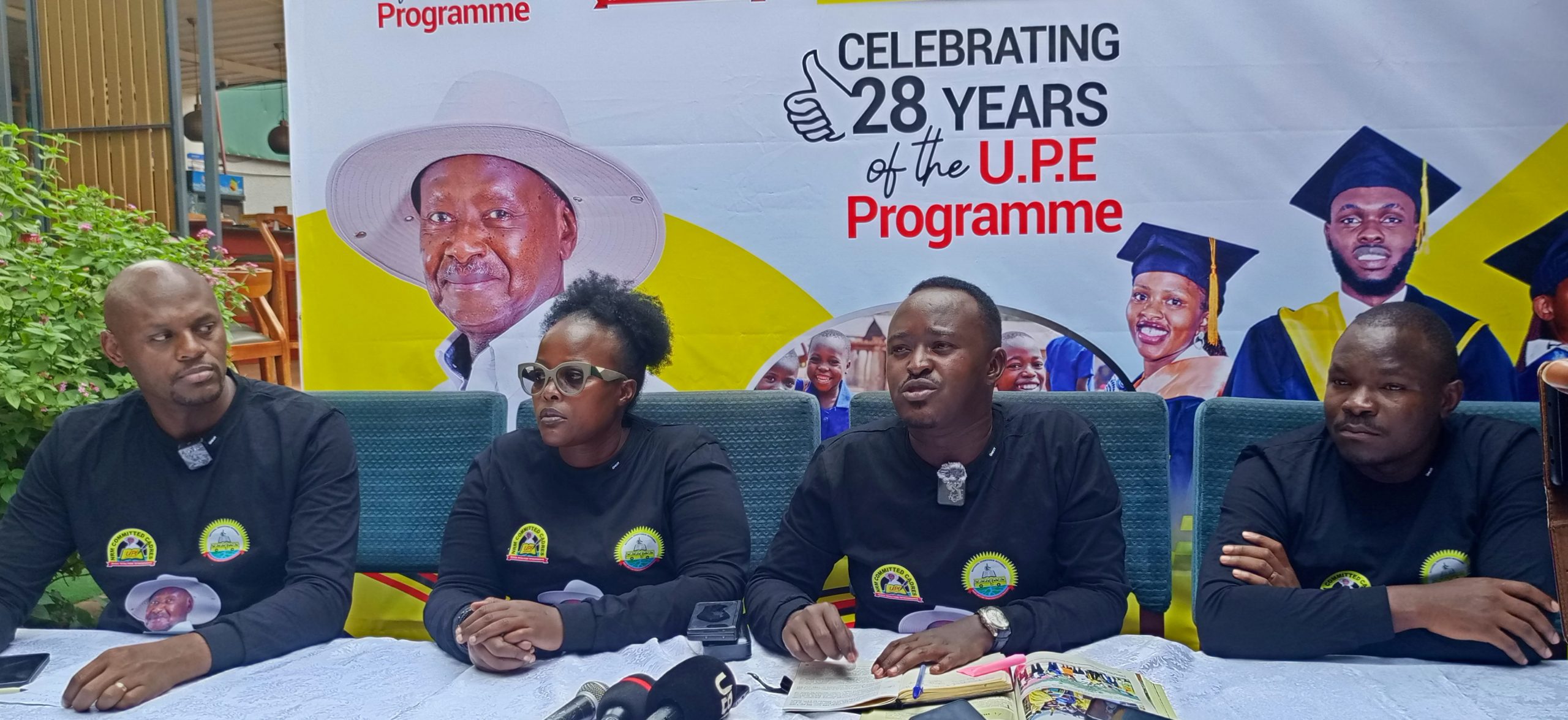
Members of the NRM Committed Cadres have rallied beneficiaries of Universal Primary Education and Universal Secondary Education to gather for a national thanksgiving event later this month, saying it is time for Ugandans to collectively appreciate the policy that opened classroom doors to millions of children, with the celebrations scheduled for 23rd November 2025 and marking 28 years of Universal Primary Education.
Speaking during a press briefing in Kampala, the group’s leaders framed the upcoming event at Kololo Ceremonial Grounds not as a political mobilisation drive but as a moment of national reflection on what they described as one of the country’s most transformative social interventions.
Paul Abaho, who serves as the national coordinator of the group, opened the briefing with a call for unity among UPE and USE beneficiaries, explaining that many of them owed their current opportunities to decisions made nearly three decades ago.

He told journalists that the cadres had spent years quietly mobilising communities before deciding that it was time to speak publicly about the importance of safeguarding Uganda’s education gains.
Abaho added that the group had invited President Museveni to the thanksgiving ceremony, and that he had agreed to attend as chief guest. He urged Ugandans to respond to the invitation with the same spirit of gratitude that he said inspired the organisers.
When the chairperson of the Committed NRM Cadres, Twebaze Johnson Matusa, took the floor, he drew a direct line between the UPE policy and the rise of many Ugandans in different sectors. He reminded Ugandans that the group was formed in 2011 with the intention of supporting the ruling party’s grassroots agenda, but had since broadened its interests to include recognising national achievements.

Matusa said the 28th anniversary of UPE presented an opportunity to celebrate the far reaching impact of the programme, noting that enrolment had grown from 2.5 million pupils before its introduction to over 9 million learners today and described this shift as one of the clearest indicators of social progress in the country.
He argued that the ability of Ugandans to participate in modern government programmes such as the Parish Development Model can be traced back to the foundation built by free primary education.
According to him, literacy and numeracy are the first step to meaningful economic participation. He insisted that even Ugandans who may not openly support the ruling party should acknowledge the role UPE played in their lives or in the lives of their children.
Matusa called on all beneficiaries, including those who studied under State House scholarships, to attend the 23 November thanksgiving event, saying the day should unite rather than divide.
His remarks were followed by testimony from Dr Joseph Kibirige, who described himself as a product of the 1997 UPE cohort. He recalled how joining the programme as a young child set him on a path that has now taken him to doctoral studies in India.

Kibirige said his academic journey would have been impossible without free primary education. He urged other beneficiaries to recognise their beginnings and show appreciation, adding that remembering one’s roots is essential for personal and national growth.
According to the organizers, the emphasis was that the thanksgiving is not an NRM event but a gathering for all Ugandans who passed through UPE and USE or benefited from the broader universal education policy. They added that the ceremony will provide space for networking, community building and a collective expression of thanks to the leadership that initiated the programme.
Organisers expect thousands of people to fill Kololo on 23 November. They said the grounds will open early in the morning to allow for a smooth arrival ahead of the President and First Lady, who also serves as Minister of Education.
For the NRM Committed Cadres, the day will mark not only a celebration of a policy but a reminder of how far the country has come, and of the responsibility Ugandans share in protecting gains made in the education sector.