
Business
Is Uganda’s Richest Tycoon Repurposing Crane Bank into Retail Outlets? This is what We Know So Far

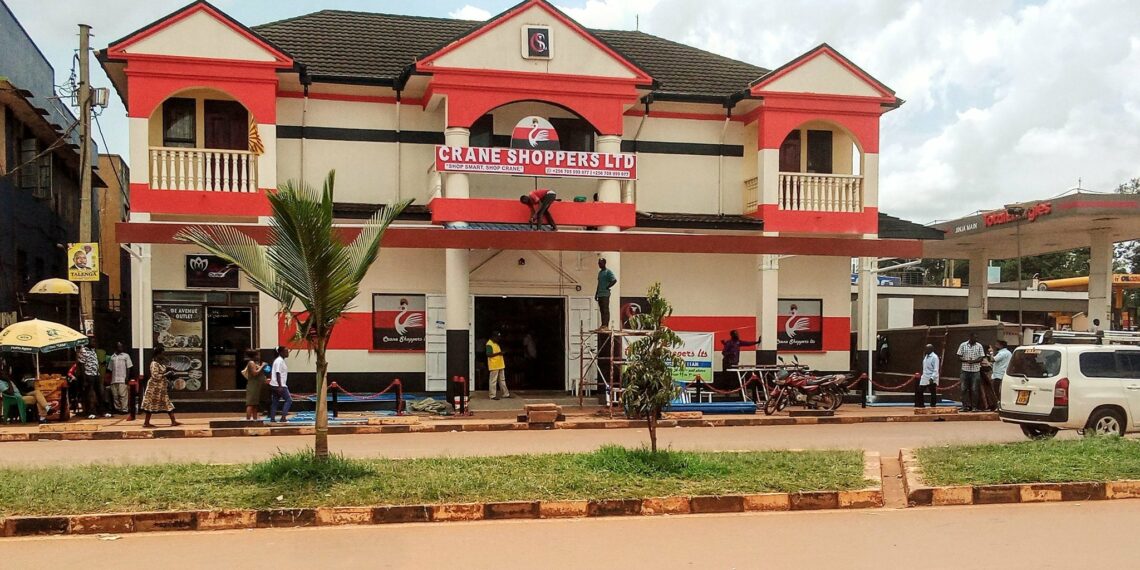
Ugandan businessman Dr. Sudhir Ruparelia appears to be charting a new path in retail after images emerged showing one of the former Crane Bank branches being transformed into a supermarket under the name Crane Shoppers Ltd.
The red-and-white building, once a symbol of his banking empire, is now being fitted with fresh signage and interior renovations, signaling what could become the tycoon’s latest business frontier.
Ruparelia, whose fortune is estimated at more than a billion dollars, has long been associated with banking, hospitality, education, and real estate through his Ruparelia Group.
His decision to turn a once-controversial property into a supermarket comes at a time when Uganda’s retail sector is expanding rapidly, buoyed by changing consumer habits and the entry of multinational players. Industry observers believe this could be the beginning of a supermarket chain that capitalizes on his extensive real estate portfolio.
The move also carries a symbolic dimension. Crane Bank, established in 1995 with just one million dollars in starting capital, became one of Uganda’s largest financial institutions before being seized by the Bank of Uganda in 2016 and controversially sold to dfcu Bank the following year.
Ruparelia has since fought a protracted legal battle, winning a major victory in 2022 when the Supreme Court ordered the return of the bank and castigated regulators for mishandling the process. Ongoing cases in the United Kingdom continue to shed light on the takeover, with recent judgments questioning the validity of audit reports used to justify the sale.
With properties once tied up in litigation now firmly back under his control, the businessman seems keen to reposition them for new commercial opportunities. Analysts say the timing is calculated, given the steady growth of Uganda’s retail market and the lessons from past failures of regional chains such as Shoprite and Nakumatt.
“This shows his ability to reinvent himself and his businesses,” said Jane Nambi, a Kampala-based financial analyst. “Retail could provide jobs and stimulate local supply chains, while diversifying his group into a sector with long-term growth potential.”
Ruparelia’s influence already extends into multiple industries, including hospitality through Speke Resort Munyonyo, education through Kampala Parents’ School and Kabojja International, and media through Sanyu FM.
The shift into supermarkets adds a consumer-facing venture that aligns with the needs of an expanding urban population. People familiar with his business strategy suggest that the decision is not merely about diversification but also about unlocking revenue streams from assets that had been lying idle during the court disputes.
Despite years of setbacks, Ruparelia’s resilience continues to define his career. His inclusion in Forbes Africa’s 2025 list of billionaires underlined his staying power in a region where many fortunes have faded.
As the retail market in Uganda is projected to surpass two billion dollars by 2027, his new supermarket venture may prove to be a strategic masterstroke, further cementing his place as one of the country’s most influential business figures.