
Sports
Musenero Charts Bold Path for Uganda as First Global Innovation Index Symposium Launches

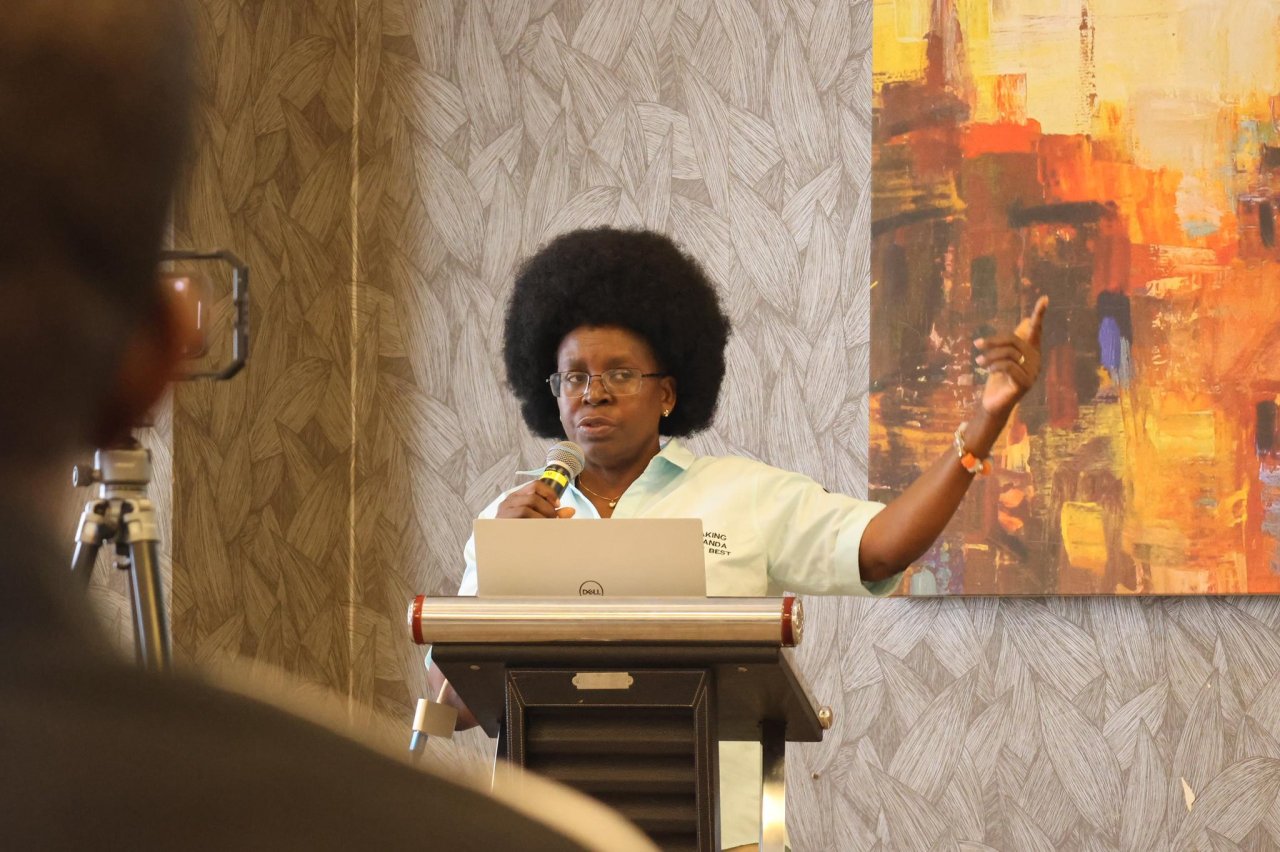
Uganda took a decisive step toward positioning itself as a continental leader in innovation with the launch of its first-ever Global Innovation Index Symposium, held at the Mestil Hotel in Kampala. The two-day event brought together a wide cross-section of stakeholders—government officials, academic leaders, private sector innovators, and development partners—all united by a shared vision to strengthen the country’s innovation ecosystem and elevate Uganda’s standing on the global stage.
Spearheaded by the Ministry of Science, Technology, and Innovation in collaboration with the Uganda Registration Services Bureau (URSB), the symposium is part of a larger national strategy to harness science and technology as engines for socioeconomic transformation. In her keynote address, Hon. Dr. Monica Musenero Masanza, Minister for Science, Technology, and Innovation, unveiled Uganda’s National Science, Technology, and Innovation Strategy (NSTI), which she described as a comprehensive roadmap to achieving middle-income status and beyond. She outlined five key industrial focus areas: mobility, health, aeronautics, infrastructure, and Industry 4.0.
“To support this vision, we are actively investing in infrastructure, human capital, and attracting investment,” she said, highlighting the importance of building a science-led economy through partnerships and deliberate planning. Dr. Musenero stressed that innovation should not be viewed as an isolated effort but as a “whole-of-nation approach,” urging academia, industry, and government to work in tandem. “Science is both funny and interesting—it lives in our minds as ideas,” she remarked, reinforcing the cultural and cognitive roots of innovation.
The Minister’s call to action was echoed by Ms. Nabatanzi Miriam, Commissioner for Copyright and Neighboring Rights at URSB, who painted a candid picture of Uganda’s current ranking—121st out of 133 economies in the Global Innovation Index. While this global position reflects significant challenges, Nabatanzi was quick to note that Uganda ranks among the most innovative economies in the low-income group. “Together, let us build a future where innovation is not just a statistic but the foundation of our nation’s prosperity,” she urged, calling for urgent reform in intellectual property systems and deeper collaboration across sectors.
Adding to the urgency of the message, Ms. Mercy K. Kainobwisho, Registrar General of URSB, identified structural issues limiting Uganda’s innovation potential. Chief among these, she said, is the lack of integrated data systems. “We do a lot of things, but we don’t talk about them. We don’t have the data sharing platforms or integrated systems in place,” Kainobwisho observed. She proposed the creation of a national task force to drive data transparency, streamline communication among stakeholders, and track progress more effectively. “Without the data, we will continue to be rated at a low level,” she warned.
One of the more resonant moments came from Mr. Denis Nabende, Principal Communications Officer at URSB, who addressed the often overlooked but essential role of intellectual property in Africa’s innovation story. He called for a redefinition of intellectual property systems to better reflect local realities, particularly those rooted in indigenous knowledge and oral traditions. “The focus must be on documenting the entire innovation process, not just the end product,” Nabende said, noting that much of Africa’s creative output remains vulnerable to exploitation in the absence of formal protection mechanisms. He emphasized URSB’s ongoing collaboration with regional bodies like ARIPO to strengthen safeguards for African-origin innovations.
Throughout the symposium, there was a prevailing sense of purpose and possibility. Panel discussions and breakout sessions explored Uganda’s performance indicators in the Global Innovation Index and dissected strategies for improvement, including policy reform, financing mechanisms, and the role of education in nurturing an innovation mindset. The energy at Mestil Hotel was described by participants as “electric,” reflecting the urgency and ambition that now define Uganda’s innovation discourse.
As Dr. Musenero concluded, “We are not just planning; we are building. We have a vision, and we are putting in the work to make Uganda an innovation leader on the global stage.” Her words captured the spirit of a nation no longer content to play catch-up but determined to lead from the front. With clear goals, institutional backing, and a growing coalition of public and private actors, Uganda’s push to rise through the global innovation ranks has moved from aspiration to action.