Breaking News
Food Insecurity Fuels Teenage Pregnancies, Child Marriages in Karenga, RHU Warns

By Richard Onapatum
KARENGA – Growing food insecurity in Kangole Parish, Karenga Town Council, is exposing children and adolescents to increased risks of teenage pregnancies, child marriages and school dropout, community leaders have warned.
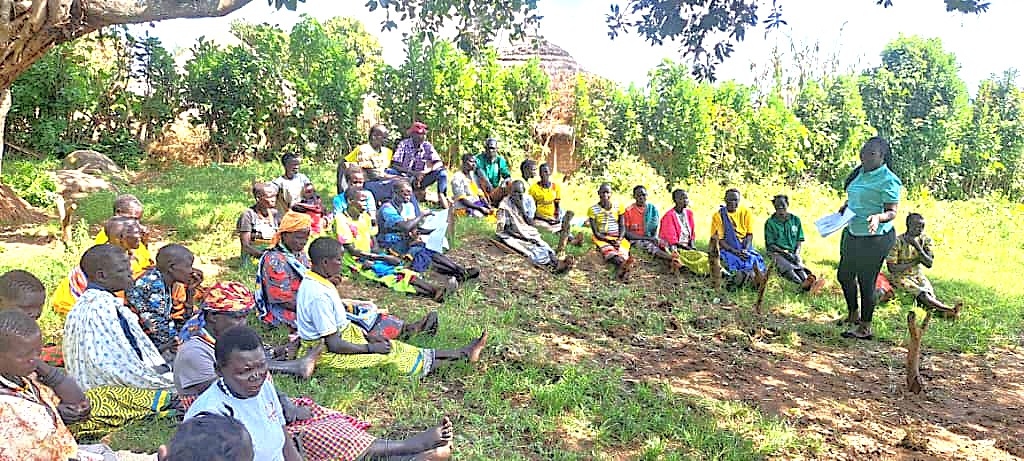
The concerns were raised during a Community Baraza organized by Reproductive Health Uganda (RHU) under the STRENGTH – Strengthening Community-Based Climate Adaptation in Uganda and Sudan Project, where district officials, local leaders, Village Health Teams (VHTs), parents, youth and community members discussed how hunger and poverty are contributing to child protection challenges.

Participants observed that recurring food shortages, declining household incomes and limited livelihood opportunities have left many families struggling to meet basic needs, increasing vulnerability among children and young people.
They noted that some children are dropping out of school, while others face increased risks of teenage pregnancies, child labour, exploitation and early marriages.
Community members said food insecurity has become more than a livelihood challenge, describing it as a growing child protection concern that requires coordinated action from government, communities and development partners.
Speaking during the Baraza, Anero Florence, RHU District Focal Person for Karenga, reaffirmed the organization’s commitment to promoting Sexual and Reproductive Health and Rights (SRHR), preventing gender-based violence and addressing challenges affecting women, girls and young people.
Florence said RHU will continue working with community leaders, health workers, schools and government institutions to strengthen awareness, improve referral pathways and ensure vulnerable groups have access to accurate reproductive health information and services.
She emphasized that reducing teenage pregnancies and child marriages requires addressing underlying causes of vulnerability, including poverty, food insecurity, school dropout and limited opportunities for young people.
“Communities must work together to create an environment where children are protected, remain in school and have opportunities to achieve their dreams,” Florence said.
Community representative Lotyany Godfrey said the awareness sessions, Community Barazas and dialogues organized by RHU had contributed to increased community understanding of child protection, sexual and reproductive health and the importance of keeping children in school.
“Since RHU started conducting awareness sessions, community barazas and dialogues, we have been able to understand the dangers of teenage pregnancies, child marriages and the importance of protecting our children. Parents are now more aware of their responsibilities, while young people have gained knowledge about their health and the available support services,” Godfrey said.
He added that the engagements had created spaces where community members could openly discuss challenges affecting children and young people, including poverty, food insecurity and school dropout.
Godfrey said community visits had revealed that many girls and boys affected by teenage pregnancies still wished to continue with their education.
He appealed to district authorities and development partners to support school re-entry programmes and rehabilitation initiatives, noting that education remains a key pathway for restoring hope among vulnerable children.
“Through these discussions, communities have realized that teenage pregnancies and child marriages are not only individual problems but issues that require everyone’s involvement. We need continued support to address the challenges affecting our children,” he said.
Senior Community Development Officer Abotto Moses urged parents and caregivers to prioritize children’s education and strengthen their responsibility to protect children from abuse, neglect and exploitation.
Abotto called for improved household livelihoods, stronger reporting mechanisms for gender-based violence and child protection cases, and closer collaboration among government departments, schools, Village Health Teams and community leaders to address the root causes of vulnerability.
Community members also identified parental neglect, gender-based violence, inadequate access to safe water, poor sanitation, insecurity and crop destruction caused by human-wildlife conflict as factors worsening household challenges.
They recommended increased investment in climate-smart agriculture, livelihood programmes, youth skilling initiatives and school-based awareness campaigns, particularly during school holidays when adolescents face increased risks.
A Village Health Team representative commended RHU for promoting family planning and birth spacing, saying the interventions had contributed to improved maternal and child health outcomes.
However, she cautioned that parental negligence and reluctance by some families to report child marriage cases continue to undermine child protection efforts.
The Baraza concluded with renewed commitments from community members, district leaders and development partners to strengthen child protection systems, improve household resilience and support vulnerable children to remain in or return to school.
Participants agreed that addressing food insecurity and poverty is critical to reducing teenage pregnancies and child marriages, calling for sustained collaboration to build resilient families and secure a better future for children in Kangole Parish and across Karenga District.
Send Us Your Story
If you would like your article or opinion published on The New Light Paper, one of Uganda’s trusted news platforms, send your submission to thenewlightpaper@gmail.com.